AI cyborg patrols streets with live 360° tracking
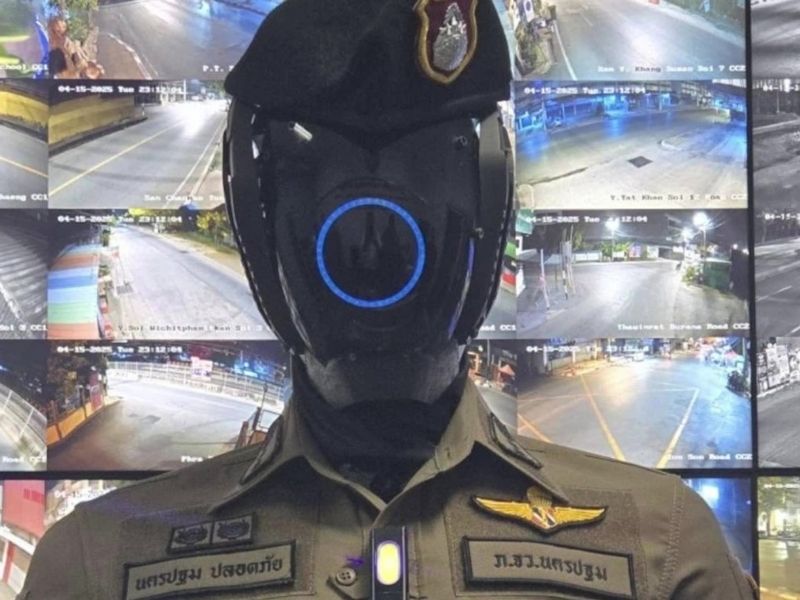
The future of law enforcement is here, and it’s wearing a robotic face. Around the globe, police forces are integrating AI-powered robots cyborgs into public safety strategies, blending advanced surveillance with real-time threat detection. Thailand has emerged as a key player in this shift, deploying its first AI police robot during the chaotic Songkran festival—a move that raises critical questions about safety, privacy, and the role of technology in society.

Credit: Royal Thai Police
Thailand’s AI police cyborg
During the Songkran festival, Thailand unveiled AI Police Cyborg 1.0, a stationary robot stationed at Nakhon Pathom’s Tonson Road venue. Developed by Provincial Police Region 7, Nakhon Pathom Provincial Police, and local authorities, the robot—officially named “Pol Col Nakhonpathom Plod Phai” (meaning “Nakhon Pathom is safe”)—features 360-degree cameras, facial recognition, and integration with drone and CCTV networks. Its AI analyzes crowds in real time, identifying weapons like knives while ignoring harmless items like water guns, and relays data to a command center for rapid police response.

Credit: Royal Thai Police
AI HUMANOID ROBOT LEARNS TO MIMIC HUMAN EMOTIONS AND BEHAVIOR
How effective is Thailand’s RoboCop?
While the Royal Thai Police tout the Cyborg as a “force multiplier that never tires,” critics question its practicality. The robot’s wheeled base limits mobility, and its reliance on existing surveillance tools like drones and CCTV networks has led some to ask why a stationary camera couldn’t achieve similar results. Additionally, its humanoid design—complete with a police uniform—appears more symbolic than functional, as it lacks bipedal movement and requires human officers nearby to deter tampering.

Credit: Royal Thai Police
CREEPY HUMANOID ROBOT MOVES USING 1000 EERIE ARTIFICIAL MUSCLES
China’s humanoid police robots
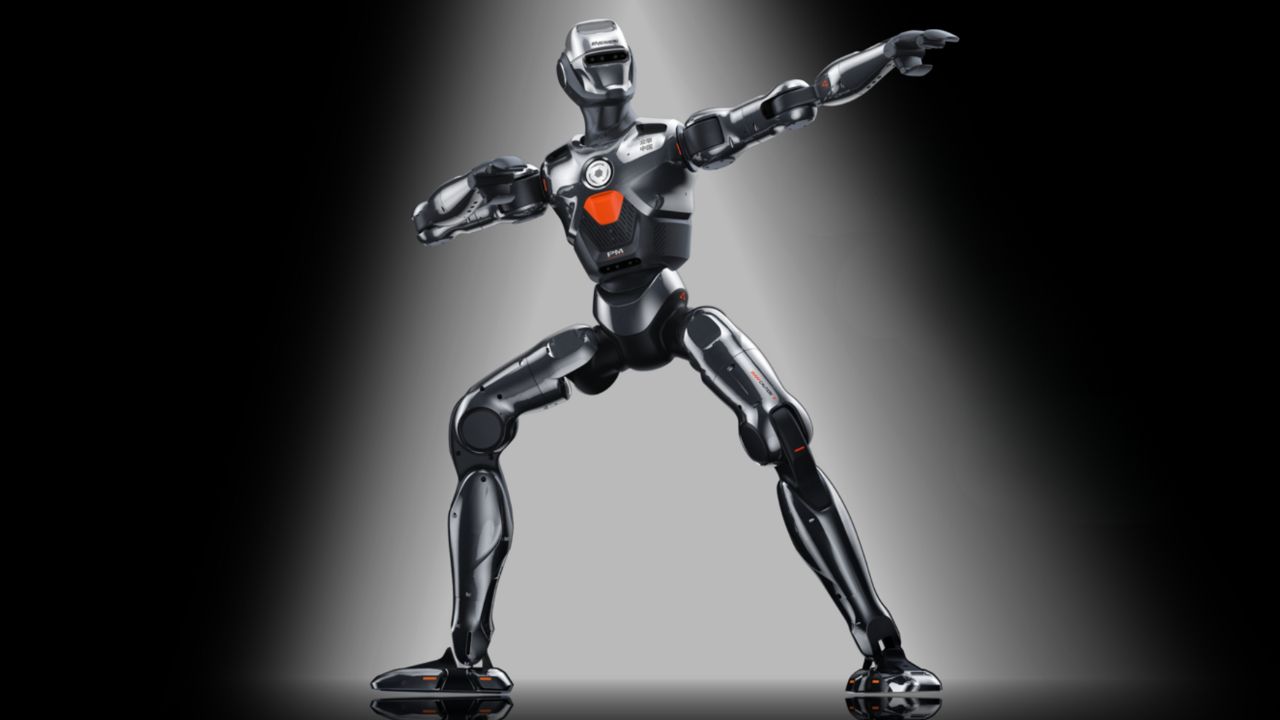
China is pushing boundaries with fully interactive humanoid robots. In Shenzhen, the PM01 model—developed by EngineAI—patrols alongside officers, waving at crowds, responding to voice commands, and even performing acrobatic feats like front flips. These robots, equipped with touchscreens and open-source software, allow global developers to expand their capabilities. Meanwhile, China’s RT-G, a spherical amphibious robot, operates in extreme environments, reaching speeds of 22 mph and enduring 4-ton impacts.
Credit: EngineAI
CHINA LAUNCHES FACILITY TO TRAIN 100 PLUS HUMANOID ROBOTS SIMULTANEOUSLY
The U.S. approach: AI without humanoids
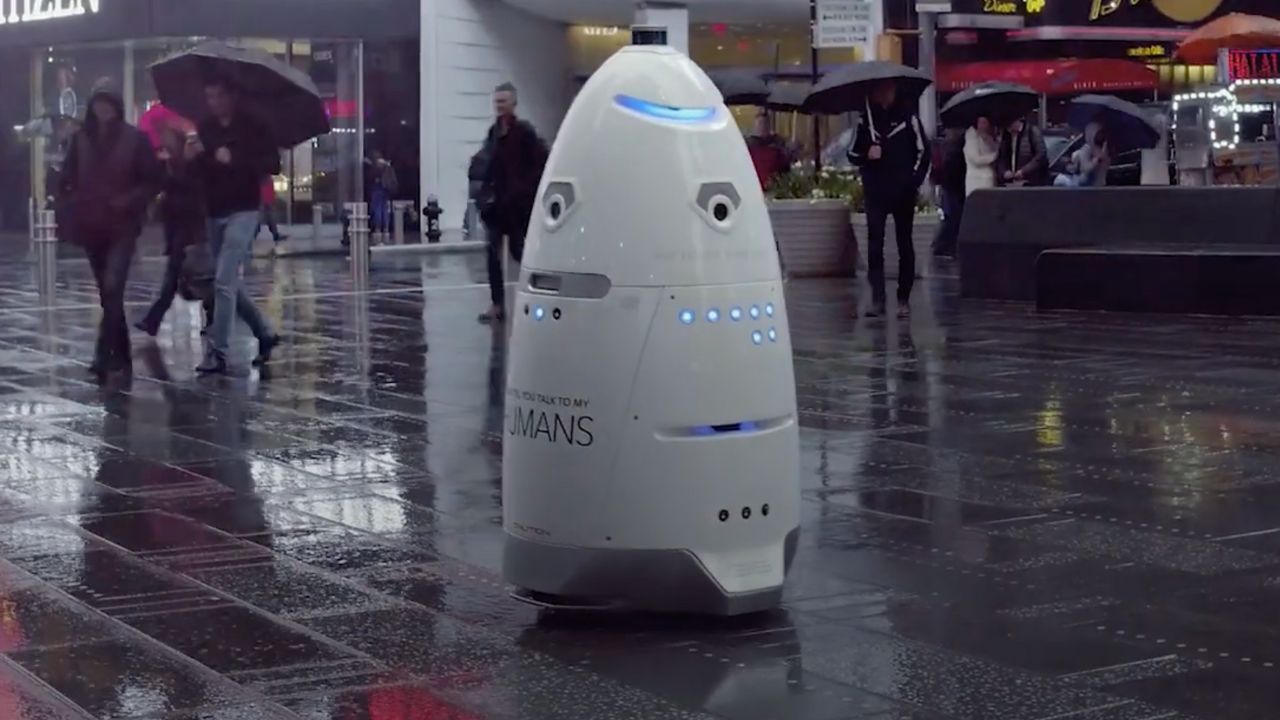
U.S. law enforcement agencies are adopting AI-driven tools while avoiding humanoid robots—at least for now. The NYPD’s K5 autonomous security robot, tested in subway stations, used 360-degree cameras for surveillance but explicitly excluded facial recognition to address privacy concerns. However, the robot’s pilot program ended after criticism over transparency and fears that it could enable mass surveillance.
Cities like Los Angeles and Memphis continue using predictive policing AI to analyze crime patterns and allocate resources. These systems identify crime hotspots based on historical data but face scrutiny for potential racial bias and lack of public oversight. While the U.S. focuses on AI for data analysis and surveillance, humanoid patrol robots remain absent from current deployments.
Credit: Knightscope
Safety vs. privacy: The global debate
Proponents argue AI robots enhance safety in crowded spaces, but privacy advocates warn of mass surveillance risks. Thailand’s Cyborg and China’s PM01 both use facial recognition, raising concerns about data misuse and bias. In the U.S., the K5 robot sparked debates about Fourth Amendment rights, with critics questioning how long footage is stored and who accesses it.
SUBSCRIBE TO KURT’S YOUTUBE CHANNEL FOR QUICK VIDEO TIPS ON HOW TO WORK ALL OF YOUR TECH DEVICES

Credit: Royal Thai Police
Kurt’s key takeaways
Thailand’s AI Police Cyborg and China’s humanoid robots mark a turning point in law enforcement, blending cutting-edge technology with public safety. While these innovations promise efficiency, they also need strict rules and transparency to stop privacy violations and government overreach.
So, here’s the question for you – Are these AI-powered robots making us safer, or are we stepping into a future where privacy takes a backseat? And would you feel comfortable being watched by a RoboCop on patrol here on U.S. soil? Let us know in the comments below.
FOR MORE OF MY TECH TIPS & SECURITY ALERTS, SUBSCRIBE TO MY FREE CYBERGUY REPORT NEWSLETTER HERE