Text job scam cost him $10K in crypto
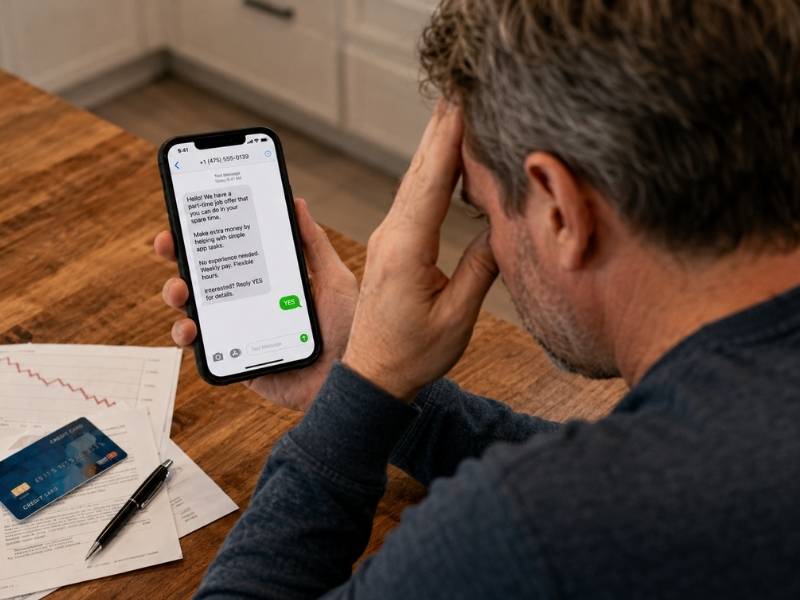
- A fake job text promised easy app work, then turned into a $10,000 crypto loss.
- Task scams often use vague online jobs, fake earnings dashboards and private messaging apps.
- Any job that asks you to deposit crypto before getting paid is a major red flag.
- Report the scam quickly and save texts, wallet addresses, screenshots and transaction records.
A text about making extra money can feel harmless at first. Maybe it shows up while you are between errands, scrolling on the couch or looking for a way to pad your budget.
That is exactly why these scams work. They do not always begin with a wild promise. Often, they start with a simple message about flexible online work. Then the scammer slowly turns curiosity into trust.
Rick S. shared this painful warning after reading one of our articles on scams:
“I am embarrassed to say this happened to me. I was contacted by text message about making some “extra” money. I was skeptical at first. This “company” was supposed to upload apps in order to get more exposure for the apps. This was supposedly associated with a company called APPTimizer. I called myself doing the research and felt confident that this was a legitimate business. I was led to believe the more “APPS” I uploaded, the more money I would make. All of this was done through Crypto. Long story short, I lost about $10k. Hard lesson to learn.”
Rick’s story fits a growing scam category often called a task scam, task-optimization scam or crypto job scam. These scams often begin with unexpected texts or WhatsApp messages offering online work. The “job” may involve fake tasks such as app optimization, product boosting, liking
content or rating items online.

What is a text job scam?
A text job scam is a fake employment offer sent by text, WhatsApp, Telegram or social media message. The pitch usually sounds easy. You may be told you can earn money from home by completing simple online tasks.
In Rick’s case, the supposed work involved uploading apps to help them get more exposure. Scammers often use vague tech terms because they sound legitimate without being easy to verify. Task scams commonly use buzzwords like “optimization tasks” or “product boosting.”
That vague wording gives the scammer room to keep changing the story. One day, you are doing small tasks. Then you are told you need to deposit crypto to unlock more work, complete a set or withdraw your supposed earnings.
How a crypto task scam works
The scam often starts with a friendly recruiter. They may claim to represent a real company or a company name that sounds real. That detail matters because a quick online search may not be enough to protect you. Crypto job scammers often pose as employees of legitimate companies. They may contact victims by text, then push the conversation to WhatsApp, Telegram or another private messaging app.
Next, the scammer gives you access to a website or app that shows your “earnings.” At first, you may even be allowed to withdraw a small amount. That early payout makes the whole setup feel legit.
Then the trap tightens. You may be told to add your own money to keep working. The fake platform may show a negative balance. A “customer service” contact may tell you that you need to deposit crypto before you can unlock your account. The FBI warns that victims are often hit with a large deposit requirement after they already have money trapped inside the platform. That is the moment many people keep paying. They are not being careless. They are trying to save the money they have already put in.

Why fake job texts feel so convincing
These scams mess with your judgment by design. A fake dashboard may show your commissions climbing. In a group chat, supposed workers may brag about easy payouts. Then a calm, professional “customer service rep” may step in to answer questions and lower your guard.
Scammers also use fake success stories to make you think that hesitating feels foolish. They want you to think everyone else understands the system, and you are the only one holding back.
That pressure can make a smart person second-guess their gut. It can also create embarrassment, which helps scammers keep victims quiet. When people feel ashamed, they often wait longer to tell someone or report the fraud.
Rick’s comment is important because it cuts through that shame. He did what many people would do. He researched the opportunity. He stayed skeptical at first. Even so, the scammers still pulled him in.
Why crypto job scams are hard to recover from
Crypto adds speed and distance. Once you send cryptocurrency to a scammer’s wallet, it can be extremely difficult to recover.
That is why scammers love it. The FTC says crypto has become the payment method of choice in many task scams. Job scam losses involving cryptocurrency have surged, according to FTC data.
The FBI’s 2025 Internet Crime Report also shows how costly crypto fraud has become. Americans who filed cryptocurrency-related complaints reported more than $11 billion in losses in 2025.
Red flags of a text job scam
Rick’s story includes several warning signs that everyone should know. The first is the unexpected text. Real companies rarely recruit strangers by random text for easy online work.
The second is the vague job description. “Upload apps,” “optimize apps,” and “boost exposure” may sound tech-related, but a real employer should explain the work clearly.
The third is crypto. A legitimate employer should not require you to use crypto to get paid, unlock tasks or access earnings.
Another warning sign is the idea that the more you put in, the more you can earn. The FBI lists this as a common feature of cryptocurrency job scams.
What to do if you sent money to a job scammer
If this happened to you, stop sending money immediately. Do not pay a “fee,” “tax,” “unlock charge,” or “recovery deposit.” That is often the next stage of the scam.
Then gather everything. Save screenshots of texts, wallet addresses, usernames, websites, transaction IDs, emails and phone numbers. Document the company or scammer name, contact methods, dates, payment methods, where funds were sent and a detailed description of the interactions.
Report the scam to the FBI’s Internet Crime Complaint Center at ic3.gov and to the FTC at ReportFraud.ftc.gov. You should also contact the crypto exchange or wallet service you used. They may not be able to reverse the transfer, but reporting quickly gives you the best chance of getting the transaction flagged.
Also, watch out for recovery scams. If someone contacts you claiming they can get your crypto back for a fee, that is another major red flag.

Ways to stay safe from text job scams
These scams often start with a simple message, so the best defense is to slow things down before you click, reply or send money.
1) Treat surprise job texts as suspicious
If a job offer arrives out of nowhere by text, slow down. Search the company’s official website on your own. Do not use links sent by the recruiter.
2) Never pay money to get paid
A real job pays you. It does not require you to deposit crypto, buy credits or “recharge” an account before you can collect earnings.
3) Be careful with private messaging apps
Scammers often move conversations to WhatsApp, Telegram or similar apps. That makes the scam feel more personal and harder to trace.
4) Do not trust a fake earnings dashboard
A website can show any number the scammer wants you to see. A growing balance on a screen does not mean real money exists.
5) Search the exact job pitch
Look up phrases from the message in quotes. Search terms like “app optimization scam,” “task scam,” “crypto job scam” and the company name.
6) Call the company directly
If the recruiter claims to represent a real business, contact that company through its official website. Ask whether the job and recruiter are legitimate.
7) Use strong antivirus protection
A fake job text may include a link to a bogus website, a fake app download or a malicious attachment. Strong antivirus software such as Norton Antivirus Plus can help block dangerous links, phishing pages and malware before they do damage.
8) Remove your personal data from the web
Scammers can use your name, phone number, address, job history and other personal details to make a fake job pitch sound more believable. A data removal service like Incogni can help reduce how much of that information is floating around on people-search sites and data broker pages.
Incogni, a service I trust 100% and use myself, helps automate the process by submitting removal requests to hundreds of data brokers and people-search sites on your behalf.
Incogni automatically contacts data brokers on your behalf and requests the removal of your personal information. It also continues monitoring those sites and submits new removal requests if your data reappears.
- Incogni currently removes personal data from 420+ data broker and people-search websites, and its Unlimited plan allows you to request removals from as many additional sites as you need.
- Incogni has also received third-party assurance from Deloitte, validating its marketing claims.
- The goal is simple: make it much harder for strangers, scammers, and cybercriminals to find your personal information online.
CyberGuy readers get 60% off Incogni’s annual plans using the links in this article.
The service also includes a 30-day money-back guarantee, so you can try it risk-free and see how much of your information is exposed online.
Is your personal information exposed online?
Run a free scan to see if your personal info is compromised. Results arrive by email in about an hour.
9) Talk to someone before sending crypto
Before sending any crypto for a job opportunity, pause and ask a trusted friend, family member or financial institution. A five-minute conversation can save thousands.
10) Report it even if you feel embarrassed
Scammers count on silence. Reporting helps investigators connect wallet addresses, websites, and phone numbers to larger fraud networks.
Related Links:
- SIM swap scam warning: What to do if your phone loses service
- Global scam crackdown leads to 276 arrests
- Fake traffic violation text scam uses QR codes
Kurt’s key takeaways
Rick’s story is a tough reminder that scams can look polished enough to fool careful people. He checked things out and still lost $10,000. That is exactly why these fake job offers are so dangerous. They mix hope, pressure, fake proof and crypto into one expensive trap. The safest rule is simple: if a job asks you to send money before you can earn money, walk away. A real paycheck should never start with you paying the employer.
Have you ever received a text offering easy online work? If so, what happened? Let us know in the comments below.
FOR MORE OF MY TECH TIPS & SECURITY ALERTS, SUBSCRIBE TO MY FREE CYBERGUY REPORT NEWSLETTER HERE
Copyright 2026 CyberGuy.com. All rights reserved. CyberGuy.com articles and content may contain affiliate links that earn a commission when purchases are made.