Smart fabric muscles could change how we move

A new robotic breakthrough out of South Korea may soon turn your clothes into assistive tech. Researchers have found a way to mass-produce ultra-thin “fabric muscles” that can flex and lift like human tissue. The innovation could redefine how wearable robots support people in everyday life.
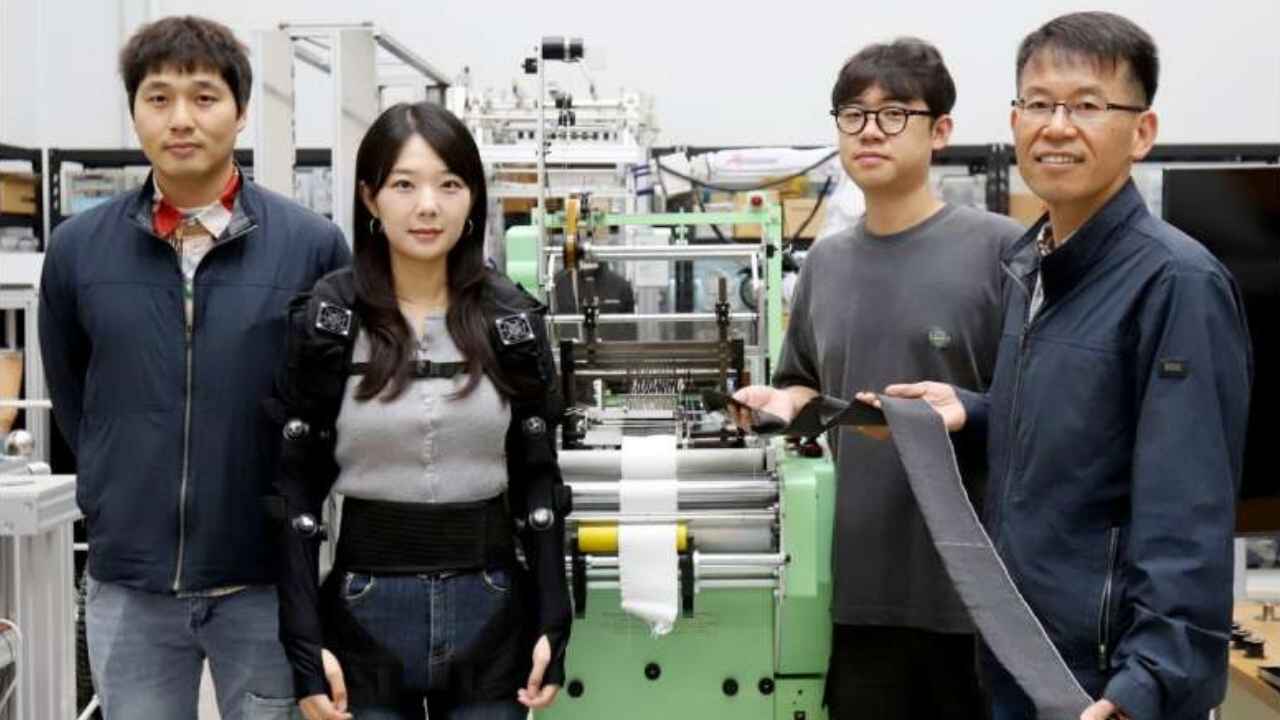
Scientists at the Korea Institute of Machinery and Materials (KIMM) developed an automated weaving system that spins shape-memory alloy coils thinner than a strand of hair.
Despite weighing less than half an ounce, this new material can lift about 33 pounds. That makes it light, flexible, and strong enough to power the next generation of wearable robotics.

Credit: KIMM
A new way to build strength into clothing
Until now, most wearable robots have relied on motors or pneumatic systems. These made them bulky, loud, and expensive. They also limited how easily a person could move.
KIMM’s solution replaces the metal core of earlier coil designs with natural fiber. This shift allows the yarn to stretch more freely while keeping its power. The upgraded weaving system now produces these fabric muscles continuously, paving the way for large-scale manufacturing.
The result is a lightweight actuator that moves naturally with the body. It can support multiple joints at once, like the shoulders, elbows, and waist, without restricting movement.

Credit: DOI
Real results from early testing
The team built the world’s first clothing-type wearable robot weighing less than 4.5 pounds. In testing, it cut muscle effort by more than 40% during repetitive work.
A smaller version designed for shoulder support weighs only about 1.8 pounds. In hospital trials at Seoul National University Hospital, patients with muscle weakness improved their shoulder movement by more than 57%.
These results show that fabric muscles can do much more than help factory workers; they can restore independence and mobility for people who need it most.
Credit: KIMM
What this means to you
This new kind of wearable tech could one day show up in your daily routine. Picture a jacket that quietly helps lift groceries, or a work shirt that reduces strain during long shifts. For people in recovery, it could offer gentle, continuous support that makes movement easier and less painful.
Healthcare professionals could see fewer injuries, while patients gain more freedom. And in industries like construction and logistics, these fabric muscles could reduce fatigue and boost safety.
Related Links:
- Best wearable cutting edge tech
- Best wearable devices to track your blood oxygen levels
- Smart wearable tracks your hydration in real time
Kurt’s key takeaways
KIMM’s success with automated fabric muscle production marks a turning point for wearable robotics. By weaving strength into soft, flexible materials, engineers are closing the gap between machine power and human comfort. As this technology spreads from labs to workplaces and homes, the idea of clothing that truly supports you, physically and practically, is becoming a reality.
Would you wear robotic clothing if it meant less strain, more strength, and greater freedom every day? Let us know in the comments below.
FOR MORE OF MY TECH TIPS & SECURITY ALERTS, SUBSCRIBE TO MY FREE CYBERGUY REPORT NEWSLETTER HERE
Copyright 2025 CyberGuy.com. All rights reserved. CyberGuy.com articles and content may contain affiliate links that earn a commission when purchases are made.