Robot soccer player dents wall with terrifying kicks
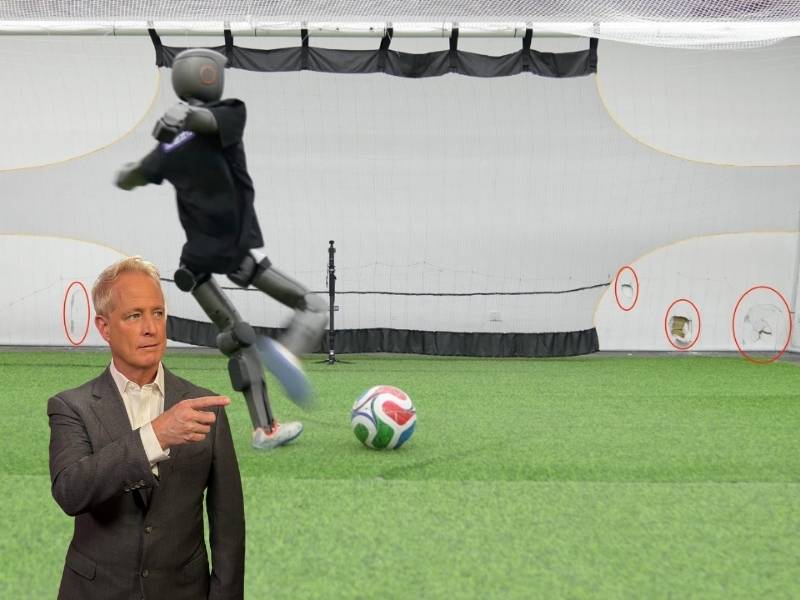
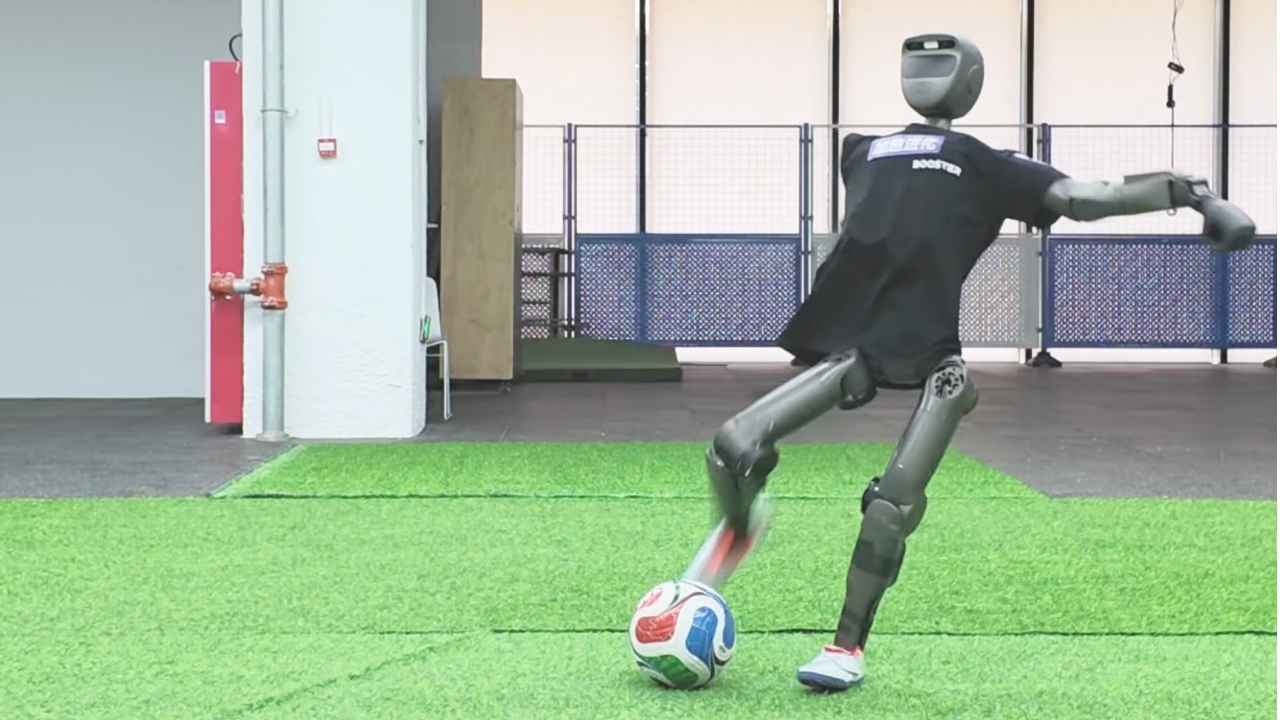
- Booster Robotics’ T1 humanoid robot can chase, dribble, pass, shoot and recover after falling.
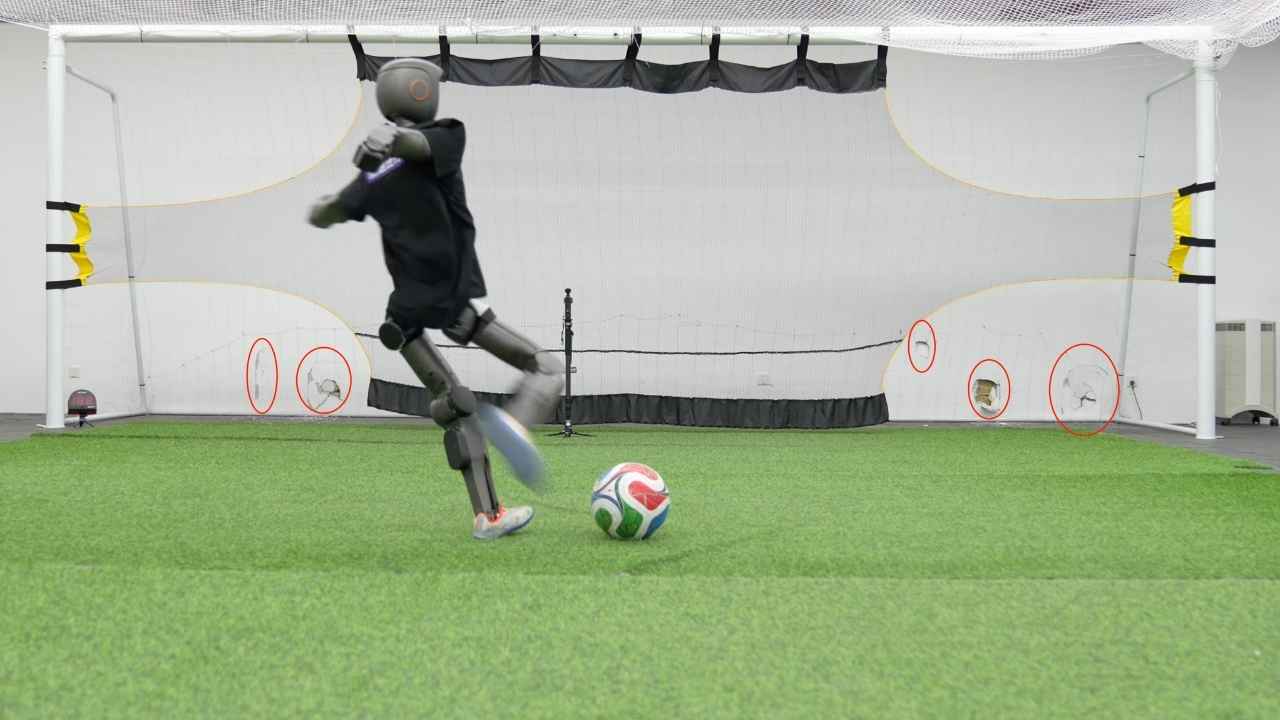
- A viral video shows the robot kicking soccer balls hard enough to leave visible dents in a lab wall.
- Robot soccer helps engineers test balance, movement and decision-making in fast-changing situations.
- The powerful kicks raise new questions about how humanoid robots should be controlled around people.
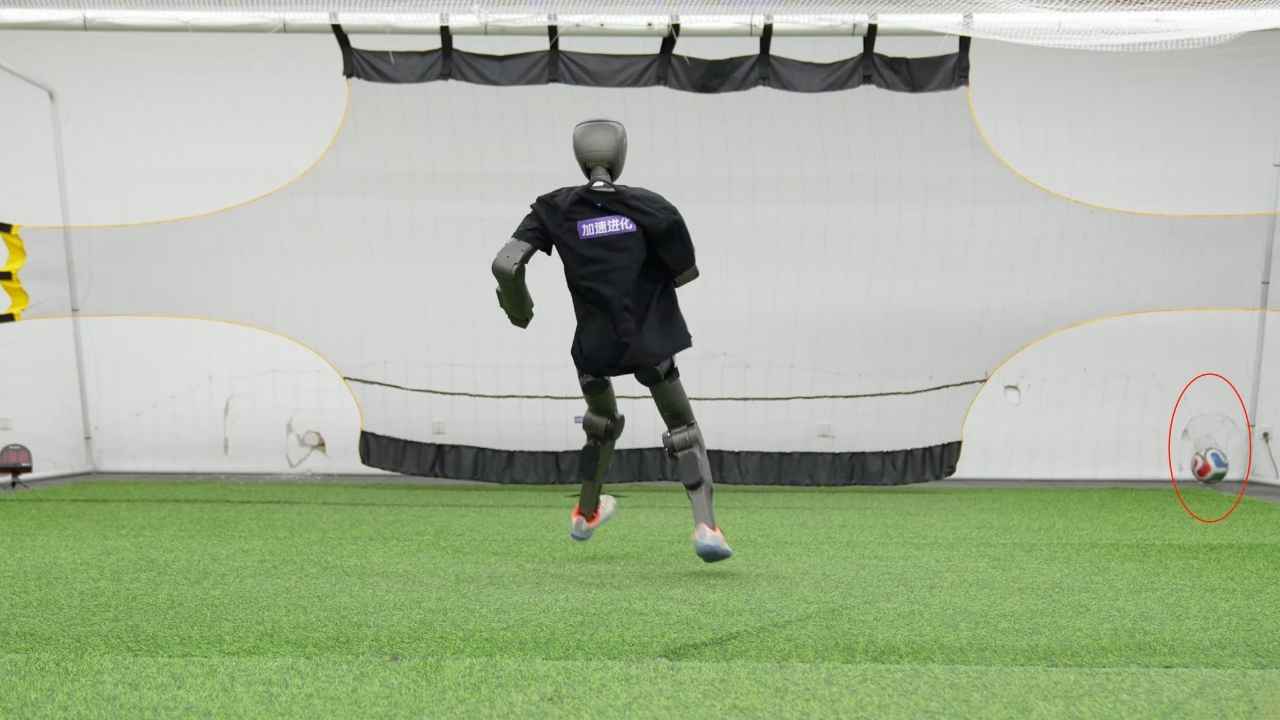
A robot soccer player just gave goalkeepers another reason to feel nervous. Booster Robotics titled its YouTube video “Try Stopping This Robot,” and after watching its T1 humanoid hammer soccer balls toward a goal, you can see why.
Most of the kicks hit the curtain behind the net. But several shots appear to hit with enough force to leave visible impact marks and dents in the wall. That part is what everyone is talking about.
At first, it just looks like a viral robot soccer video. Then the wall damage makes the whole thing feel a lot more serious. This video also raises an important question: What happens if someone were to end up in the path of a soccer ball kicked by one of these robots?
What is the Booster T1 humanoid robot?
The Booster T1 is a humanoid robot from Beijing-based Booster Robotics. According to Booster, the T1 stands about 3 feet, 10 inches tall and weighs about 66 pounds. Booster says the T1 has 23 to 41 degrees of freedom, depending on the configuration. In everyday terms, that means it has enough moving joints to walk, turn, balance and perform athletic movements.
The company also says the T1 can walk for about two hours and stand for about four hours on a charge. It supports open-source tools, software frameworks and API interfaces. That makes it easier for teams to train the robot for new tasks. The company also says more than 50 robotics teams and research institutes already use the platform.
Credit: Booster Robotics
How robot soccer helps train humanoid robots
There is also a serious reason companies test robots this way. Soccer forces a humanoid robot to deal with movement, balance and split-second changes. The ball does not stay still. The robot has to adjust its body, shift its weight and decide what to do next. That makes soccer a useful test for machines that may one day work around people.
Those lessons can carry beyond the soccer field. A robot that learns how to recover from a fall or adjust to a moving object could be more useful in a warehouse, lab or disaster zone. That is why robot soccer has become a way for engineers to test how these machines handle pressure when the action does not go perfectly.
Credit: Booster Robotics
Booster T1 robot is built for developers
The T1 is meant for research and development. Booster positions the robot as a platform for schools, labs and robotics teams. Developers can use it to test software, train motion models and build new robot behaviors.
The company also offers RoboCup-related tools, including an open-source reinforcement learning framework and a demo system. That demo system covers perception, localization and decision-making for robot matches.
In other words, the T1 works like a serious robot body that developers can teach. That also explains why the wall-denting video is such a strong showcase. It shows the power, balance and control of these robots.
Credit: Booster Robotics
Robot soccer power raises safety concerns
A robot strong enough to dent a wall can damage more than drywall. If a system fails, a powerful leg or arm could hurt someone nearby. That does not mean every humanoid robot poses a danger. It means companies need strong guardrails before these machines move into homes, hospitals, stores or public spaces.
Force limits matter. Emergency stops matter. Testing environments matter. Clear rules about where robots can operate matter. A robot in a lab can be impressive. A robot near the public needs a much higher safety bar.
RoboCup robot soccer has a bigger goal
Booster’s T1 is also part of the RoboCup world, which is basically an international robot soccer competition. But RoboCup isn’t only about robots kicking a ball around a field. The long-term goal is much bigger. RoboCup wants fully autonomous humanoid robots to eventually beat the human World Cup champions under official soccer rules.
That may sound like a wild idea. However, there is serious research behind it. Robot soccer forces teams to improve how these machines balance, see the field, react to movement and make decisions on their own. Booster says the T1 was built around robot soccer and RoboCup standards. The company also offers tools that help teams create robot soccer demos more quickly.
So while robot soccer may look like a game, it is also helping engineers figure out how humanoid robots could become more capable in places far beyond the soccer field.
What this means to you
You may not care about robot soccer. Still, this kind of demo says a lot about the future of everyday robotics. Humanoid robots are learning to move with more confidence. They can balance better, recover faster and use their bodies with more force. That progress could eventually help with useful jobs, including warehouse work, elder care support or disaster response.
At the same time, stronger robots create new questions. Who checks their safety? Who sets the rules? Who is responsible when a robot breaks something or injures someone? The T1 video shows why the next phase of robotics really needs testing, transparency and accountability.
Related Links:
- A wheeled robot may beat humanoids into your home
- Are humanoid robots now coming for retail jobs?
- Humanoid robot cleans first US apartment
Kurt’s key takeaways
This robot soccer video makes you stop and think. Booster Robotics’ T1 can kick a soccer ball with enough force to leave visible dents and impact marks in a wall. That to me is scary. It also raises a real safety question. As humanoid robots get stronger, companies will need to prove they can control that power around people. A robot kicking soccer balls in a lab is one thing. A robot near players, workers or bystanders is a very different story. Robot soccer may look like a game today. But it may also be showing us what tomorrow’s machines will be able to do. That is why it is important to keep an eye on this technology as it develops.
When you see a robot kick with this much force, does it make you excited about what is coming next, or worried about how safe these machines will be around people? Let us know in the comments below.
FOR MORE OF MY TECH TIPS & SECURITY ALERTS, SUBSCRIBE TO MY FREE CYBERGUY REPORT NEWSLETTER HERE
Copyright 2026 CyberGuy.com. All rights reserved. CyberGuy.com articles and content may contain affiliate links that earn a commission when purchases are made.