Thief used a Waymo as a getaway car
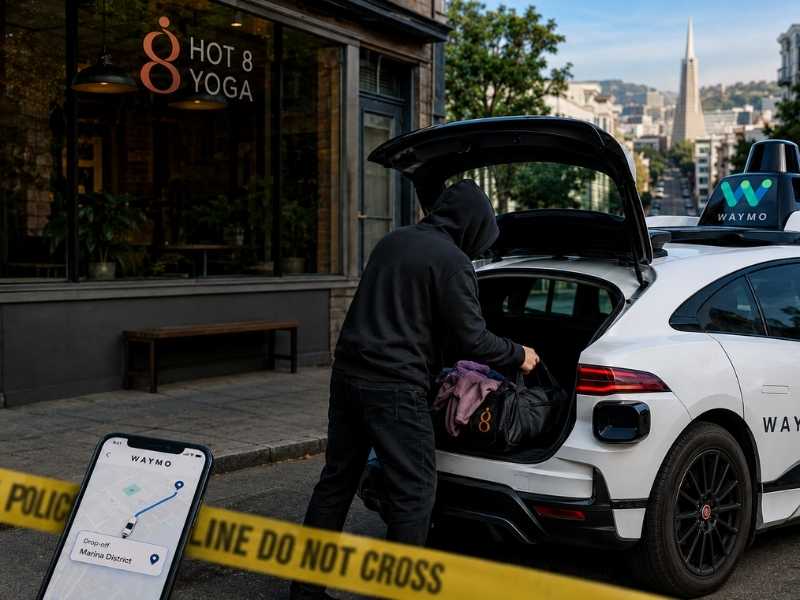
- Police say a burglar used a Waymo robotaxi as a getaway car after breaking into a San Francisco yoga studio.
- The case shows how self-driving cars can become witnesses, evidence holders or part of a crime scene.
- Investigators sought Waymo account data and vehicle footage, but the evidence reportedly failed to identify a suspect.
- The case raises new questions about robotaxi privacy, police access and how long vehicle footage should be kept.
A getaway car with no driver? That is a new one. Police say that is what happened outside Hot 8 Yoga in San Francisco’s Marina district. According to police records, a burglar slipped inside the studio, grabbed activewear and got out in under three minutes. Waiting outside was a Waymo robotaxi.
The suspect allegedly loaded the stolen clothing into the trunk, climbed in and rode away as if the whole thing were a normal pickup.
That is what makes this case so wild. A basic burglary suddenly turned into a bigger question about self-driving cars, privacy and police evidence. What happens when a robotaxi becomes part of a crime scene?

Credit: Waymo
How a Waymo robotaxi became the getaway car
The suspect allegedly used the autonomous vehicle the same way someone might use a regular ride-hail car. The Waymo vehicle dropped him off near the yoga studio, waited while the burglary happened and then drove him away. That is the part that makes you stop and say, wait, what?
There was no driver to look back and wonder why someone was loading stolen activewear into the trunk. No one behind the wheel to say, “Something feels off here.” The car simply followed the ride request.
Police believe this may be San Francisco’s first known case of someone using a self-driving car to flee a crime scene. And yes, the stolen haul reportedly included men’s shorts. That bizarre detail gives the whole thing a strange twist. But underneath it all, there is a real question here. What happens when a robotaxi becomes part of the crime?
Why the Waymo getaway car case is hard to solve
At first, this sounds like an easy case to solve. Waymo vehicles have cameras. Riders need accounts. Payment information is usually tied to the trip. So, you might think the police would have a clear trail. That did not happen here.
Police reportedly obtained a search warrant for Waymo account information and footage from the vehicle. The detective on the case said the account information did not lead police to the suspect. He also said the company no longer had interior footage by the time the warrant was filed months later.
The outside footage had another issue. Faces were blurred for privacy. That created a strange twist. The same privacy protections that help protect innocent bystanders may also make it harder to identify someone suspected of a crime.
CyberGuy reached out to SFPD for an update on the case. As of publication, the department had not announced an arrest or publicly identified a suspect.

Credit: Waymo
Waymo says it balances safety and privacy
When contacted by CyberGuy, Waymo declined to comment on this specific burglary. More broadly, Waymo says it carefully reviews each law enforcement request to make sure it satisfies applicable laws and has a valid legal basis. The company says it closely scrutinizes those requests and may narrow the scope or push back when needed.
Waymo also says it does not use facial recognition or other biometric identification technologies to identify people. That detail is important here because these cars see a lot as they move through a city. Waymo says its cameras and sensors help the vehicle understand its surroundings and drive safely in real time. The company also says that information helps improve the Waymo Driver over time. In other words, Waymo says its technology can recognize that it sees a person, but it does not match that person to an individual identity.
To me, that is where this story gets complicated. If a real crime happens, you want the police to have useful evidence. At the same time, you probably do not want every self-driving car turning into a rolling surveillance camera with no clear limits. That balance between safety, privacy and police access may become a much bigger issue as robotaxis show up in more cities.
Why robotaxis could complicate crime investigations
This case shows how quickly an old-fashioned crime can run into new technology. A burglar once needed a friend, a taxi or a stolen car. Now, someone can call a driverless ride with an app and leave the scene without ever dealing with a human driver.
That creates a problem for the police. If the ride was ordered with stolen information or a burner phone, the account may not point to the person who actually committed the crime. And even with all those cameras, the footage may not show what investigators need.
That is the part that stands out to me. We often assume more cameras mean more answers. But this case shows that assumption can fall apart fast. If key video gets deleted, faces stay blurred or the account information leads nowhere, a high-tech getaway car may still leave police with very old-fashioned detective work.
What this Waymo case means to you
If robotaxis operate where you live or where you travel, this story should get your attention. These cars are no longer test vehicles quietly roaming around a few streets. They are picking people up, dropping them off and now, in this case, showing up in a police investigation.
That is what makes this so important. A self-driving car can become a witness, a source of evidence or even the ride someone uses to leave a crime scene.
At the same time, privacy protections can create a real tradeoff. Blurring faces may protect people walking down the street who have nothing to do with a crime. But it may also limit what police can use later.
And this case proves something else. Cameras alone do not guarantee answers. A vehicle can record plenty of data and still miss the one image, account detail or clue investigators need.
For riders, here is the part to remember. A robotaxi may feel private because no driver sits up front. But it still leaves a digital trail. Before you climb in, assume the trip, the account and some vehicle data may be recorded.

Credit: Waymo
How to protect your privacy in a robotaxi
This case also gives riders something to think about. A robotaxi may feel more private because no driver sits up front. But the vehicle can still collect trip details, account information and sensor data.
Check the robotaxi privacy policy
Review the company’s privacy policy so you understand what it collects, how long it may keep certain data and when it may share information with law enforcement. You do not need to read every line like a lawyer. Look for sections about cameras, audio, trip history, account data and legal requests.
Secure your ride-hail account
Use a strong, unique password for your ride-hail account, and consider using a trusted password manager such as NorPass to create and store it securely. Turn on two-factor authentication (2FA) when available. Also, keep your phone locked with a passcode, Face ID or fingerprint protection. If someone gets into your phone, they may also get into your ride apps.
Be careful what you say during the ride
Avoid sharing sensitive personal details during a robotaxi ride unless you really need to. That includes financial information, passwords, medical details or private family matters. Also, be careful about phone calls on speaker. Even without a human driver, you should treat the space like a connected vehicle.
Protect your payment information
Use a credit card instead of a debit card when possible. Credit cards often offer stronger fraud protections if an account gets compromised. Check your ride receipts and payment alerts. If you see a trip you did not take, report it right away.
Know what to do if something goes wrong
If you feel unsafe during a ride, use the app’s help or emergency option. Take screenshots of your trip details if you can do so safely. If you see a robotaxi near a crime or emergency, remember that useful footage may depend on timing and legal process. Police may need a warrant or another valid request before a company turns over data. That gap between what the car saw and what investigators can later use can make a big difference.
Related Links:
- Would you ride in Waymo’s new Ojai robotaxi?
- Waymo teams up with Waze to spot potholes faster
- Waymo’s cheaper robotaxi tech could help expand rides fast
Kurt’s key takeaways
A burglar using a Waymo as a getaway car sounds almost ridiculous, but the privacy questions are very real. These vehicles can capture a lot of what happens around them. Still, that does not mean police will always get clear evidence or a quick answer. This case also shows why timing matters. If footage is deleted, blurred or tied to a stolen account, a high-tech vehicle may not solve the crime as easily as you might expect. To me, this is where cities need to catch up. Robotaxis are already on the road. Now we need clearer rules for how long footage is kept, when police can access it and how innocent people’s privacy is protected.
Would you feel safer knowing robotaxis keep more footage for police, or more concerned about what that could mean for your privacy? Let us know your thoughts in the comments below.
FOR MORE OF MY TECH TIPS & SECURITY ALERTS, SUBSCRIBE TO MY FREE CYBERGUY REPORT NEWSLETTER HERE
Copyright 2026 CyberGuy.com. All rights reserved. CyberGuy.com articles and content may contain affiliate links that earn a commission when purchases are made.