



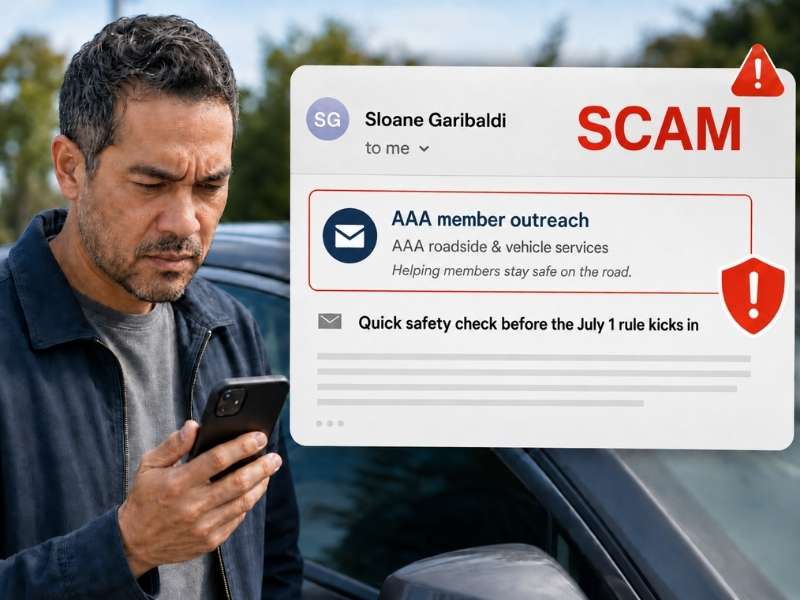
- A suspicious AAA-themed email uses car safety fears to push drivers toward a questionable link.
- The sender address, shared URL and missing official branding are major warning signs.
- The email cites a real-looking federal rule, but the claim does not appear to match the regulation.
- Never click surprise safety checks, opt-out links or forms in emails you did not expect.
A strange email shows up in your inbox, and at first, it sounds helpful. It uses a familiar company, leans into family safety and warns that you may need to act before a deadline.
That is what makes this suspicious AAA-themed email we received worth warning you about. It reads like a friendly safety reminder from someone who claims to work in AAA’s member outreach. It isn’t the kind of message most of us would delete right away.
Still, something feels off. Before you click any link or trust the warning, it helps to slow down and look for the signs that this could actually be one big scam.
What this fake AAA email scam is
The email appears to use car safety as bait, then pushes you toward a link that should raise concern.
A message built around family safety
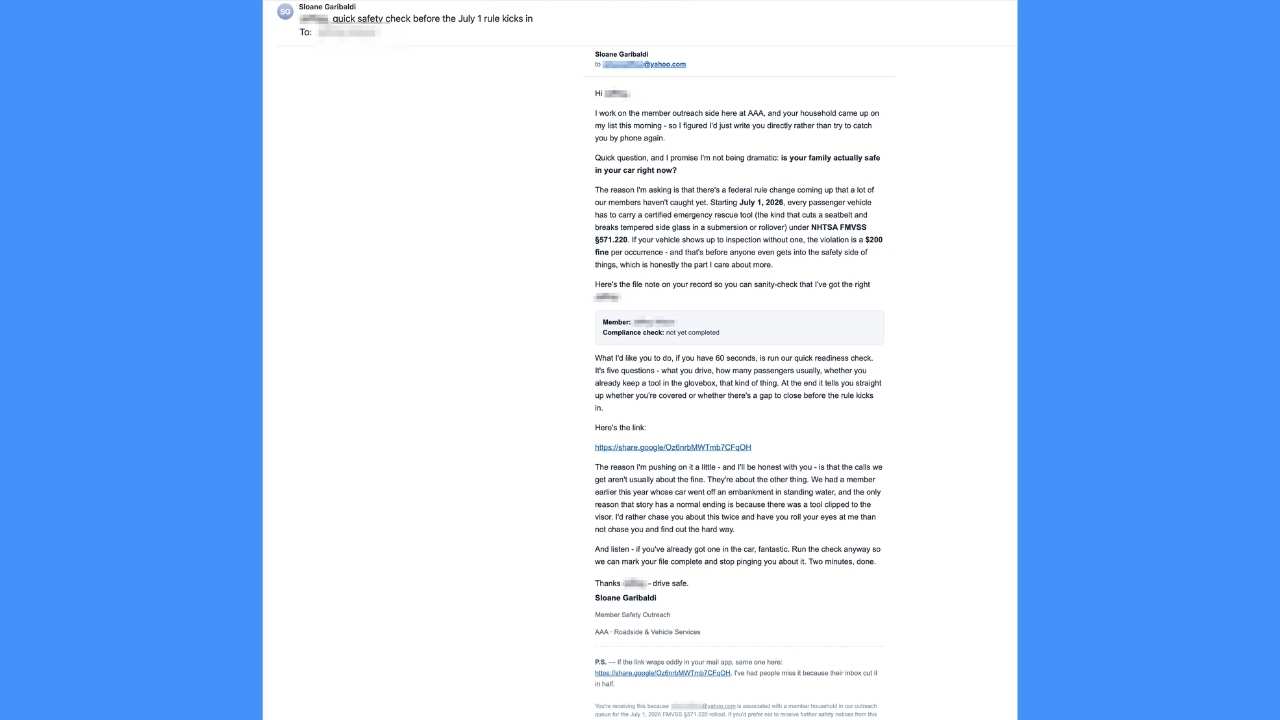
The email claims to come from someone named Sloane Garibaldi at AAA. It says the recipient’s household appeared on a member outreach list. Then it asks whether the family is “actually safe” in the car. That wording makes the message feel personal. It also turns a random email into something that sounds urgent.
A supposed rule with a deadline
The email says a new federal rule starts on July 1, 2026. It claims every passenger vehicle must carry a certified emergency rescue tool that can cut a seatbelt and break glass. Then it adds a warning about a $200 fine per occurrence. That kind of deadline can make any driver worry. However, the message does not point to a government site or an official AAA page. Instead, it pushes a shared Google link.
A fake status check
The email includes a small “compliance check” box. It lists the recipient as a member and says the check has not been completed. That detail makes the message feel like an account notice. It also creates a small task the reader may want to fix. Scammers use that tactic often. They make the action look quick, then hope you click before you question the message.
Red flags in the fake AAA email
Several clues inside the message suggest this email deserves to be treated as suspicious.
1) The real sender address looks suspicious
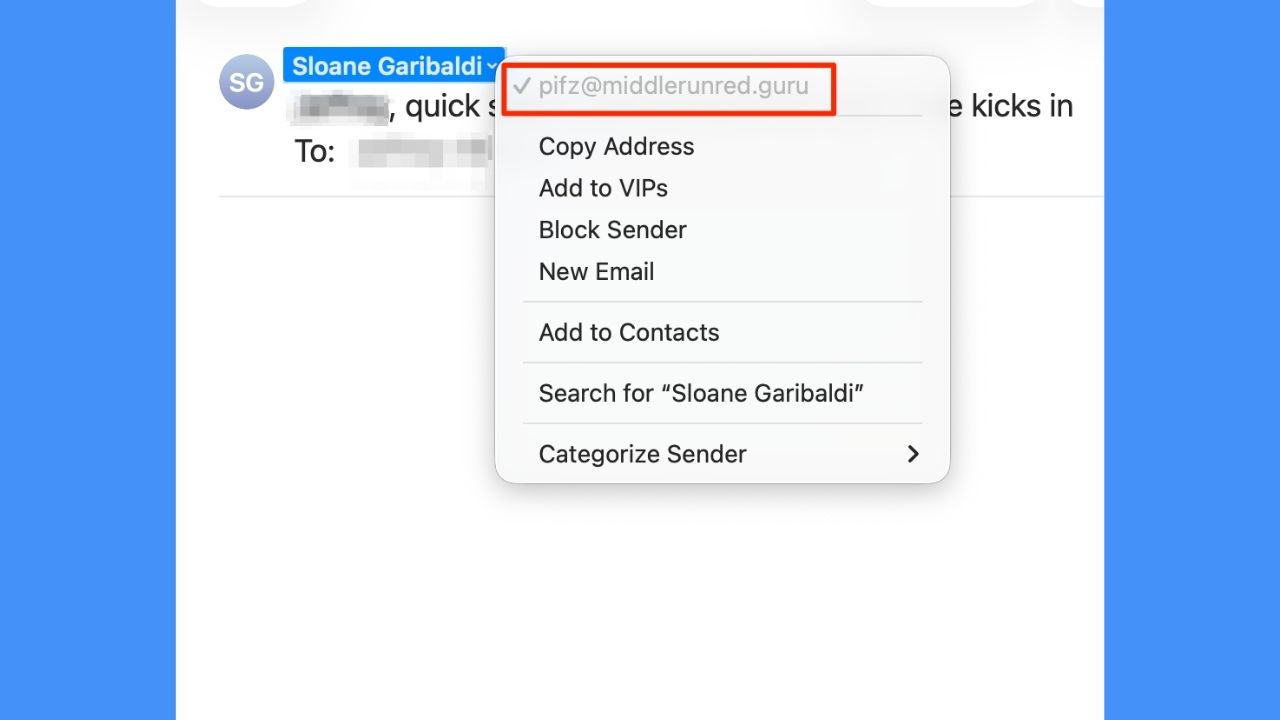
The display name says Sloane Garibaldi, but the expanded sender address shows pfiz@middlerunred.guru. That domain has no clear connection to AAA. Display names can be faked. The real sender address often tells a very different story.
2) The email does not use official AAA branding
The message uses the AAA name, but it does not include the official AAA logo or the kind of polished branding you would expect from a real member safety notice. That alone does not prove an email is fake. However, it adds to the concern when combined with a strange sender address, a shared link and urgent language. A real company email usually looks consistent with the brand’s website, app and past messages.
3) The link goes through a shared URL
The message uses a share. Google link instead of an official AAA website. That should make you pause. Shared links can hide the final destination. They can also lead to fake forms that collect personal details, account information, vehicle data or payment details. A real AAA notice should point to an official AAA domain or tell you to log in through the AAA app.
4) The email pushes fear before facts
The message asks whether your family is safe. It mentions a deadline. It warns about fines. Then it says the check only takes 60 seconds. That is a pressure move. The scammer wants clicking to feel easier than checking.
5) The rule citation does not match the claim
The email cites NHTSA FMVSS 571.220. That sounds convincing until you check what the rule covers. That federal standard deals with school bus rollover protection. It does not appear to require everyday passenger vehicles to carry an emergency rescue tool. Scammers often use official-sounding language because many people will not look it up.
6) The tone feels too casual for a legal warning
The message uses friendly lines like “I promise I’m not being dramatic” and “I’d rather chase you about this twice.” That tone may be meant to lower your guard. It sounds like someone trying to help. Still, a real safety or compliance notice should not arrive from a strange domain with a shared link and casual pressure.
7) The fine print repeats the suspicious link
The bottom of the email includes a P.S. that says the link may “wrap oddly” in your mail app. Then it repeats the same shared link so you can click it again. It even adds, “I’ve had people miss it because their inbox cut it in half,” which sounds casual but also gives the sender another excuse to push the link. That may seem helpful, but it keeps steering you toward the same questionable destination. Legitimate companies do not need to explain why a safety link looks strange in your inbox.
The fine print also says the recipient’s email address is tied to a “member household” in an outreach queue for the July 1, 2026, FMVSS §571.220 rollout. That wording sounds official, but it gives no member number, no verified AAA account link and no official AAA contact path. Even the opt-out line deserves caution. Scam emails often include unsubscribe or opt-out links to make the message look legitimate. In this case, “opt out here” could confirm your email address is active or send you to another suspicious page.

AAA says it did not send the email
We reached out to AAA, and the organization confirmed the message did not come from them.
“AAA did not send those emails, and they could potentially be malicious,” an AAA spokesperson told CyberGuy. “We remind members to avoid clicking on suspicious links and contact us directly if they have questions or concerns.”
That confirmation makes the warning even clearer: do not click the link in the email. Go directly to AAA if you have any questions about your membership or a safety notice.
Why this fake AAA email could fool drivers
The scam feels believable because it mixes a practical safety concern with a personal tone and an official-sounding reference.
Car safety gets attention
Most people want to protect their family on the road. A seatbelt cutter or window breaker can also sound useful in a real emergency. That makes the topic believable. The issue is the email, not necessarily the idea of keeping an emergency tool in your vehicle.
Personal details can lower your guard
The email uses the recipient’s actual first and last name. Scammers often use personal details to make messages feel legitimate. A name, city, phone number or family reference can make someone hesitate before deleting an email.
Official names add fake credibility
The email mentions NHTSA and a federal motor vehicle safety standard. Those details make the message look researched. However, one official name does not make the claim true. Scammers count on people trusting the reference without checking it.

How to stay safe from fake AAA emails
A few quick checks can help you avoid bad links, fake forms and phishing attempts that pretend to come from trusted brands.
1) Check the sender address
Do not rely on the display name. Click or tap the sender to see the full address. If the domain does not match the company, treat the message as suspicious.
2) Look for missing or sloppy branding
Pay attention to the overall look of the email. Missing logos, odd spacing, plain formatting or generic design can be warning signs. Also, compare the message with past emails from the same company. If the style looks off, do not click.
3) Skip links in urgent emails
Avoid clicking links in surprise emails that mention deadlines, penalties or account problems. Instead, open your browser and go directly to the company’s official website. You can also use the company’s app.
4) Use strong antivirus software
Strong antivirus software such as Norton Antivirus Plus can help block malicious links, phishing pages and dangerous downloads. It can also warn you before you land on a risky site. That extra alert can stop a quick mistake from becoming a bigger problem.
5) Do not fill out surprise forms
A fake “readiness check” can collect more than you realize. Do not enter your name, address, phone number, vehicle details, payment information or account login through an unexpected email link.
6) Verify legal claims on your own
If an email cites a rule, law or government agency, search for it separately. Use official government websites or trusted legal sources. Do not use the link inside the message to verify the message.
7) Use a data removal service
Scam emails become more convincing when criminals know personal details about you. Data brokers and people-search sites can expose names, addresses, phone numbers and relatives. A data removal service such as Incogni can help reduce that exposure. It will not remove everything, but it can make you a harder target.
8) Report and block the sender
Mark the message as phishing or junk. Then block the sender and delete the email. If the message claims to come from AAA, contact AAA through its official website or app to report it.
9) Warn someone who may click quickly
This kind of scam can fool anyone. It may be especially risky for older relatives, new drivers or anyone who takes safety notices seriously. A quick warning could help them avoid a bad link and major headaches down the road.
Related Links:
- Fake CAPTCHA scam can hack your computer
- Geek Squad billing scam email warning
- AI cybersecurity risks and deepfake scams on the rise
Kurt’s key takeaways
This fake AAA email works because it feels personal and practical. It talks about family safety. It uses a deadline. It cites a federal rule. Then it pushes a link that does not belong in a legitimate AAA notice. That is the real lesson here. When an email makes you feel rushed, slow down. Check the sender address. Look at the link. Notice the branding. Verify the claim somewhere else. You may still decide to keep an emergency tool in your car. Just do not buy one, register one or share personal information because a suspicious email told you to act fast.
Should companies and email providers be doing more to stop scam messages like this before they ever hit your inbox? Let us know in the comments below.
FOR MORE OF MY TECH TIPS & SECURITY ALERTS, SUBSCRIBE TO MY FREE CYBERGUY REPORT NEWSLETTER HERE
Copyright 2026 CyberGuy.com. All rights reserved. CyberGuy.com articles and content may contain affiliate links that earn a commission when purchases are made.