



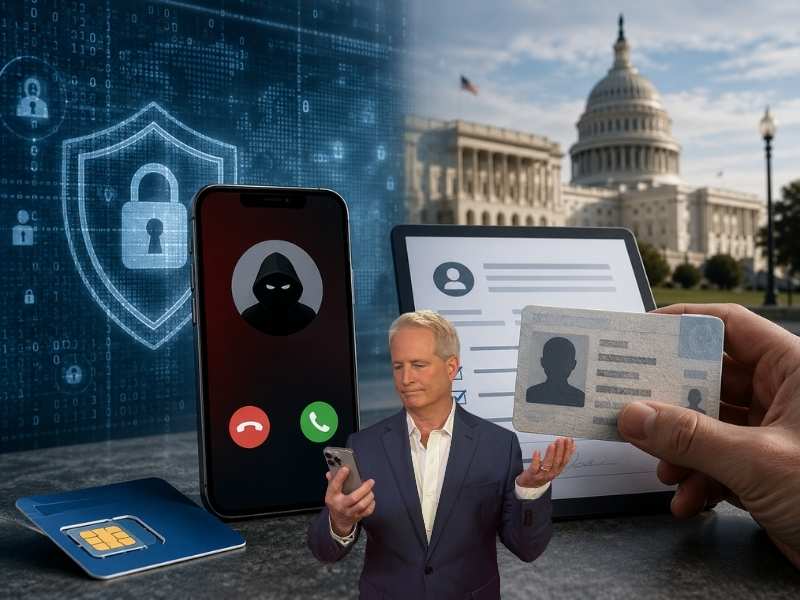
- The FCC is considering new phone identity rules that could require more personal information before service begins.
- The proposal could affect many new or renewing customers, especially people who rely on prepaid phone service.
- Privacy advocates warn the rules could make safe, private phone access harder for abuse survivors, journalists and others.
- The FCC says stronger customer checks could help stop scammers before they get onto phone networks.
Buying a phone without tying it directly to your identity could get much harder. The Federal Communications Commission is considering tougher “know your customer” rules for voice providers.
The proposal would push phone companies to collect and keep more personal information before giving many new or renewing customers access to service. That could include your name, physical address, government-issued identification number and an alternate phone number.
The FCC says the goal is to make life harder for scammers, robocallers and criminals who abuse phone networks. That sounds reasonable at first. Nobody wants more fake bank calls, Medicare scam texts or urgent messages from crooks pretending to be family members. Yet this proposal raises a much bigger question. How much personal privacy should we give up to fight scam calls?

What the FCC phone ID proposal would require
The FCC phone ID proposal focuses on identity checks for originating voice providers. Those are the companies that allow calls to enter the phone network. Right now, the FCC already expects providers to take steps to know their customers and stop illegal calls. The new proposal would make those duties more specific. The FCC is asking whether providers should be required to obtain and retain certain customer information before granting service. At a minimum, that could include:
- Name
- Physical address
- Government-issued identification number
- Alternate telephone number
The FCC is also asking how these rules should apply to “new and renewing” customers. That phrase is important. A narrow version could focus on people opening new accounts. A broader version could reach people who switch plans or renew service with a current provider. For high-volume customers, including some business and foreign customers, the FCC is also asking whether providers should collect more information. That could include the intended use of the service and the IP address used to place calls, when applicable.
The FCC is also asking whether providers should retain KYC records for four years after the customer relationship ends, tied to the statute of limitations for certain illegal calling violations.
Why the FCC wants stronger phone identity checks
The FCC says scammers hide behind phone calls and texts to rip people off, then disappear before anyone can track them down. Anyone with a phone knows this problem has gotten out of hand. Most of us now look at an unknown number and assume trouble before we even answer.
The agency believes tougher identity checks could make it harder for bad actors to get onto phone networks in the first place. It also says better customer records could help investigators connect the dots after a scam call or text causes harm.
Here is where the proposal gets bigger. The FCC also asks whether stronger records could help law enforcement investigate crimes that go beyond scam calls, including national security threats and abuse in text messaging networks. So while robocalls are the headline, this proposal reaches much further. It could move phone service closer to an identity-check model that goes well beyond robocalls.
Why burner phones could become harder to buy
The FCC proposal does not specifically say it will ban burner phones. Still, the practical impact could be significant. A burner phone usually refers to a prepaid phone or phone line with no clear identity link at the point of purchase. TV shows often connect burner phones with criminals. Real life is more complicated.
People use prepaid or private phone lines for plenty of lawful reasons. A domestic abuse survivor may need a safe phone that an abuser cannot easily trace through shared accounts. A journalist may need to protect a source. A whistleblower may need to call without exposing a personal number. Someone without a stable address may rely on prepaid service because it is easier to obtain.
If phone companies must collect a government ID number and physical address before service begins, anonymous or lightly identified prepaid service could become far harder to access. That is why privacy advocates see this as more than a robocall rule. They see it as a potential shift in how Americans get basic phone service.
The FCC proposal could affect prepaid phone plans
Prepaid phones are a big part of this story. Some people use them to save money. Others use them because they want more control over what they spend or because a traditional phone plan creates hurdles they would rather avoid.
The FCC is now asking whether prepaid and postpaid customers should face different identity checks. That question is important because prepaid service has long been one of the easiest ways to get a working phone without a lengthy signup process.
A strict final rule could make prepaid service feel a lot more like opening a bank account. For some people, that may only mean another form to fill out. For others, especially someone trying to stay safe or keep a phone line private, it could be a much bigger deal.
The privacy risk behind a phone ID database
The most obvious concern is privacy. The quieter concern is cybersecurity. Phone companies already hold sensitive customer information. Adding government ID numbers, physical addresses and alternate phone numbers would make those records even more valuable to hackers.
If a telecom database gets breached, criminals may use stolen customer data for phishing, identity theft, SIM-swap attacks or stalking. A rule meant to stop scammers could create a richer target for scammers to steal. That to me is scary.
The FCC does ask how providers should protect customer information and how long records should be retained. Those are important questions. Still, better security rules would need real teeth. Sensitive data becomes a liability the moment it gets collected.
What “physical address” could mean for phone customers
The FCC is also asking whether P.O. boxes, shared office locations and similar addresses should count as a customer’s physical address. That detail could create real problems.
Some people do not have a traditional home address. Others may avoid sharing one because of safety concerns. A domestic abuse survivor may use a mailing address that keeps a home location private. A small business owner may use a shared office or mail service. If the final rule limits what counts as a valid address, some people could face a harder path to phone service. That may sound like a compliance detail. For someone trying to stay safe, it could matter a lot.

What happens next with the FCC phone ID proposal
The FCC is taking public comments on the proposal through June 25, 2026. Reply comments are due July 27, 2026. After that, the agency can review feedback from phone companies, law enforcement, privacy groups, consumer advocates and the public.
The final rule could change. The FCC could narrow the requirements, add privacy safeguards, create exceptions or revise major parts of the proposal. For now, this is one to watch closely.
We reached out to the FCC for comment, but did not hear back before our deadline.
How to reduce scam calls and texts now
You do not need to wait for a new FCC rule to protect yourself.
1) Let unknown calls go to voicemail
Do not feel pressured to answer every unknown number. A real caller can leave a message. A scammer wants you on the line fast, before you have a chance to slow down and think.
2) Turn on phone spam protections
On iPhone, go to Settings, tap Apps, scroll down and tap Phone, then go to the unknown caller settings. Choose Silence to send calls from unsaved numbers to voicemail, or choose Ask Reason for Calling if you want unsaved callers to provide more information before your iPhone rings. You can also look under Call Filtering and toggle on Unknown Callers and Spam.
On many Samsung phones, open the Phone app, tap the three dots, tap Settings, tap Caller ID and spam protection and turn it on. Then, scroll down and make sure Block all spam and scam calls is toggled on. Settings may vary depending on your phone model.
3) Avoid links in unexpected texts
Go directly to the company’s app or website instead. That habit can help stop fake toll texts, bank scams and delivery alerts.
4) Reduce the personal info scammers can use against you
Scammers often sound convincing because they already know something about you. That information can come from people-search sites, data brokers, old breaches or public records. Consider using a data removal service such as Incogni to reduce how much of your personal information is floating around online.
5) Block and report suspicious messages
Do not just delete scam texts. On iPhone, open Messages. If you have not opened the message, swipe left on it, tap the Delete button, then tap Delete and Report Spam. If you have already opened it, tap Report Spam at the bottom of the message, then tap Delete and Report Spam. To block the sender, open the conversation, tap the sender’s icon at the top, tap Info, scroll down and tap Block Contact. Apple says reporting spam does not block the sender. Settings and carrier support may vary.
On many Samsung Galaxy phones using Google Messages, open the message, tap the three dots and choose Block and report spam. If you use Samsung Messages, touch and hold the conversation, tap More, then tap Block. Settings may vary depending on your phone model and messaging app.
6) Use antivirus software and a password manager
Strong antivirus software such as Norton Antivirus Plus can help block phishing links and malicious websites before they cause damage. A password manager can also help you avoid reusing passwords if a scammer tricks you into entering login details on a fake page.
7) Turn on account alerts
Turn on bank, credit card and phone carrier alerts so you know quickly if someone tries to make a charge, move money or change your account. Fast alerts can help you stop damage before it spreads.
Related Links:
- Stolen iPhones fuel scary passcode scam
- Text job scam cost him $10K in crypto
- Android fake call detection warns you about scams
Kurt’s key takeaways
The FCC wants to stop scammers before they ever get onto the phone network. I get that. Scam calls and texts are out of control, and they have cost too many people real money. At the same time, the way the FCC is looking at this raises a real privacy concern. Asking phone companies to collect a government ID number, physical address and alternate phone number could change what it takes to get basic phone service in America. The FCC believes stronger customer records could help investigators track scammers after illegal calls happen. The question is whether scammers would still find ways around the rules while people with legitimate privacy needs face new hurdles. A domestic abuse survivor, journalist, whistleblower or person without a stable address may have a much harder time getting a private phone line. That is why any scam-fighting plan needs strong privacy safeguards. Before asking phone customers to hand over more personal information, the FCC should show how this data would reduce scams and how it would be protected.
Would you give your phone carrier a government ID number and physical address if it meant fewer scam calls, or does that go too far? Let us know your thoughts in the comments below.
FOR MORE OF MY TECH TIPS & SECURITY ALERTS, SUBSCRIBE TO MY FREE CYBERGUY REPORT NEWSLETTER HERE
Copyright 2026 CyberGuy.com. All rights reserved. CyberGuy.com articles and content may contain affiliate links that earn a commission when purchases are made.