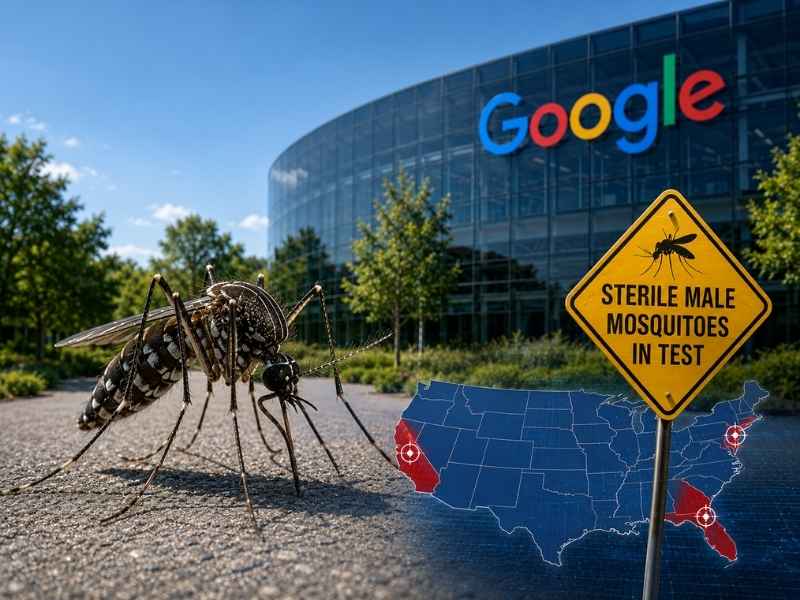



- Google’s Debug project is seeking permission to release sterile male mosquitoes in New Jersey, California and Florida.
- The goal is to reduce mosquito populations that can spread diseases without relying only on pesticides.
- Male mosquitoes do not bite, but the project depends on accurately separating males from females.
- The plan is raising questions about public trust, oversight, safeguards and what happens if the trial fails.
I know what you are thinking. Why on earth would Google want to release millions of mosquitoes? That was my first reaction too.
Usually, when we hear “Google” and “bugs” in the same sentence, we think about software. This time, the bugs are real.
Google’s Debug project is asking federal regulators for permission to release sterile male mosquitoes in New Jersey, California and Florida. The goal is to reduce mosquito populations that can spread disease.
Now the big question is whether this is a smart new way to fight mosquito-borne disease, or a tech-backed experiment that needs much more public scrutiny.
How Google’s mosquito plan is supposed to work
Google’s Debug project says it is using science, automation and engineering to fight disease-carrying mosquitoes. The idea comes from a method called the sterile insect technique.
Here is the basic version. Scientists raise male mosquitoes that cannot produce viable offspring. Then they release those males into the wild. When the sterile males mate with wild females, the eggs do not hatch. Over time, the local mosquito population can shrink.
That part is important. Male mosquitoes do not bite. Female mosquitoes are the ones that bite and can spread disease. So Google isn’t trying to release more biting mosquitoes into neighborhoods. It is trying to release males that can help stop future generations from hatching.
Why Google wants to release mosquitoes
Google’s Debug project sees mosquito control as a public-health and technology challenge. The team says it wants to use engineering, automation and AI tools to reduce disease-carrying mosquito populations.
The idea is to stop “bad bugs” with “good bugs.” That may sound strange, but the science behind it has been studied for decades.
Sterile insect releases have been used against other pests, including fruit flies, screwworms and codling moths. Mosquitoes are harder. They are fragile, difficult to raise at a massive scale and challenging to sort by sex. That is where Debug says Google’s technology can help.
Why sorting male mosquitoes matters
Debug says the process starts by raising sterile male mosquitoes. One approach uses Wolbachia, a naturally occurring bacteria found in many insects.
The bacteria can make males incompatible with wild females that do not carry the same Wolbachia strain. When they mate, the eggs fail to develop.
After that, Debug has to separate males from females. This step matters a lot. If the project releases too many females by mistake, the whole idea becomes much harder to trust.
A Texas mom says she spent the night in jail after speaking up online about dirty water in her town. The case was later dropped, but her story raises a troubling question: could something you post online ever put you at risk?

Join Kurt this Saturday, June 13 at 10 AM ET for quick phone privacy and security fixes.
See Kurt’s 2026 picks for practical tech and everyday upgrades.
That is where Google’s tech background comes in. Debug says its team is using sensors, algorithms, automation and monitoring tools to raise, sort, release and track mosquitoes at scale. In other words, this is mosquito control with a Silicon Valley twist.
Why sterile male mosquitoes could help
Mosquito-borne diseases are a serious global health problem. Some mosquitoes can spread dengue, Zika, yellow fever, chikungunya, West Nile virus and other illnesses.
Traditional mosquito control often depends on pesticides. Those can help, but they can also raise environmental concerns. Mosquitoes can also become harder to control over time.
That is why sterile male releases interest some researchers. The approach targets a specific mosquito population. It also avoids spraying more chemicals into the environment.
If it works, the local mosquito population drops because fewer eggs hatch. That could mean fewer disease risks in areas where these mosquitoes are a problem.
Why residents are worried about Google mosquitoes
Even with the science behind it, the public concern is easy to understand. Nobody likes the phrase “release millions of mosquitoes.” It sounds like the start of a bad summer, not a public-health project.
Some residents also worry about control. Once living insects are released, people want to know what happens next. They want to know who monitors the program, who pays for follow-up work and what happens if the results are not what scientists expected. Those are fair questions.
There is also a trust issue. A project like this can feel very different when a private tech giant is involved. People may support disease prevention and still feel uneasy about a corporation playing such a large role in local ecosystems.
The biggest challenge with sterile mosquito releases
The success of this idea depends on precision. Male mosquitoes do not bite. Female mosquitoes do. So the sorting process has to be extremely accurate.
Debug says it is working on technology to separate males from females quickly. That may include sensors, algorithms and engineering systems that spot biological differences between them.
However, this is the part many people will focus on. If the public is told only males will be released, they will want proof. They will also want clear oversight from regulators. When you are dealing with living insects, “close enough” isn’t the most reassuring phrase.
What the EPA is reviewing
The EPA is reviewing Google’s request for an experimental use permit. The filing involves Wolbachia pipientis contained in live adult male mosquitoes.
The purpose is to test whether Debug’s male mosquitoes can mate with wild females and suppress the population.
The EPA will decide whether to approve or deny the request. If it approves the permit, it can also set conditions for how the project must operate.
What Google mosquitoes could mean for you
Even if you do not live in one of the proposed release areas, this is worth watching. If Google’s project works, more communities may look at sterile mosquito releases as another tool against disease. That could be good news in areas dealing with mosquito-borne illnesses.
At the same time, it raises a larger question. How much public-health work should depend on private companies with their own funding, technology and long-term goals? For many people, the science may sound promising. The setup may still feel uncomfortable. Both reactions can be true.
Related Links:
- Best mosquito repellent products for home and travel
- AI technology can help you swat away mosquitoes
- How to limit what Google collects about you
Kurt’s key takeaways
Google releasing mosquitoes may sound strange, but the goal is real public health. Debug wants to use sterile male mosquitoes to cut down populations that can spread disease. There is a reason scientists are interested. Male mosquitoes do not bite, and sterile insect releases have been studied for decades. Still, communities deserve more than a promise that everything will go as planned. They need clear answers about monitoring, safeguards, costs and what happens if the project fails. Fighting mosquito-borne disease is important. But once living insects are released into the wild, trust and oversight have to come first.
Would you trust Google to help control mosquitoes in your community? Let us know in the comments below.
FOR MORE OF MY TECH TIPS & SECURITY ALERTS, SUBSCRIBE TO MY FREE CYBERGUY REPORT NEWSLETTER HERE
Copyright 2026 CyberGuy.com. All rights reserved. CyberGuy.com articles and content may contain affiliate links that earn a commission when purchases are made.
🎙 Now Streaming: My New Podcast: The CyberGuy Report
Kurt’s Top Deals
Deals move fast and inventory can be limited, so don’t wait too long.
| 🔥 Editor’s pick  Summer entertaining Ninja SLUSHi Machine (26% off) Frozen drinks and slushies at home in minutes. | |
| 💰 Top deal 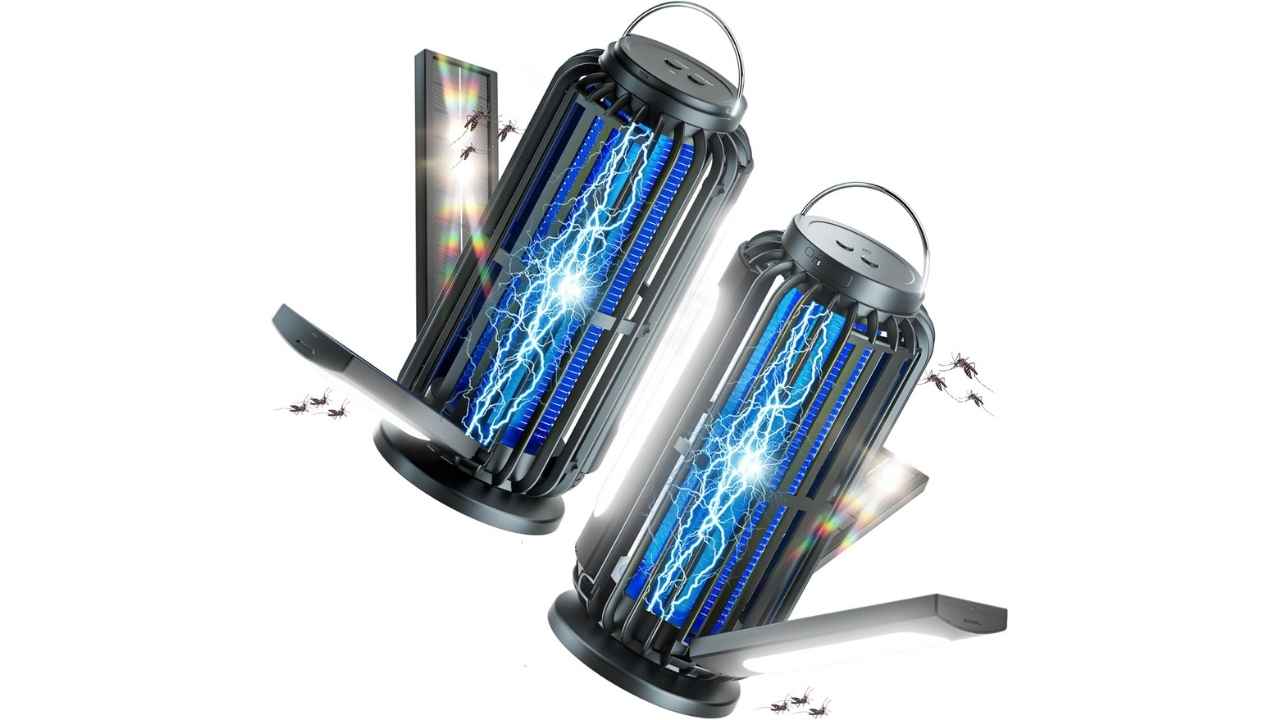 Outdoor essential TYPEC Solar Bug Zapper (36% off) Solar-powered bug zappers for patios and camping. |