



- Scammers are running fake Facebook ads offering USPS stamps at steep discounts.
- USPS sells stamps at face value, so 20% to 65% off is a major red flag.
- Many of these sites use official logos to steal credit card information.
- Buy stamps only from USPS or approved retailers to avoid counterfeit postage.
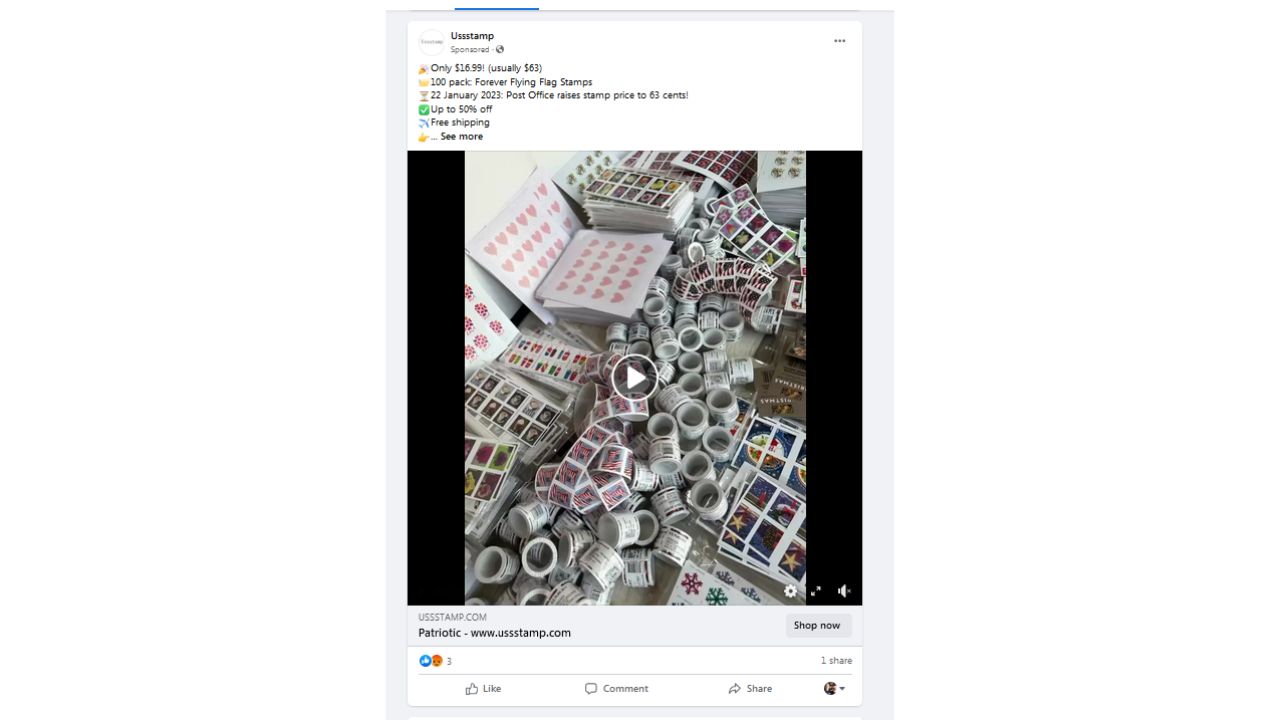
Scammers are once again flooding Facebook with ads promising deeply discounted USPS Forever stamps. The offers look official. The logos appear real. The prices, however, tell a different story. If you’re seeing 40% to 65% off a roll of stamps, you’re not getting a deal; you’re likely looking at counterfeit postage or a credit card scam. Here’s what’s happening and how to protect yourself before you click.
Credit: Patrick K.
The selling of fake postal stamps has been an issue for quite some time now, and the U.S. Postal Service has warned against this. Now, it looks like those items are being advertised on Facebook as well for as low as $19.99 for a roll of 100 stamps. Let’s dive in and discuss what to look out for from these scammers.
The fake USPS ads are back on Facebook
We’re seeing another wave of fraudulent stamp ads circulating on Facebook, and they look convincing at first glance. In the example below, the ad claims to offer “USPS Forever Stamps Christmas Sale” at 65% off – advertising 100 stamps for just $27.51 (usually $78). That kind of discount is a massive red flag.
These ads often:
- Use official USPS logos and branding
- Display real stamp designs to appear legitimate
- Claim limited-time “holiday” or “clearance” sales
- Link to suspicious domains unrelated to USPS
Remember: USPS does not sell stamps at deep discounts. If you see 20%, 40%, or 65% off, it’s almost certainly counterfeit stamps – or worse, a credit card harvesting scam.
Here is one of the current ads being reported by readers:

If you come across one of these ads:
- Do not click the link
- Do not enter payment information
- Report the ad directly on Facebook
- Report the site to the USPS Inspection Service
Scammers rotate domains frequently, so even if one site disappears, another usually pops up quickly.
How do I know if an ad for stamps is fake?
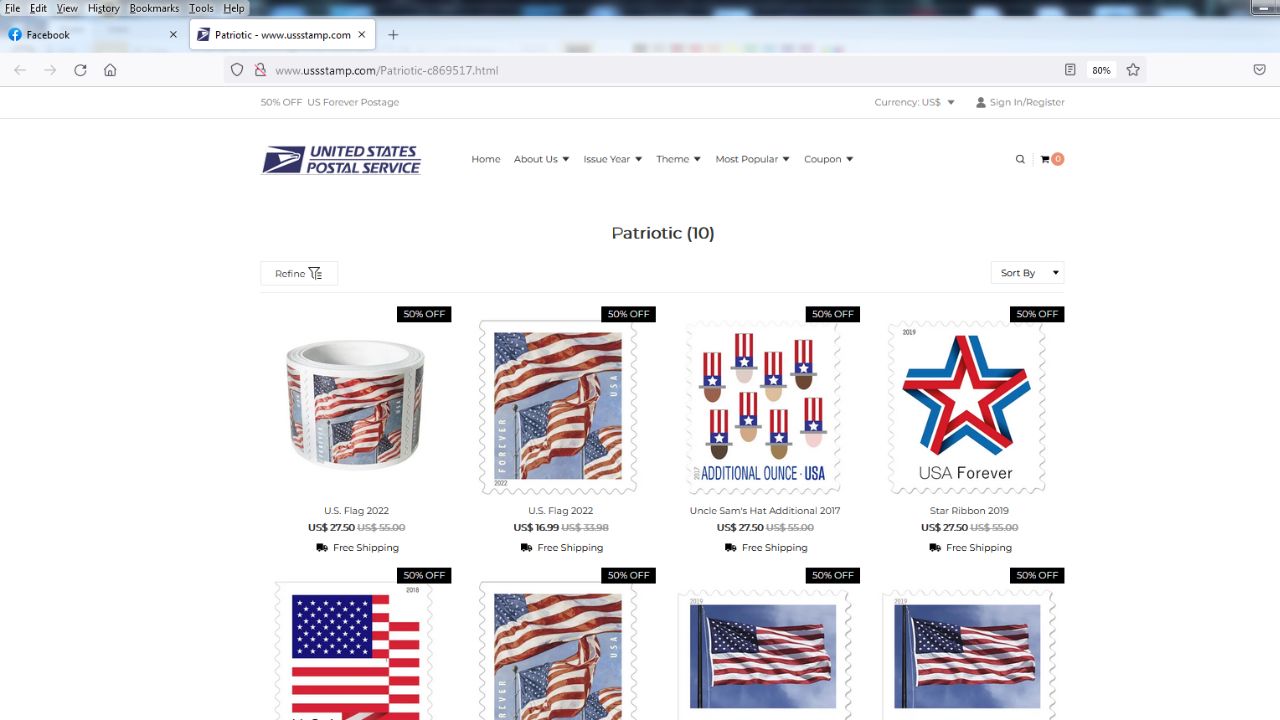
The U.S. Postal Service has made clear that they only sell postal stamps at face value. They state on their website, “Scammers peddle fake stamps on social media marketplaces, e-commerce sites via third-party vendors, and other websites. Counterfeit stamps are often sold in bulk quantities at a significant discount–anywhere from 20 to 50 percent of their face value. ”
Credit: Patrick K.
So, if you see an advertisement on an online platform like Facebook for stamps that are ridiculously low-priced, it’s likely that those stamps are counterfeit. The U.S. Postal Service has teams of forensic scientists who can catch the subtle differences between a real postage stamp and a fake one; however, an average person could easily make that mistake and use a counterfeit stamp, which is a federal crime. Another aspect of these fake sites is the potential for these scammers to take your credit card information and never respond.
Other legitimate retailers such as Costco, Walgreens, and CVS are permitted to sell postage stamps and may occasionally offer very small savings through membership rewards, loyalty programs, or bulk purchases, but not deep discounts below face value. If you see stamps advertised at 20% to 50% off, that is a major red flag.
How do I know if an online store is fake?
There are multiple ways to be able to tell if an online store is fake. You should always research the store before buying anything from there and look to see if other people have given it poor reviews. Another good tip to remember is to check the website’s URL. If it starts with “https,” that means the connection is encrypted – but that does not guarantee the site is legitimate. Many scam websites now use HTTPS as well. Instead of relying on the padlock icon alone, look for warning signs such as recently created domains, spelling errors, missing contact information, or unrealistic discounts. And if the store is looking for you to make any form of payment that isn’t via credit cards or PayPal, there’s a good chance it’s a scam.
You can check out more of our tips for what to look for in a fake online store scam here.
What if I accidentally fall for a fake online store?
If you think you’ve become the victim of a scam, contact the Better Business Bureau. You can file a complaint with them 24/7, and they can look into the fake online store for you.
You should also report counterfeit stamp scams directly to the U.S. Postal Inspection Service, which investigates mail-related fraud. In addition, file a report with the Federal Trade Commission at ReportFraud.ftc.gov. If you saw the ad on Facebook or Instagram, report the ad directly within the platform to help prevent others from being targeted.
Besides the BBB, you can also use IdentityTheft.org or call 877-438-4338 if you feel that your identity has been stolen or misused. Identity theft that has been made online can also be reported to the FBI’s Internet Crime Complaint Center.
What other resources can I use to protect myself?
Use identity theft protection: If you want additional layers of protection, handholding, and recovery against identity theft, companies such as my #1 pick, Aura Identity Theft Protection, can help.
Exclusive CyberGuy deal: Save up to 68% today: Get Aura’s award-winning identity theft protection and credit monitoring for as low as $9/month when billed annually.
Have strong antivirus software on all your devices: The best way to protect yourself from having your data breached is to have antivirus protection installed on all your devices. This can also alert you to any phishing emails or ransomware scams.
TotalAV is easy to set up and offers real-time protection for paid users, keeping your devices safe around the clock. It includes tools to block phishing scams, remove ransomware and spyware, and clean up adware and junk files. The software also features a browser manager, system tune-up tools, and protects across Windows, Mac, Android, and iOS devices.
GET MY EXCLUSIVE CYBERGUY TOTALAV DEAL:
Please note:
1) If you're having difficulty seeing either of the above deals, do this:
- If you're on a mobile device, hold down the link above, "Copy Link", and then paste it into a private or incognito browser.
- If you're on a laptop or desktop, right click the link, "Copy Link", and then paste it into a private or incognito browser.
2) During registration you may see optional upsells you can decline. Our top pick is the core antivirus product.
3) If you need help after your purchase, you can reach TotalAV directly through their official support page here.
Where is the best place to buy stamps?
The best place for you to buy stamps is, without a doubt, the U.S. Postal Service. You can go to your local post office and purchase the stamps there. However, if you’re looking to save a little, here’s a list of places that also sell legit postage stamps for a slightly cheaper price:
- Publix
- Kroger
- Wegmans
- CVS Pharmacy
- Walgreens
- Rite Aid
- Walmart
- Target
- Costco
- 7 Eleven
- Wells Fargo
- Office Depot
- Office Max
While these retailers sell legitimate USPS stamps, most sell them at face value. Any savings are typically limited to store rewards programs or credit card incentives, not direct discounts on the stamps themselves. Avoid sellers advertising steep markdowns, especially on social media platforms.
You should always be buying stamps from approved vendors to avoid using counterfeit ones and having your mail confiscated, and never from an online platform like Facebook, Instagram, or any other retailer that you have never heard of.
Why does Facebook allow these fraudulent ads?
It’s not exactly that Facebook allows people to post fraudulent ads on the site. In many cases, scammers exploit compromised or previously verified business advertising accounts to bypass safeguards. Once hackers gain access to these accounts, they can run fraudulent ads and even charge large amounts in ad spending to credit cards associated with the compromised accounts. While platforms work to remove scam ads, bad actors continuously adapt their tactics to slip through automated review systems.
Related Links:
- Desperately need Facebook help? Don’t fall for this scam
- Warning over new Facebook & Apple email scams dueling for your attention
- Tips to help you tell if an online store is real or a scam
Kurt’s key takeaways
If a stamp deal looks too good to be true, it is. The U.S. Postal Service does not run flash sales on Forever stamps, and legitimate retailers don’t slash prices in half. Scammers rely on urgency and convincing visuals to push you into quick decisions. Slow down, verify the seller, and stick with approved vendors. A few extra seconds of caution can save you from counterfeit stamps, lost money, and stolen card details.
Have you seen these or other fraudulent ads on Facebook or other platforms? Let us know in the comments below.
Copyright 2026 CyberGuy.com. All rights reserved. CyberGuy.com articles and content may contain affiliate links that earn a commission when purchases are made.
🎙 Now Streaming: My New Podcast: The CyberGuy Report
Kurt’s Top Deals
Deals move fast and inventory can be limited, so don’t wait too long.
| 🔥 Editor’s pick  Summer entertaining Ninja SLUSHi Machine (26% off) Frozen drinks and slushies at home in minutes. | |
| 💰 Top deal  Outdoor essential TYPEC Solar Bug Zapper (36% off) Solar-powered bug zappers for patios and camping. |


2 comments
How can I tell if stamps are counterfeit? I bought some online and I did get the stamps. Now I get a lot of emails about deals on stamps. The sender is usually different.
Hi Catherine, counterfeit stamps have become very common online, especially when sold at 30% to 50% below face value, so the first thing to consider is what you paid and where you bought them, since USPS does not discount Forever stamps through random websites or email offers; you can also examine the print quality under bright light, as real stamps have sharp lines, clear microprinting, even perforations and consistent color, while counterfeit versions often look slightly blurry or uneven and may feel thinner or have inconsistent adhesive, and the increase in promotional emails likely means your email address was added to reseller marketing lists, so avoid clicking links in those messages and mark them as spam, and if you are still unsure, you can bring a sheet to your local Post Office and they can usually confirm authenticity quickly.