



- Bank scammers use spoofed calls, stolen personal details and urgent warnings to gain your trust.
- They may pressure you to move money, withdraw cash, share codes or lie to bank employees.
- Fake refunds, SIM swaps and marketplace payment tricks can also lead to major financial losses.
- Hang up, contact your bank directly and verify every request before taking action.
A veteran network news correspondent who has covered scams for years recently admitted that a convincing caller nearly persuaded him to empty one of his bank accounts. The woman claimed to work in his bank’s fraud department. She provided a name and badge number, knew personal details about his accounts and said criminals were operating inside his local bank branch. Then she instructed him to visit the branch and withdraw thousands of dollars in cash to help expose the supposed fraudsters.
He stayed on the phone for more than an hour and even traveled to the bank. The scheme finally unraveled when the caller warned him not to tell the bank employees what he was doing because they could be involved. That instruction made him stop. A legitimate bank or law enforcement agency would never recruit a customer for a secret sting operation or tell that person to conceal a withdrawal from bank employees. He later realized he could have walked out carrying thousands of dollars at a location already known to the scammers.
His experience is a timely warning. According to the Federal Trade Commission’s latest data, consumers reported losing $3.5 billion to imposter scams in 2025. That was nearly three times the amount reported in 2020. Imposter scams also accounted for almost one out of every three fraud reports received by the FTC.

What imposter bank scams look like
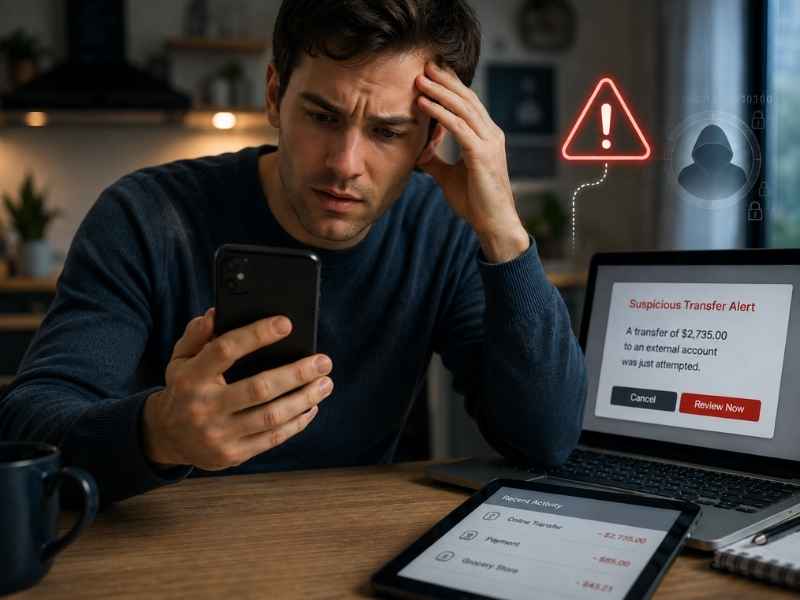
Scammers pretending to be from your bank follow a predictable yet terrifying pattern. They begin with an urgent phone call warning that your account has been compromised. The caller ID displays your bank’s real number, which builds instant trust.
Next, they instruct you to move your money into a so-called “safe” or “decoy” account while they “investigate” the issue. Their goal is to create fear and push you into action before you have time to think.
One journalist reportedly learned this lesson the hard way when he answered what appeared to be a legitimate call from Chase Bank. After a series of convincing conversations with multiple “representatives,” he transferred nearly $30,000 to scammers. In another case, a 65-year-old caterer lost nearly $160,000 after a friendly woman pretending to be a bank employee claimed her ATM card had been compromised. The caller repeatedly persuaded her to read verification codes sent by the real bank.
These stories are not rare; they reflect how sophisticated and believable modern scams have become.

Bank scams can take several different forms
A bank scam does not always begin with someone directly asking for your account password. Criminals may use fake refunds, hijacked phone numbers, realistic bank websites or carefully rehearsed stories to gain control of your money.
The fake refund and mirrored bank website
An 85-year-old Florida man we featured on The CyberGuy Report podcast lost $200,000 after receiving what appeared to be a harmless PayPal refund email.
The scammers displayed a fake version of his bank’s website that made it appear as though too much money had been deposited into his account. They pressured him to “return” the nonexistent money through several payments, including cryptocurrency ATM transactions.
The victim eventually worked with police on a sting operation that led to an arrest and an 18-year prison sentence. His experience shows why you should open your bank’s official app or type the bank’s web address yourself instead of trusting a website provided by a caller or email.
Watch the latest episode of The CyberGuy Report.

Missed this event? Sign up via the registration form and see our live recording.
See Kurt’s latest Amazon picks for useful gadgets, smart home upgrades and everyday tech worth grabbing while the deals last.
The SIM-swap bank takeover
Some criminals can bypass a bank conversation by taking control of your phone number.
A woman I interviewed on The CyberGuy Report suddenly lost cellular service. By the following morning, criminals had used a SIM-swap attack to intercept security codes, reset passwords and take thousands of dollars from her accounts.
An unexpected loss of cellular service can be an early warning that your phone number has been transferred to another SIM card or device. Use another phone to contact your carrier immediately if your service suddenly stops and you cannot explain why.
The coached bank withdrawal
Scammers may stay on the phone while a victim travels to the bank and coach that person on exactly what to say to the teller. They might tell the victim to claim the money is for home repairs, a car purchase or a family expense.
Darius Kingsley, JPMorgan Chase’s head of scam prevention, explained this tactic during an episode of The CyberGuy Report. Bank employees are trained to watch for signs that a customer may be under a scammer’s control, which is why criminals try to prepare victims for the questions they may face.
Anyone telling you to lie to a teller, hide the real reason for a withdrawal or keep the transaction secret is working against you.
The cash, gold and cryptocurrency courier
A caller may claim that your bank account, Social Security number or identity has been connected to a crime. You are then instructed to withdraw cash, buy gold bars or convert your savings into cryptocurrency.
The scammer may send a courier to your home to collect the cash or gold. The FBI documented at least 1,737 courier incidents involving bulk cash or precious metals nationwide between 2023 and May 2025, with reported losses of about $186 million.
No legitimate bank or government agency will send someone to your home to collect your savings.
Why you and others are targets
Banks are trusted institutions, and scammers know it. That trust makes impersonation one of the easiest and most effective fraud tactics today. With spoofing tools, criminals can mimic real bank phone numbers and even use AI to reproduce familiar voices. Their approach is psychological: they create panic and urgency to make victims act quickly and irrationally.
Older adults are particularly vulnerable. The FTC found that losses of over $100,000 to imposter scams among people aged 60 and older have skyrocketed, from $55 million in 2020 to $445 million in 2024.
However, the veteran correspondent’s close call shows that experience and technical knowledge do not make anyone immune. A believable story delivered at the right moment can catch almost anyone off guard.

Online marketplace scams create financial and physical risks
Not every financial scam begins with a fake bank representative. Buying or selling through Facebook Marketplace, Craigslist and similar services can expose you to fake payments, fraudulent checks, QR code scams and unsafe cash meetings.
A supposed buyer may show you a payment screenshot or send a fake email claiming that money has reached your account. Others send a fraudulent check for more than the agreed amount and ask you to refund the difference before the bank discovers that the check is worthless.
Police departments around the country have created monitored exchange areas where people can complete legitimate online transactions in public. The Boston Police Department, for example, provides video-monitored Safe Exchange Zones at its district stations and headquarters.
The Fairfield Police Department in Connecticut recently added a designated Online Purchase Exchange Zone in the parking lot of Fire Station 1, directly across from Police Headquarters. The area is public and has security camera coverage.
A monitored location can make an in-person meeting safer, but it does not prove that a payment is real. Before handing over an item, open your bank or payment app yourself and confirm that the money has arrived. Never rely on a screenshot, email or text shown by the other person.
11 smart tips to protect yourself from imposter scams
Imposter scams move fast, but with the right precautions, you can stop them before they strike.
1) Never trust caller ID alone
Spoofed numbers make a call appear as if it’s coming from your bank, even when it’s not.
2) Hang up and call your bank using a verified number
Do not return calls using numbers given to you by the person who contacted you. Always call the number printed on your debit or credit card.
3) Use a data removal service to protect your identity
Scammers often collect phone numbers, email addresses and other personal details from public records and data broker sites. Using a trusted data removal service helps wipe that information from the web, reducing the chances that criminals can use your data to impersonate you.
While no service can guarantee the complete removal of your data from the internet, a data removal service is really a smart choice. They aren’t cheap, and neither is your privacy. These services do all the work for you by actively monitoring and systematically erasing your personal information from hundreds of websites. It’s what gives me peace of mind and has proven to be the most effective way to erase your personal data from the internet.
By limiting the information available, you reduce the risk of scammers cross-referencing data from breaches with information they might find on the dark web, making it harder for them to target you.
Is your personal information exposed online?
Run a free scan to see if your personal info is compromised. Results arrive by email in about an hour.
Exclusive Deal for CyberGuy Readers (60% off): Incogni offers a 30-day, money-back guarantee and applies a special CyberGuy discount to all annual plans, for as low as $6.39/month for one person (billed annually) or $13.19/month for your family (up to 5 people) on their annual plan.
I strongly recommend the family plan. Here's why: the scam that starts with a Google search of your name almost always ends with a call to you, your elderly parent or a text to your adult child. Protecting yourself without protecting the people around you is half a solution. At $2.64 per person per month, the family plan covers up to five people, and the people most likely to be the final target are often the ones who'd never think to protect themselves.
Get Incogni and remove your info
4) Never move money to protect it
A legitimate bank will not ask you to transfer your savings to another account, cryptocurrency wallet or payment app to keep the money safe. Any request to move funds into a “safe,” “secure” or “protected” account is a major warning sign.
5) Use strong antivirus software
Scammers often send fake links or pop-ups that install malicious programs on your device. A strong antivirus program can detect these threats, block phishing attempts and stop remote-access tools that give criminals control of your computer. Keeping your software updated adds another layer of protection against evolving scams.
The best way to safeguard yourself from malicious links that install malware, potentially accessing your private information, is to have strong antivirus software such as Norton Antivirus Plus installed on all your devices. This protection can also alert you to phishing emails and ransomware scams, keeping your personal information and digital assets safe.
- Strong real-time protection against viruses, malware, ransomware and hacking attempts
- AI-powered scam protection to help identify suspicious emails, texts and websites
- Built-in password manager to securely store and manage logins
- 2 GB PC cloud backup to help protect important files from ransomware or hardware failure
- Smart firewall and phishing protection
- Protects 1, 3 or 5 devices
- Available for Windows, macOS, Android and iOS
- Includes real-time threat protection, smart firewall and phishing protection to guard against online attacks
6) Never share verification codes or PINs
Banks do not ask for your codes over the phone, text or email. Read the entire verification message before using the code. Many messages specifically warn you that bank employees will never ask you to read the number aloud.
7) Use your phone’s built-in call-screening tools
These settings can screen, identify or silence many suspicious calls before you answer.
If you use an iPhone running current software:
- Open Settings
- Tap Apps
- Tap Phone
- Scroll to Screen Unknown Callers
- Choose Ask Reason for Calling to screen unknown calls or Silence to send them directly to voicemail
- Under Call Filtering, turn on Spam to silence calls your carrier identifies as potential fraud
You can review Apple’s current instructions for screening and blocking calls on an iPhone here.
On a Samsung Galaxy phone:
Settings and wording can vary on other Android phones.
- Open the Phone app
- Tap the three vertical dots
- Tap Settings
- Tap Caller ID and spam protection
- Turn on Caller ID and spam protection
- Tap Block spam and scam calls and choose your preferred blocking level
Samsung Galaxy phones running Android 16 with One UI 8.5 or later may also offer AI Scam Detection or Call Screening. Availability can vary by model and carrier. You can review Samsung’s current spam-call protection instructions here.
8) Pause if something feels urgent and frightening
Scammers depend on panic. Taking a moment to breathe could save your savings.
9) Report suspicious activity immediately
If you suspect a scam, contact your bank, file a complaint with the FTC at ReportFraud.ftc.gov and alert local law enforcement.
10) Never hide a withdrawal from bank employees
Tell the teller the real reason you are taking out the money. Bank employees may recognize warning signs and stop a transaction before the cash reaches a scammer. End the call immediately if someone instructs you to lie, use a cover story or avoid discussing the transaction with bank employees.
11) Use a safe exchange zone for marketplace transactions
Meet at a designated police or fire department exchange area when buying or selling an item in person. Meet during daylight hours and bring someone you trust when possible. Confirm electronic payments inside your own bank or payment app before handing over the item. A payment screenshot or confirmation email can be faked.
What to do if you’ve been targeted
If you believe you have fallen victim, act quickly.
1) Contact your bank and request a freeze or close monitoring of your accounts
Ask the fraud department whether it can stop, reverse or recall the payment. Recovery is never guaranteed, but reporting the transaction quickly can improve the chances.
2) File a report with the FTC and your local police department, even if you believe recovery is unlikely
You should also file a report with the FBI’s Internet Crime Complaint Center at IC3.gov when the scam involves online communication, cryptocurrency, wire transfers or account takeovers.
3) Keep every piece of evidence, including phone records, text messages and transfer confirmations
Save emails, voicemails, screenshots, receipts, courier descriptions and any instructions the scammer gave you. Do not delete anything until your bank and law enforcement have had an opportunity to review it.
4) Change all passwords and enable transaction alerts on every sensitive account to prevent further damage
Consider using a password manager, which securely stores and generates complex passwords, reducing the risk of password reuse.
Next, see if your email has been exposed in past breaches. Our #1 pick, NordPass, includes a built-in breach scanner that checks whether your email address or passwords have appeared in known leaks. If you discover a match, immediately change any reused passwords and secure those accounts with new, unique credentials.
- Unlimited password storage
- Secure sharing
- Password health reports
- Auto-fill and emergency access
- Data breach monitoring to alert you if your credentials have been exposed
- A Security Dashboard with tools like the Data Breach Scanner and Password Health Checker to identify weak, reused, or compromised passwords
CyberGuy Exclusive Deal: Save 52% now with CyberGuy’s exclusive NordPass offer – Get 1 extra month FREE with a 2-year plan. Try 30 days risk-free for only $1.43 per month!
5) Contact your mobile carrier if your service suddenly stops
Use another phone to contact your carrier if your device unexpectedly loses cellular service. Ask whether anyone changed your SIM card, transferred your number or modified your account. Request that the carrier secure the account and reverse any unauthorized changes.
6) Sign up with an Identity Theft Protection service
An identity theft protection service can monitor personal information like your Social Security Number (SSN), phone number and email address and alert you if it is sold on the dark web or used to open an account. They can also assist you in freezing your bank and credit card accounts to prevent further unauthorized use by criminals.
Exclusive CyberGuy deal: Save up to 68% today: Get Aura’s award-winning identity theft protection and credit monitoring for as low as $9/month when billed annually.
How to check if your personal information was exposed
If you are unsure whether criminals have already exposed your personal information, take action now. Start with a free identity breach scan to see whether your data appears in known leaks. Early detection gives you more control and helps you respond before fraud spreads.
Related Links:
- Beware of these fake credit card account restriction scams
- Payroll scam hits U.S. universities as phishing wave tricks staff
- From friendly text to financial trap: the new scam trend
Kurt’s key takeaways
The most dangerous bank scams do not always sound sloppy or suspicious. A caller may know where you bank, describe real transactions and speak with the confidence of a trained fraud investigator. The warning signs often appear in the instructions. Move your money. Withdraw cash. Share a code. Keep the call secret. Lie to the teller. Those requests tell you that the person is working against you, no matter what appears on caller ID. End the conversation and contact your bank independently. Then tell someone you trust what happened. Scammers gain control by isolating you and keeping you in motion. A second opinion and a short pause can break that control before your savings leave your account.
Has a call or text ever appeared to come from your bank, and what helped you decide whether it was legitimate? Let us know in the comments below.
FOR MORE OF MY TECH TIPS & SECURITY ALERTS, SUBSCRIBE TO MY FREE CYBERGUY REPORT NEWSLETTER HERE
Copyright 2026 CyberGuy.com. All rights reserved. CyberGuy.com articles and content may contain affiliate links that earn a commission when purchases are made.
🎙 Now Streaming: My New Podcast: The CyberGuy Report
Kurt’s Top Deals
Deals move fast and inventory can be limited, so don’t wait too long.
| 🔥 Editor’s pick  Summer entertaining Ninja SLUSHi Machine (26% off) Frozen drinks and slushies at home in minutes. | |
| 💰 Top deal  Outdoor essential TYPEC Solar Bug Zapper (36% off) Solar-powered bug zappers for patios and camping. |


2 comments
Rather than installing apps or programs designed to protect me against such scams, I have written to Congress asking that they look into truly free reverse number lookup sites and to eliminate the legal phone number spoofing. Apparently the latter will be tough to achieve because the medical community likes it.
Over a year ago I was scammed and lost $100,000. The scammer told me that someone at the Credit Union that I used was under investigation and they told be exactly what to say when I withdrew money (for deposit into a crypto exchange near where I lived.) After I had lost my money I did notify Internet Crime Complaint Center at IC3.gov, but they told me there was not much they could do. They left it a t that. I was a sucker and fell into their trap. I was mostly disappointed in the fact that the Crime Complaint Center did nothing even after I did some work and found that the scammers were from a house that had a dozen phone lines connected to it. Never again.