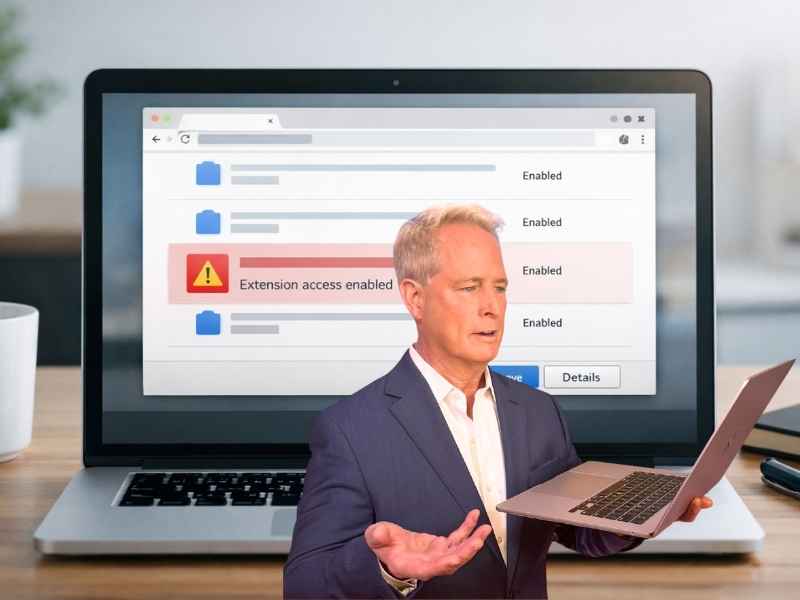

Cybersecurity researchers have uncovered a serious threat hiding inside Google Chrome. Several browser extensions pretend to be helpful tools. In reality, they quietly take over user accounts. These extensions impersonate popular human resources and business platforms such as Workday, NetSuite and SAP SuccessFactors. Once installed, they can steal login data and block security controls designed to protect users. Many people who installed them had no warning signs that anything was wrong.

The fake Chrome extensions to watch out for
Security researchers from Socket’s Threat Research Team identified five malicious Chrome extensions connected to this campaign. The add-ons were marketed as productivity or security tools, but were designed to hijack accounts.
The extensions include:
- DataByCloud Access
- Tool Access 11
- DataByCloud 1
- DataByCloud 2
- Software Access
We reached out to Google, and a spokesperson told CyberGuy that the extensions are no longer available on the Chrome Web Store. However, some are still available on third-party software download sites, which continues to pose a risk. If you see any of these names installed in your browser, remove them immediately.

Why malicious Chrome extensions look legitimate
These malicious add-ons are designed to look legitimate. They use professional names, polished dashboards and business-focused descriptions. Some claim to offer faster access to workplace tools. Others say they restrict user actions to protect company accounts. Privacy policies often promise that no personal data is collected. For people juggling daily work tasks or managing business accounts, the pitch sounds helpful rather than suspicious.
What these extensions actually do
After installation, the extensions operate silently in the background. They steal session cookies, which are small pieces of data that tell websites you are already logged in. When attackers get these cookies, they can access accounts without a password. At the same time, some extensions block access to security pages. Users may be unable to change passwords, disable accounts or review login history. One extension even allows criminals to insert stolen login sessions into another browser. That lets them sign in instantly as the victim.
Why malicious Chrome extensions are so dangerous
This attack goes beyond stealing credentials. It removes the ability to respond. Security teams may detect unusual activity, but cannot fix it through normal controls. Password changes fail. Account settings disappear. Two-factor authentication tools become unreachable. As a result, attackers can maintain access for long periods without being stopped.
How to check for these extensions on your computer
If you use Google Chrome, review your extensions now. The process only takes a few minutes.
- Open Google Chrome
- Click the three-dot menu in the top right corner
- Select Extensions, then choose Manage Extensions
- Review every extension listed
Look for unfamiliar names, especially those claiming to offer access to HR platforms or business tools.
How to remove suspicious Chrome extensions
If you find one of these extensions, remove it immediately.
- Open Manage Extensions in Chrome
- Find the suspicious extension
- Click Remove
- Confirm when prompted
Restart your browser after removal to ensure the extension is fully disabled. If Chrome sync is enabled, repeat these steps on all synced devices before turning sync back on.

What to do after removing the extension
Removal is only the first step. Change passwords for any accounts accessed while the extension was installed. Use a different browser or device if possible.
A password manager can help you create strong, unique passwords for each account and store them securely. This reduces the risk of reused passwords being exploited again.
Next, see if your email has been exposed in past breaches. Our #1 pick, NordPass, includes a built-in breach scanner that checks whether your email address or passwords have appeared in known leaks. If you discover a match, immediately change any reused passwords and secure those accounts with new, unique credentials.
- Unlimited password storage
- Secure sharing
- Password health reports
- Auto-fill and emergency access
- Data breach monitoring to alert you if your credentials have been exposed
- A Security Dashboard with tools like the Data Breach Scanner and Password Health Checker to identify weak, reused, or compromised passwords
CyberGuy Exclusive Deal: Save 52% now with CyberGuy’s exclusive NordPass offer – Get 1 extra month FREE with a 2-year plan. Try 30 days risk-free for only $1.43 per month!
Finally, review account activity for unfamiliar logins, locations or devices and be sure to follow the steps below to stay safe moving forward.
Ways to stay safe going forward
Simple habits can significantly reduce your risk.
1) Limit browser extensions
Only install extensions you truly need. The fewer extensions you use, the smaller your attack surface becomes.
2) Be cautious with add-ons
Avoid extensions that promise premium access or special tools for enterprise platforms. Legitimate companies rarely require browser add-ons for account access.
3) Check permissions carefully
Be wary of extensions that request access to cookies, browsing data or account management. These permissions can be abused to hijack sessions.
4) Review extensions regularly
Check your browser every few months and remove tools you no longer use or recognize.
5) Use strong antivirus software
Strong antivirus software can help detect malicious extensions, block suspicious behavior and alert you to browser-based threats before damage occurs.
The best way to safeguard yourself from malicious links that install malware, potentially accessing your private information, is to have strong antivirus software installed on all your devices. This protection can also alert you to phishing emails and ransomware scams, keeping your personal information and digital assets safe.
TotalAV is easy to set up and offers real-time protection for paid users, keeping your devices safe around the clock. It includes tools to block phishing scams, remove ransomware and spyware, and clean up adware and junk files. The software also features a browser manager, system tune-up tools, and protects across Windows, Mac, Android, and iOS devices.
GET MY EXCLUSIVE CYBERGUY TOTALAV DEAL:
Please note:
1) If you're having difficulty seeing either of the above deals, do this:
- If you're on a mobile device, hold down the link above, "Copy Link", and then paste it into a private or incognito browser.
- If you're on a laptop or desktop, right click the link, "Copy Link", and then paste it into a private or incognito browser.
2) During registration you may see optional upsells you can decline. Our top pick is the core antivirus product.
3) If you need help after your purchase, you can reach TotalAV directly through their official support page here.
6) Consider a data removal service
If your work or personal information has been exposed, a data removal service can help reduce your digital footprint by removing your details from data broker sites. This lowers the risk of follow-up scams or identity misuse.
While no service can guarantee the complete removal of your data from the internet, a data removal service is really a smart choice. They aren’t cheap, and neither is your privacy. These services do all the work for you by actively monitoring and systematically erasing your personal information from hundreds of websites. It’s what gives me peace of mind and has proven to be the most effective way to erase your personal data from the internet. By limiting the information available, you reduce the risk of scammers cross-referencing data from breaches with information they might find on the dark web, making it harder for them to target you.
Incogni, a service I trust 100% and use myself, helps automate the process by submitting removal requests to hundreds of data brokers and people-search sites on your behalf.
Incogni automatically contacts data brokers on your behalf and requests the removal of your personal information. It also continues monitoring those sites and submits new removal requests if your data reappears.
- Incogni currently removes personal data from 420+ data broker and people-search websites, and its Unlimited plan allows you to request removals from as many additional sites as you need.
- Incogni has also received third-party assurance from Deloitte, validating its marketing claims.
- The goal is simple: make it much harder for strangers, scammers, and cybercriminals to find your personal information online.
CyberGuy readers get 60% off Incogni’s annual plans using the links in this article.
The service also includes a 30-day money-back guarantee, so you can try it risk-free and see how much of your information is exposed online.
Is your personal information exposed online?
Run a free scan to see if your personal info is compromised. Results arrive by email in about an hour.
7) Avoid third-party download sites
Do not reinstall extensions from third-party websites, even if they claim to offer the same features. These sites often host outdated or malicious versions.
A Texas mom says she spent the night in jail after speaking up online about dirty water in her town. The case was later dropped, but her story raises a troubling question: could something you post online ever put you at risk?

Missed this event? Sign up via the registration form and see our live recording.
See Kurt’s 2026 picks for practical tech and everyday upgrades.
Related Links:
- Why January is the best time to remove personal data online
- Make 2026 your most private year yet by removing broker data
- How to stop health and fitness apps from using your private data
Kurt’s key takeaways
Browser extensions can be useful, but this research shows how easily they can also be abused. These fake Chrome add-ons did not rely on flashy tricks or obvious warnings. They blended in, looked professional and quietly did their damage in the background. The good news is that you do not need to be a tech expert to protect yourself. Taking a few minutes to review your extensions, remove anything unfamiliar and lock down your accounts can make a real difference. Small habits, repeated regularly, go a long way in reducing risk. If there is one takeaway here, it is this: convenience should never come at the cost of security. A clean browser and strong account protections give you back control.
How many browser extensions do you have installed right now that you have never looked at twice? Let us know in the comments below.
FOR MORE OF MY TECH TIPS & SECURITY ALERTS, SUBSCRIBE TO MY FREE CYBERGUY REPORT NEWSLETTER HERE
Copyright 2026 CyberGuy.com. All rights reserved. CyberGuy.com articles and content may contain affiliate links that earn a commission when purchases are made.
🎙 Now Streaming: My New Podcast: The CyberGuy Report
Kurt’s Top Deals
Deals move fast and inventory can be limited, so don’t wait too long.
| 🔥 Editor’s pick  Summer entertaining Ninja SLUSHi Machine (26% off) Frozen drinks and slushies at home in minutes. | |
| 💰 Top deal  Outdoor essential TYPEC Solar Bug Zapper (36% off) Solar-powered bug zappers for patios and camping. |