



Carbon dioxide usually gets blamed for climate change, not praised for solving it. But Google plans to flip the script. The company just announced a partnership with Italian firm Energy Dome to help store clean energy using carbon dioxide in an entirely new way.
This collaboration will deploy long-duration energy storage systems, also known as LDES, at Google’s renewable energy projects across the globe. The idea is simple yet powerful: store extra energy when wind and solar production are high, and release it when the skies darken or the wind dies down.
Most current batteries can only provide about four hours of backup power. That might help during short dips in production, but it fails during overnight outages or cloudy, windless days. Energy Dome offers a better solution.
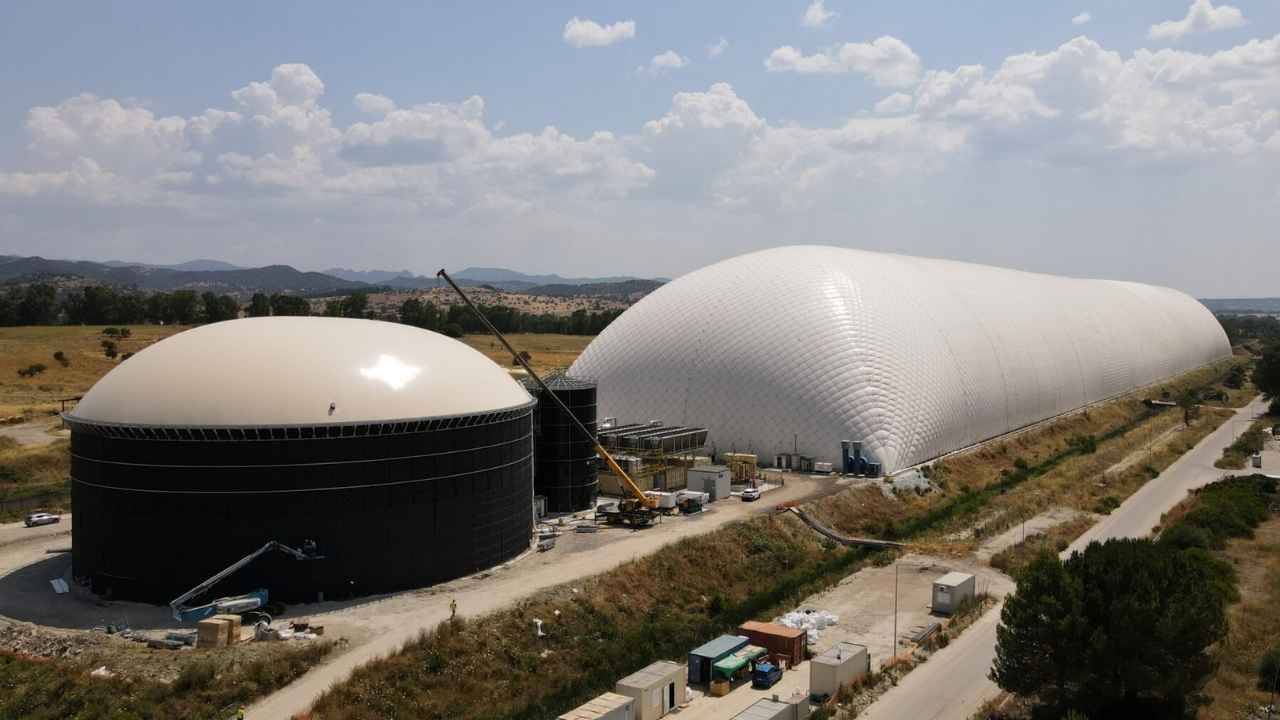
Credit: Energy Dome
Why Google chose the CO2 Battery
Google selected Energy Dome’s CO2 Battery because it provides clean, dispatchable energy for up to 24 hours. Unlike lithium-ion systems, which depend on expensive and often hard-to-source materials, this battery uses off-the-shelf mechanical components and simple physics.
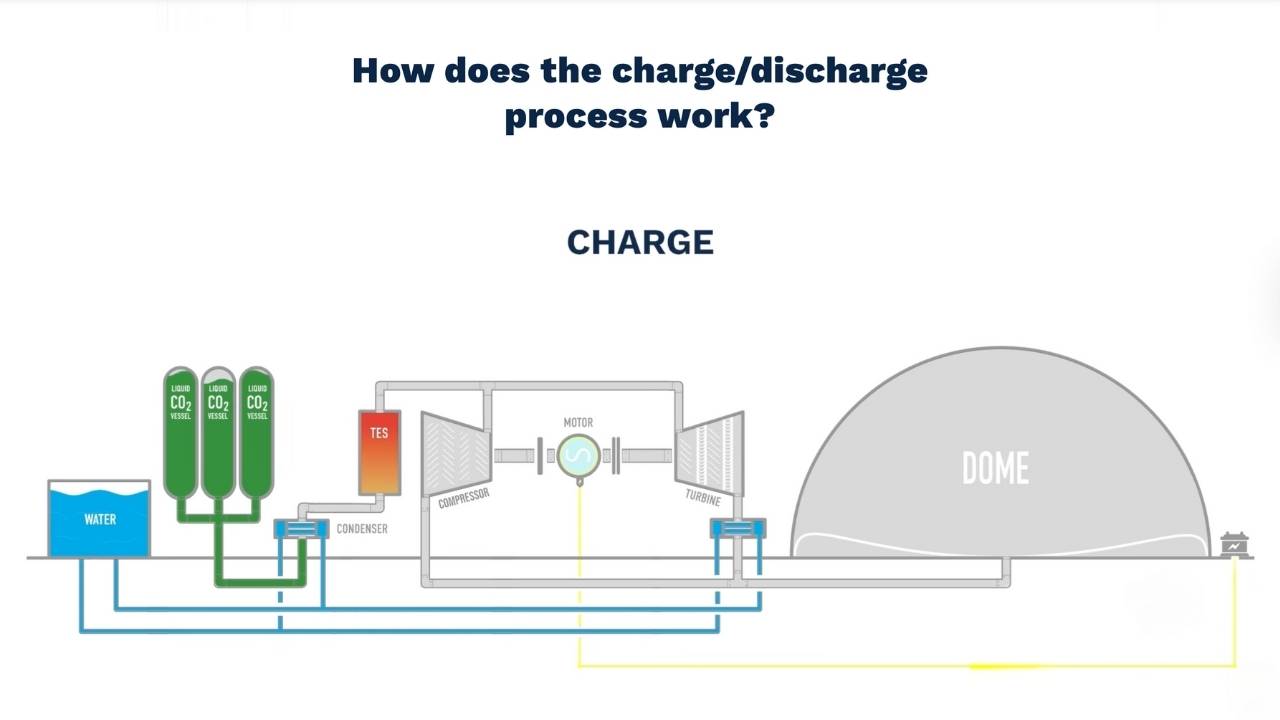
Instead of storing electricity in chemical form, the CO2 Battery stores it by compressing carbon dioxide gas into a liquid. When the power grid needs more electricity, the system heats and expands that liquid CO2 back into a gas. As the gas expands, it spins a turbine, just like steam would, which generates electricity.
Once the gas cools, the system captures it again in the dome for future use. This closed-loop process repeats as needed, providing an efficient, carbon-free way to smooth out power demand and supply.
Energy Dome has already proven that the technology works. Its first commercial facility in Italy has been operating successfully for over three years. With a 20-megawatt, 200-megawatt-hour capacity, the plant proves that carbon dioxide can play a surprisingly powerful role in making renewable energy more dependable.
Why CO₂ instead of other storage solutions?
Carbon dioxide has several unique properties that make it ideal for mechanical energy storage:
- Liquefies at moderate pressures: Unlike compressed air, CO₂ doesn’t require ultra-high pressure tanks, making storage more efficient and cost-effective.
- Expands efficiently when heated: It behaves similarly to steam, making it perfect for driving turbines and generating electricity on demand.
- Abundant and reusable: CO₂ is inexpensive and used in a closed-loop system, so there are no emissions involved.
What about sand or ice batteries?
- Sand batteries store heat, not electricity. They’re great for industrial heating but not suited for powering homes or the grid.
- Ice batteries help with air conditioning load shifting, but only work in limited scenarios and short durations.
CO₂ batteries, by contrast, can deliver up to 24 hours of clean, dispatchable electricity, filling a critical gap where lithium-ion and other solutions fall short.
Credit: Energy Dome
A scalable, reliable way to store clean power
Google’s backing could significantly accelerate the global rollout of this technology. While wind and solar are affordable and widely available, they remain inconsistent by nature. Without storage, their reliability suffers.
Energy Dome’s CO2 Battery helps bridge this gap. It can store renewable energy when production is high and release it when demand peaks. This flexibility supports not just Google’s data centers but entire communities that rely on a stable power grid.
Watch the latest episode of The CyberGuy Report.

Missed this event? Sign up via the registration form and see our live recording.
See Kurt’s Prime Day picks for useful gadgets, practical upgrades and everyday tech while the deals last.
The battery also offers another key benefit. Its spinning machinery adds natural inertia to the grid. That helps stabilize power flow, which becomes more important as older fossil fuel plants shut down and leave behind fewer tools for grid balancing.
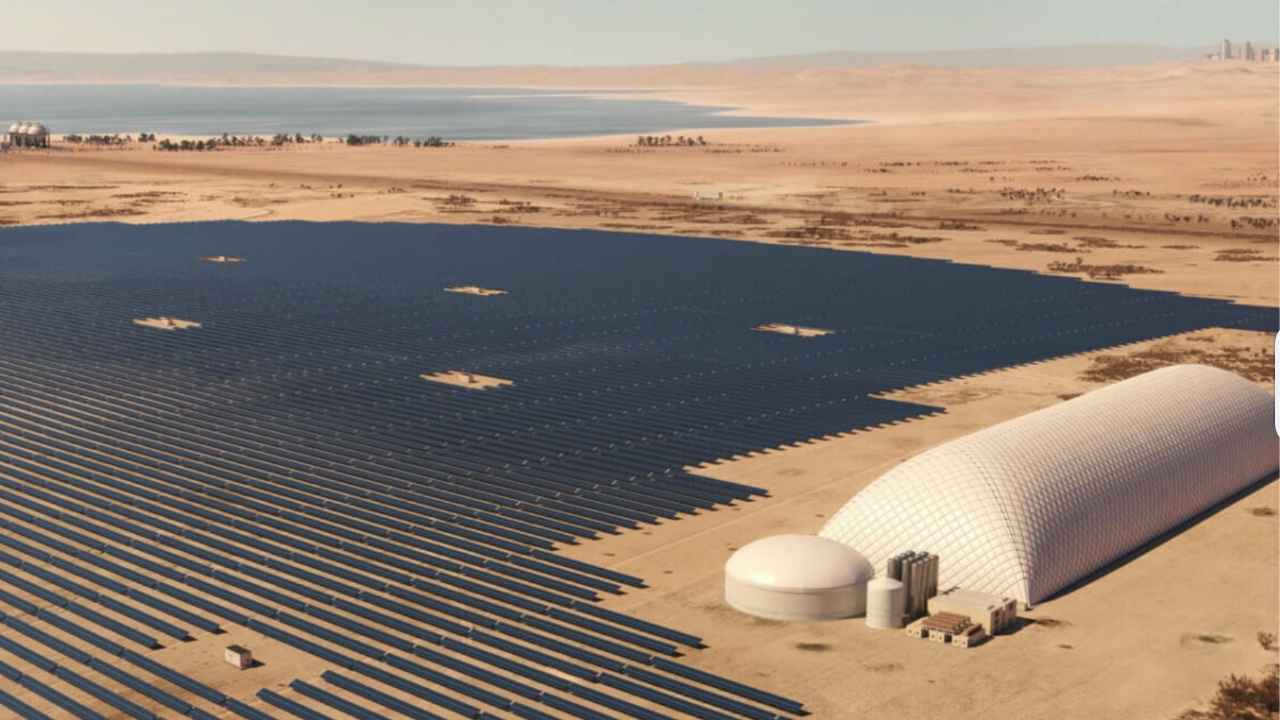
By investing in Energy Dome and planning commercial deployments in regions like North America, Europe, and Asia-Pacific, Google hopes to meet its goal of operating on 24/7 carbon-free energy by 2030.
Credit: Energy Dome
What this means for you
This breakthrough in energy storage will impact far more than Google’s internal operations. As this technology expands, more people could benefit from reliable electricity even when solar panels stop producing or the wind turbines stop turning.
Cleaner and more flexible energy storage also reduces the need for fossil fuel power plants. That shift helps lower emissions and create a more resilient grid for homes, schools, hospitals, and businesses.
The scalability of the CO2 Battery opens the door to broader access. Communities around the world could see improvements in both affordability and energy security as deployment grows.
Related Links:
- Google signs 200 MW fusion energy deal to power future AI
- Energy-sucking AI data centers can look here for power instead
- Energy-saving scam uses Elon Musk’s name – Here’s the truth
Kurt’s key takeaways
Google’s partnership with Energy Dome solves a very current problem. The world needs clean energy that works around the clock, not just when the weather cooperates. Long-duration energy storage delivers that reliability. By storing power in carbon dioxide and releasing it on demand, this new battery model offers a cost-effective, scalable, and sustainable solution. With global investments and commercial projects already underway, the future of clean energy could arrive much sooner than expected.
Would you trust a CO2-powered battery to keep your home’s lights on through the night? Let us know in the comments below.
FOR MORE OF MY TECH TIPS & SECURITY ALERTS, SUBSCRIBE TO MY FREE CYBERGUY REPORT NEWSLETTER HERE
Copyright 2025 CyberGuy.com. All rights reserved. CyberGuy.com articles and content may contain affiliate links that earn a commission when purchases are made.
🎙 Now Streaming: My New Podcast: The CyberGuy Report
Kurt’s Top Deals
Deals move fast and inventory can be limited, so don’t wait too long.
| 🔥 Editor’s pick  Summer entertaining Ninja SLUSHi Machine (26% off) Frozen drinks and slushies at home in minutes. | |
| 💰 Top deal  Outdoor essential TYPEC Solar Bug Zapper (36% off) Solar-powered bug zappers for patios and camping. |


2 comments
My solar lithium battery (installed when I installed my 4.6 kw full house solar system) cost $19K. But, it will run my house for about 24 hrs. Sounds like with all that is necessary for this carbon system, it would cost far more and offer far less run time when the power grid goes down. Plus, the electricity my house doesn’t use gets sent back to the grid and we get a credit for that. So my average power bill went from about $100 per month to around $40. ($29 of that is the connection fee our power company charges to have grid power also.
$19K to save $60 a month?