



Wisconsin has launched a groundbreaking project that could reshape how the state generates and uses electricity. The Paris Solar-Battery Park in Kenosha County combines a massive solar farm with a powerful battery storage system to make renewable energy available day and night.
This project brings clean energy, greater reliability, and potential savings for residents across the state.

Credit: We Energies
How Wisconsin’s solar battery park powers 130,000 homes
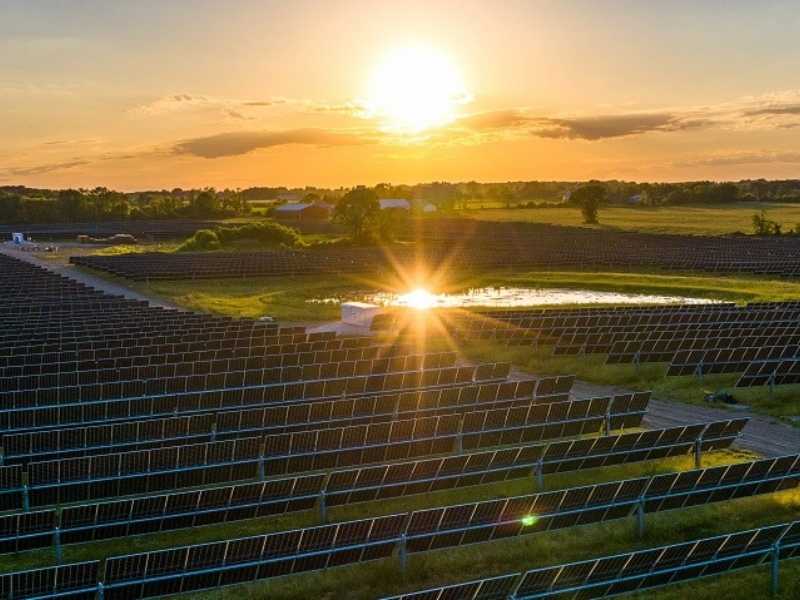
The Paris Solar farm began producing power in December 2024 and generates 200 megawatts of renewable electricity during the day. That amount is enough to supply about 55,000 homes each year.
Now, a 110-megawatt battery storage system has been added. These batteries capture excess energy from the solar panels and release it at night, during cloudy weather, or when demand suddenly rises. The battery system can power about 130,000 homes for up to four hours.
By combining solar generation with battery storage, Wisconsin is addressing one of renewable energy’s most significant challenges: ensuring a steady and reliable power supply at all times.
Why Wisconsin’s solar battery park is a historic energy shift
Energy use is climbing, and nearly 79 percent of electricity in the United States still comes from fossil fuels. That dependence contributes to increased carbon pollution, higher costs, and leaves the grid vulnerable during extreme conditions.
The Paris Solar-Battery Park reduces reliance on fossil fuels while strengthening Wisconsin’s grid. It also provides a model other states can follow.
Mike Hooper, president of project partner We Energies, called the project “historic” and stressed that customers can count on dependable and affordable power in any weather. That level of reliability is especially crucial as storms, heatwaves, and cold snaps put additional pressure on power systems.

Credit: We Energies
What Wisconsin’s solar battery park means for clean energy
Battery storage is becoming a cornerstone of the clean energy movement. Without storage, solar power only helps while the sun is shining. With it, renewable energy becomes flexible, consistent, and available around the clock.
This shift benefits both the environment and consumers. Solar farms have been shown to cut electric bills by 5 to 20 percent. Additionally, the Paris Solar-Battery Park is eligible for federal tax credits, which can pass on savings to residents.
Recent policy changes may reduce some of those incentives in the future. Even so, pairing solar with battery storage remains one of the most effective ways to lower costs and reduce emissions.

Credit: We Energies
A Texas mom says she spent the night in jail after speaking up online about dirty water in her town. The case was later dropped, but her story raises a troubling question: could something you post online ever put you at risk?

Missed this event? Sign up via the registration form and see our live recording.
See Kurt’s Prime Day picks for useful gadgets, practical upgrades and everyday tech while the deals last.
Environmental questions about solar and batteries
When we talk about projects like Wisconsin’s Paris Solar-Battery Park, readers often ask about the hidden costs. It’s a smart question. Clean energy does not mean zero impact, so here’s what you should know.
What about mining for materials?
Making solar panels and lithium-ion batteries requires metals like lithium, cobalt, and nickel. Mining them can use a lot of water, disturb land, and create pollution. That is true. The good news is that researchers are already working on new ways to cut down on these impacts and design panels that are easier to recycle.
Are old panels and batteries recycled?
Some parts of a solar panel, like the glass and aluminum frame, are highly recyclable. But in practice, most panels in the U.S. still end up in landfills. The same goes for batteries. Recycling programs exist but are not yet widespread or cost-effective. Expect to see this improve as new rules and facilities come online.
Does solar take away farmland?
Large solar parks need space, and sometimes that land is farmland. In those cases, it’s fair to ask if we are trading crops for energy. Some projects, though, use landfills, brownfields, or less productive land to avoid that conflict. Others even mix solar with grazing animals or pollinator habitats. Location matters.
What about tax credits?
Tax credits are not magic money. They are policy tools. The idea is to reward clean energy projects that reduce pollution and strengthen the grid. You can think of it as an incentive to speed up adoption and lower costs for everyone.
So is solar plus storage worth it?
Even when you factor in mining, land, and recycling challenges, studies show that solar with batteries has a smaller lifetime footprint than coal or natural gas. These projects cut carbon pollution, improve air quality, and make the grid more reliable. The trade-offs are real, but the net benefits are strong.
What this means for you
If you live in Wisconsin, you may soon experience the benefits through cleaner air, lower utility bills, and fewer outages. For residents of other states, this project is a clear sign that large-scale solar plus storage is possible and practical. It also shows that renewable energy can be more than a backup option. With smart storage, it can become the backbone of a dependable grid.
Related Links:
- Solar drone soars nonstop for 3 Days
- Solar farms use sheep to cut costs, emissions, and boost profits
- World’s first hybrid solar cargo ship launches in Germany
Kurt’s key takeaways
The Paris Solar-Battery Park is more than Wisconsin’s first big project. It represents the future of energy in America. By capturing sunlight during the day and making it available at night, Wisconsin is proving that renewable power can be both reliable and affordable.
Do you think every state should commit to building solar and battery projects to replace fossil fuels? Let us know your thoughts in the comments below.
FOR MORE OF MY TECH TIPS & SECURITY ALERTS, SUBSCRIBE TO MY FREE CYBERGUY REPORT NEWSLETTER HERE
Copyright 2025 CyberGuy.com. All rights reserved. CyberGuy.com articles and content may contain affiliate links that earn a commission when purchases are made.
🎙 Now Streaming: My New Podcast: The CyberGuy Report
Kurt’s Top Deals
Deals move fast and inventory can be limited, so don’t wait too long.
| 🔥 Editor’s pick  Summer entertaining Ninja SLUSHi Machine (26% off) Frozen drinks and slushies at home in minutes. | |
| 💰 Top deal  Outdoor essential TYPEC Solar Bug Zapper (36% off) Solar-powered bug zappers for patios and camping. |


8 comments
I don’t agree with the assessment that solar and wind turbins as well are that cost effective. In practice the rising cost of electricity in Wisconsin has been partially blamed on the high cost of adding these to the grid. So we re not seeing any cost reduction. And ther si still no way to recycle the panels, batteries or wind turbins. At the end of life 15-20 years, they fill up land fills.
NextEra wants to build a large solar farm in my town with battery storage….BUT they want to cut down THOUSANDS of trees to do it! How is this green energy???
I think the Wisconsin battery storage farm is a great idea. The article talks about how much power is generated everyday but wonder what the output is on a cloudy, snowy day(s)? The article also talks about reducing electricity costs to the consumer; maybe w all your contacts Kurt, maybe you can research the last time a utility company reduced their rates. What a great idea.
Wisconsin gets a lot of snow that lingers from sometimes October to April. They don’t mention how they are going to keep the solar panels from getting clogged up with snow and ice?
This Wisconsin solar and battery storage project reveals the Hugh weaknesses in this approach.
Wisconsin is in an area of long, dark winter days so no 4 hour
storage on those days and not enough electricity produced
for daytime use.
Gas, coal or nuclear plants are required and huge
additional costs incurred.
Solar and wind existence relies on taxpayer provided subsidies.
The Big Beautiful Bill phases out subsidies over the next 5 years.
So, no, other states should not follow Wisconsin.
Let’s give it some time before we jump on this bandwagon. A long spell of bad weather might delete the batteries and 130,000 will get a little cold.
A HUGE joke on the American Public. The Nuclear Plant near me at Berwick Pa generates 59,856 MWH DAILY enough for TWO MILLION HOMES. How much food producing land is used for this project? Life expectancy of Solar Panels? Life expectancy of Batteries? What about recycling Of Batteries and Panels? This paltry output of this Solar Farm of 200 MegaWatts a day to power 130,000 homes FOR UP TO 4 HOURS really? Not to mention the unbelievable tax credits from beginning to end. Also another gift for CHINA.
I am pretty skeptical about this…
I have lots of questions.
What happens when it is cloudy for a week?
Snows/rains for 3 or 4 days straight?
Overall start-up costs? Land? Equipment? Labor?
Maintenance/support/replacement costs?
Batteries last 5 years? 10 years?
Are the batteries in climate controlled modules?
How many acres for this entire system?
Why should they get federal tax credits?