



If your smartphone stays on your bedside table overnight, it stays busy long after you fall asleep. Even while it appears idle, your phone continues to send and receive data in the background. Some of that activity is expected. Your device checks for security patches, syncs system settings and keeps essential services running. Other data transfers are far less obvious and far less necessary.
Experts warn that smartphones routinely transmit tracking and advertising signals without you fully realizing it. In many cases, that data includes information that should only be shared with clear and informed consent.

What data your phone sends while you sleep
Your phone is not just charging overnight. It operates in a continuous data loop that generally falls into two categories.
Legitimate system data
This includes updates, crash reports and basic diagnostics. Operating systems rely on this information to fix bugs, improve stability and protect against security threats. In most cases, this data collection is disclosed and configurable.
Tracking and advertising data
This is where concerns grow. Smartphones also transmit location signals, device identifiers, advertising IDs, usage patterns and app behavior data. Companies combine this information to build detailed user profiles and deliver targeted ads that promise higher engagement. The problem is that the line between necessary diagnostics and commercial tracking is often blurry. Many of us never realize how much data flows out of our phones overnight.

What we know about phone tracking today
Independent academic investigations found that some Android devices transmitted data linked to tracking behaviors involving major companies like Meta and Yandex. The research, conducted by teams from IMDEA Networks Institute and European universities, showed that certain apps and services continued communicating with external servers even after users attempted to limit tracking. The researchers observed data flows that could link web activity with app identifiers, raising concerns about how effectively privacy controls were enforced at the system level.
There is also long standing concern around smartphones appearing to “listen” to conversations. While no public evidence shows that phones actively record private speech for advertising, many users report ads that closely mirror recent conversations. At a minimum, aggressive data collection combined with location, app usage and search history can make these moments feel unsettling.
Despite years of scrutiny, most smartphones still operate this way today. The good news is that you can reduce how much data leaves your device.
How to protect yourself from overnight data sharing
You do not need to give up your smartphone to regain control. Small settings changes can make a real difference.
1) Review app permissions
Start with your installed apps. Focus on those with access to your location, microphone, camera and tracking data. Only allow sensitive permissions while the app is in use. Be especially cautious with apps that run continuously in the background.
How to review app permissions on iPhone
- Open Settings
- Tap Privacy & Security
- Tap Location Services, Microphone, Camera or Tracking
- Select an app from the list
- Choose While Using the App or Never when available
For tracking controls:
- Go to Settings
- Click Privacy & Security
- Tap Tracking
- Turn off Allow Apps to Request to Track
This prevents apps from accessing your advertising identifier and sharing activity across apps and websites.
Watch the latest episode of The CyberGuy Report.

Missed this event? Sign up via the registration form and see our live recording.
See Kurt’s latest Amazon picks for useful gadgets, smart home upgrades and everyday tech worth grabbing while the deals last.

How to review app permissions on Android
Settings may vary depending on your Android phone’s manufacturer
- Open Settings
- Tap Privacy & Security or Security and privacy
- Click More privacy settings
- Tap Permission Manager
- Select Location, Microphone, Camera or Sensors
- Tap an app and choose Allow only while using the app or Don’t allow
To review background access:
- Go to Settings
- Click Apps
- Select an app
- Tap Mobile data & Wi-Fi
- Turn off Background data if the app does not need constant access
This limits silent data transfers when the app is not actively open.
2) Limit background activity
Disabling background activity reduces how often apps sync data when you are not using them. This also limits automatic cloud activity. Keep in mind that this may affect real-time backups or notifications. Weigh the convenience against the privacy tradeoff.
How to limit background activity on iPhone
Turn off Background App Refresh
- Open Settings
- Tap General
- Tap Background App Refresh
- Tap Background App Refresh at the top
- Select Off or Wi-Fi
To disable it for specific apps:
- Stay on the Background App Refresh screen
- Toggle off apps that do not need to update in the background
This prevents apps from quietly syncing data when they are not open.
How to limit background activity on Android
Settings may vary depending on your Android phone’s manufacturer.
Restrict background data
- Open Settings
- Tap Apps
- Select an app
- Tap Mobile data & Wi-Fi
- Turn off Background data
Restrict background battery usage
- From the app’s settings screen, tap Battery
- Select Restricted or Limit background usage
This reduces background syncing and prevents apps from running silently when you are not actively using them.
3) Turn off personalized advertising
Personalized ads rely on device identifiers and activity data collected across apps. Turning this off limits how your behavior is used for ad targeting, even when your phone is idle.
How to turn off personalized ads on iPhone
- Open Settings
- Tap Privacy & Security
- Tap Tracking
- Turn off Allow Apps to Request to Track
To limit Apple ads:
- Go to Settings
- Click Privacy & Security
- Tap Apple Advertising
- Turn off Personalized Ads
This reduces ad targeting based on your activity within Apple services.

How to turn off personalized ads on Android
Settings may vary depending on your Android phone’s manufacturer.
- Open Settings
- Tap Privacy & Security or Security and privacy
- Click More privacy settings
- Tap Ads or Advertising
- Tap Delete advertising ID or Opt out of Ads Personalization
- Click Delete advertising ID
You can also reset your advertising ID from this menu to break the link between past activity and future ads.
This limits how apps and advertisers track behavior across apps and websites.
4) Consider a VPN
A reputable VPN can help obscure your IP address and reduce certain forms of network-based tracking. It does not stop all data collection, but it adds a layer of protection, especially on shared or public networks.
ExpressVPN is the go-to choice for those who prioritize ultra-fast speeds, reliability, and top-tier security. With servers in 105 countries, ExpressVPN delivers blazing-fast performance for streaming, gaming, and secure browsing. It supports P2P file sharing, offers best-in-class encryption, and maintains a strict no-logs policy—with all servers running on RAM for enhanced privacy. You can connect up to 10 devices simultaneously, and setup takes under 2 minutes. Plus, with 24/7 live customer support and a 30-day money-back guarantee, ExpressVPN is a premium choice for security-focused users who want speed without compromise.
CyberGuy Exclusive ExpressVPN Deals:
✅ Save 75% – Get 3 months FREE with 12-month plan for $3.99/month. Try 30 days risk-free.
✅ Save 84% – Get 4 months FREE with 24-month plan for $2.49/month. Try 30 days risk-free.
Surfshark – Best for Unlimited Devices & Budget-Friendly Security
If you're looking for a more affordable VPN without sacrificing security, Surfshark is an excellent choice. Surfshark operates under a strict no-logs policy and offers top-notch encryption to keep your data safe. However, Surfshark stands out by allowing unlimited devices on a single account - making it perfect for families, small businesses, or users with multiple gadgets. If you're looking for a more affordable VPN without sacrificing security, Surfshark is an excellent choice. Surfshark operates under a strict no-logs policy and offers top-notch encryption to keep your data safe. It now runs on upgraded 100 Gbps servers, delivering faster speeds, smoother streaming, and greater reliability even during peak hours. The upgrade also makes Surfshark more future-proof with improved stability, scalability, and load balancing for growing bandwidth demands.
Surfshark stands out by allowing unlimited devices on a single account—making it perfect for families, small businesses, or users with multiple gadgets. It also includes features like MultiHop (double VPN) and Camouflage Mode to bypass VPN restrictions in censored regions. With a budget-friendly price and feature-rich security, Surfshark is ideal for those who want privacy on a budget.
CyberGuy Exclusive Surfshark Deals:
✅ Save 81% – Get 3 extra months FREE with 12-month plan for $2.98/month. Try 30 days risk-free.
✅ Save 88% – Get 3 extra months FREE with 24-month plan for $1.78/month. Try 30 days risk-free.
For best VPN software, see my expert review of the best VPNs for browsing the web privately on your Windows, Mac, Android & iOS devices
5) Remove your data from broker sites
Even if you lock down your phone, much of your personal information already exists online. Data brokers collect and sell details like your name, address, phone number and browsing behavior.
Using a reputable data removal service can help locate and remove your information from these sites. This reduces how easily advertisers and third parties can link your phone activity to your real identity.
For ongoing protection, these services do all the work for you by actively monitoring and systematically erasing your personal information from hundreds of websites. It’s what gives me peace of mind and has proven to be the most effective way to erase your personal data from the internet. By limiting the information available, you reduce the risk of scammers cross-referencing data from breaches with information they might find on the dark web, making it harder for them to target you.
Incogni, a service I trust 100% and use myself, helps automate the process by submitting removal requests to hundreds of data brokers and people-search sites on your behalf.
Incogni automatically contacts data brokers on your behalf and requests the removal of your personal information. It also continues monitoring those sites and submits new removal requests if your data reappears.
- Incogni currently removes personal data from 420+ data broker and people-search websites, and its Unlimited plan allows you to request removals from as many additional sites as you need.
- Incogni has also received third-party assurance from Deloitte, validating its marketing claims.
- The goal is simple: make it much harder for strangers, scammers, and cybercriminals to find your personal information online.
CyberGuy readers get 60% off Incogni’s annual plans using the links in this article.
The service also includes a 30-day money-back guarantee, so you can try it risk-free and see how much of your information is exposed online.
Is your personal information exposed online?
Run a free scan to see if your personal info is compromised. Results arrive by email in about an hour.
6) Use airplane mode or power off at night
If overnight data sharing concerns you, the simplest option is also the most effective. Turning your phone off or using airplane mode cuts off wireless communication while still allowing alarms to work.
How to turn on airplane mode on iPhone
- Open Control Center by swiping down from the top right corner
- Tap the airplane icon so it turns orange
- Confirm that cellular, Wi Fi and Bluetooth turn off
How to turn on airplane mode on Android
Settings may vary depending on your Android phone’s manufacturer
- Swipe down from the top of the screen to open Quick Settings
- Tap the airplane mode icon
- Check that mobile data, Wi Fi and Bluetooth are disabled
If you still want Bluetooth for a watch or headphones, you can turn it back on manually after enabling airplane mode. This keeps most background data transfers blocked while you sleep.
Related Links:
- Why January is the best time to remove personal data online
- Make 2026 your most private year yet by removing broker data
- Surprising places your personal data is exposed and how to remove it
Kurt’s key takeaways
Your smartphone works around the clock, even when you do not. Some background data sharing keeps your device secure and functional. Other data collection exists primarily to fuel tracking and advertising., The key is awareness and control. By tightening permissions, limiting background activity and disabling ad personalization, you reduce how much of your personal data leaves your phone while you sleep. Privacy is not about fear. It is about informed choices.
Do you leave your phone fully on overnight, or will tonight be the night you finally switch it off? Let us know your thoughts in the comments below.
FOR MORE OF MY TECH TIPS & SECURITY ALERTS, SUBSCRIBE TO MY FREE CYBERGUY REPORT NEWSLETTER HERE
Copyright 2026 CyberGuy.com. All rights reserved. CyberGuy.com articles and content may contain affiliate links that earn a commission when purchases are made.
🎙 Now Streaming: My New Podcast: The CyberGuy Report
Kurt’s Top Deals
Deals move fast and inventory can be limited, so don’t wait too long.
| 🔥 Editor’s pick  Summer entertaining Ninja SLUSHi Machine (26% off) Frozen drinks and slushies at home in minutes. | |
| 💰 Top deal 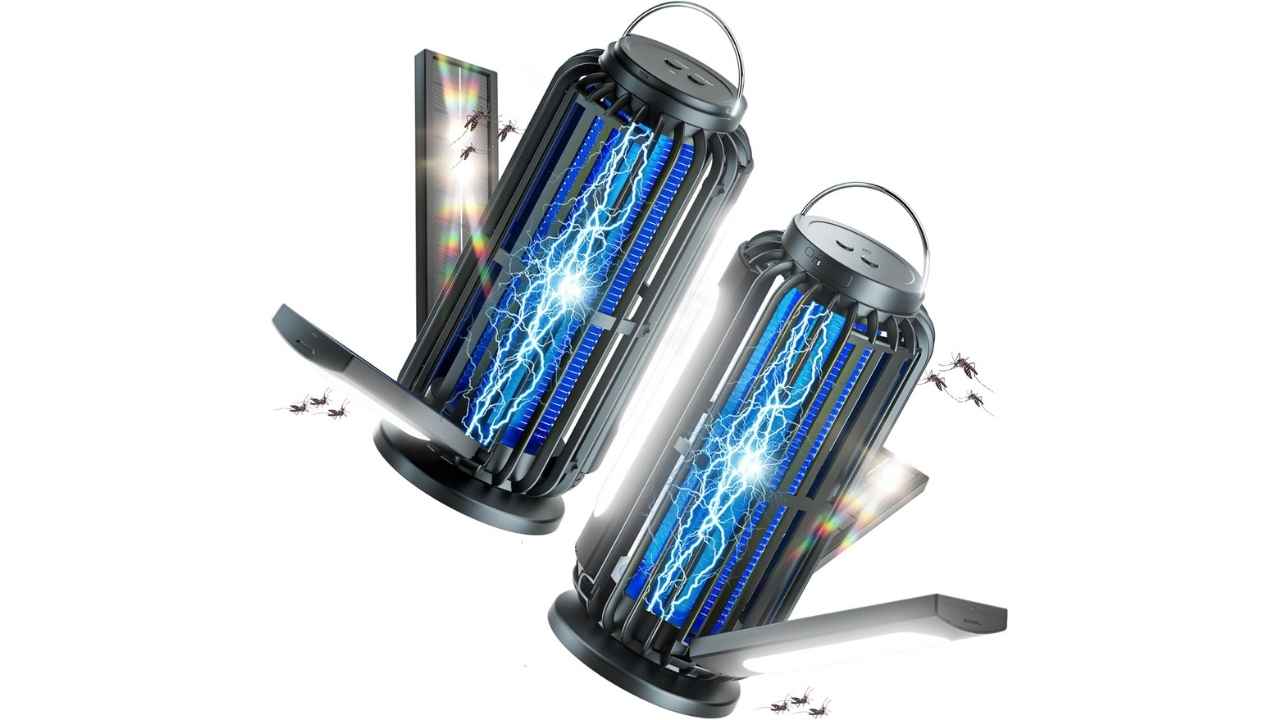 Outdoor essential TYPEC Solar Bug Zapper (36% off) Solar-powered bug zappers for patios and camping. |


