

Online dangers continue to evolve alongside the rise in digital shopping. As of 2025, nearly 8 in 10 Americans say they shop online more than they did before the COVID-19 pandemic. But with that convenience comes greater risk, especially when entering payment details on unfamiliar websites.
While you might have once looked for a padlock icon to confirm a site was secure, that visual cue has now changed. Major web browsers like Chrome, Safari, and Edge have replaced the traditional padlock with a new “page info” icon to better reflect what’s actually happening behind the scenes.
So, how can you tell if a website is secure? And does HTTPS still matter? Let’s break it down.

What’s the difference between “HTTP” and “HTTPS”?
The difference between HTTP and HTTPS is that HTTPS uses an SSL (Secure Sockets Layer) certificate to encrypt all data transfer, while HTTP is not secured with an SSL certificate and is much more open to hackers stealing sensitive information.
HTTPS is Internet security geekspeak for Hypertext Transfer Protocol Secure, and it functions similarly to HTTP, except that it works to protect communication between web servers and browsers when transporting data. A website that begins with HTTP does not have this same layer of protection.
It’s all about the letter “S”
In the simplest of terms, imagine you are sending a letter to your friend through the mail. HTTP is like sending a letter in a normal envelope. It is not very secure, and anyone who intercepts the letter can open it and read your message.
HTTPS is like sending a letter in a locked envelope. It is very secure, and only you and the recipient can open it and read your message.
Why is HTTPS more secure than HTTP?
HTTPS is more secure than HTTP because it uses an SSL certificate to encrypt the data that is transferred between the web server and the browser. This means that anyone who tries to intercept or tamper with the data will not be able to read or modify it.
How HTTPS protects your data with SSL certificates
SSL certificates also verify the identity of the website, so you can be sure that you are dealing with a legitimate site and not a fake one. An SSL certificate is a digital document that contains information about the website, such as its domain name, owner, and expiration date.
It also has a public key and a private key, which are used to encrypt and decrypt data. The public key is shared with anyone who wants to communicate with the website, while the private key is kept secret by the website owner.
How your browser verifies and encrypts data with HTTPS
When you visit a website that uses HTTPS, your browser will check the SSL certificate and make sure that it is valid and matches the website’s domain name.
If everything is okay, your browser will establish a secure connection with the website and exchange encryption keys.
Then, all the data that is sent and received will be encrypted using these keys.
Watch the latest episode of The CyberGuy Report.

Missed this event? Sign up via the registration form and see our live recording.
See Kurt’s latest Amazon picks for useful gadgets, smart home upgrades and everyday tech worth grabbing while the deals last.
How to identify HTTPS websites in your browser
You used to look for a padlock icon next to the web address to confirm HTTPS. That has changed. Most modern browsers, like Chrome, Edge, and Safari, have removed the traditional padlock icon.
Why? Because people mistakenly believed the padlock meant a website was safe overall. In truth, it only meant the connection was encrypted.
Now, you’ll see a new icon, often a small rectangle with lines, sliders, or “tune” bars. Clicking it still gives you details about the site’s certificate, permissions, and whether it’s using HTTPS.
What matters most: if you don’t see a warning like “Not secure,” then the site is using encryption.

Why you should avoid paying with credit cards on HTTP websites
Whether a site takes credit cards or not has nothing to do with whether it uses HTTP or HTTPS. However, if a site does take credit cards, it’s important that it uses HTTPS to protect the sensitive information being transferred.
If you’re on a website that uses HTTP and it’s telling you to pay for something with a credit card, you should probably steer clear of it.
The website could be a phishing page or be infected with some sort of malware that could hand your credit card information over to a hacker, and then they could do whatever they want with it.

What can I do to protect myself from a keylogging attack
There are a number of precautions that you can take to avoid becoming the next victim of a keylogging attack.
Have good antivirus software on all your devices
Keeping hackers out of your devices can often be prevented when you have good antivirus protection installed on all your devices. Having antivirus software on your devices will help make sure you are stopped from clicking on any known malicious links, attachments, or images that may install malware on your devices, allowing hackers to gain access to your personal information.
- Strong real-time protection against viruses, malware, ransomware and hacking attempts
- AI-powered scam protection to help identify suspicious emails, texts and websites
- Built-in password manager to securely store and manage logins
- 2 GB PC cloud backup to help protect important files from ransomware or hardware failure
- Smart firewall and phishing protection
- Protects 1, 3 or 5 devices
- Available for Windows, macOS, Android and iOS
- Includes real-time threat protection, smart firewall and phishing protection to guard against online attacks
Use a password manager
Keyloggers can’t record what you don’t type, so using a password manager that automatically fills in your login credentials can help you avoid typing them. You should also use strong and unique passwords for each account and change them frequently.
- Unlimited password storage
- Secure sharing
- Password health reports
- Auto-fill and emergency access
- Data breach monitoring to alert you if your credentials have been exposed
- A Security Dashboard with tools like the Data Breach Scanner and Password Health Checker to identify weak, reused, or compromised passwords
CyberGuy Exclusive Deal: Save 52% now with CyberGuy’s exclusive NordPass offer – Get 1 extra month FREE with a 2-year plan. Try 30 days risk-free for only $1.43 per month!
Keep your software and apps updated
Updating your operating system, browser, antivirus software, and other applications can patch any security vulnerabilities that hackers can exploit to install keyloggers. I know I sound like a broken record here. You should avoid clicking on suspicious links or attachments that may contain malware.
Use a Virtual Private Network (VPN)
We recommend using a VPN to protect against hackers snooping on your device. VPNs will protect you from those who want to track and identify your potential location and the websites that you visit.
ExpressVPN is the go-to choice for those who prioritize ultra-fast speeds, reliability, and top-tier security. With servers in 105 countries, ExpressVPN delivers blazing-fast performance for streaming, gaming, and secure browsing. It supports P2P file sharing, offers best-in-class encryption, and maintains a strict no-logs policy—with all servers running on RAM for enhanced privacy. You can connect up to 10 devices simultaneously, and setup takes under 2 minutes. Plus, with 24/7 live customer support and a 30-day money-back guarantee, ExpressVPN is a premium choice for security-focused users who want speed without compromise.
CyberGuy Exclusive ExpressVPN Deals:
✅ Save 75% – Get 3 months FREE with 12-month plan for $3.99/month. Try 30 days risk-free.
✅ Save 84% – Get 4 months FREE with 24-month plan for $2.49/month. Try 30 days risk-free.
Surfshark – Best for Unlimited Devices & Budget-Friendly Security
If you're looking for a more affordable VPN without sacrificing security, Surfshark is an excellent choice. Surfshark operates under a strict no-logs policy and offers top-notch encryption to keep your data safe. However, Surfshark stands out by allowing unlimited devices on a single account - making it perfect for families, small businesses, or users with multiple gadgets. If you're looking for a more affordable VPN without sacrificing security, Surfshark is an excellent choice. Surfshark operates under a strict no-logs policy and offers top-notch encryption to keep your data safe. It now runs on upgraded 100 Gbps servers, delivering faster speeds, smoother streaming, and greater reliability even during peak hours. The upgrade also makes Surfshark more future-proof with improved stability, scalability, and load balancing for growing bandwidth demands.
Surfshark stands out by allowing unlimited devices on a single account—making it perfect for families, small businesses, or users with multiple gadgets. It also includes features like MultiHop (double VPN) and Camouflage Mode to bypass VPN restrictions in censored regions. With a budget-friendly price and feature-rich security, Surfshark is ideal for those who want privacy on a budget.
CyberGuy Exclusive Surfshark Deals:
✅ Save 81% – Get 3 extra months FREE with 12-month plan for $2.98/month. Try 30 days risk-free.
✅ Save 88% – Get 3 extra months FREE with 24-month plan for $1.78/month. Try 30 days risk-free.
For best VPN software, see my expert review of the best VPNs for browsing the web privately on your Windows, Mac, Android & iOS devices
Related Links:
- Stop Google from following your every move
- Don’t fall for this bank phishing scam trick
- TSA warns of phishing scam targeting PreCheck travelers
Kurt’s key takeaways
Always stay alert when visiting unfamiliar websites. Make sure the URL begins with HTTPS, especially before entering passwords, credit card numbers, or personal details. Don’t rely on the old padlock icon; browsers now display a “page info” or “tune” icon instead, which you can click to check the site’s security and permissions. Avoid any website flagged as “Not secure,” and never enter sensitive information on a site that uses only HTTP. Even with secure encryption, only trust sites you recognize; security starts with both the connection and the company behind it.
What else do you wish websites could do to prove that they are safe and secure? Let us know by commenting below.
FOR MORE OF MY TECH TIPS AND SECURITY ALERTS, SUBSCRIBE TO MY FREE CYBERGUY REPORT NEWSLETTER HERE
Copyright 2025 CyberGuy.com. All rights reserved. CyberGuy.com articles and content may contain affiliate links that earn a commission when purchases are made.
🎙 Now Streaming: My New Podcast: The CyberGuy Report
Kurt’s Top Deals
Deals move fast and inventory can be limited, so don’t wait too long.
| 🔥 Editor’s pick  Summer entertaining Ninja SLUSHi Machine (26% off) Frozen drinks and slushies at home in minutes. | |
| 💰 Top deal 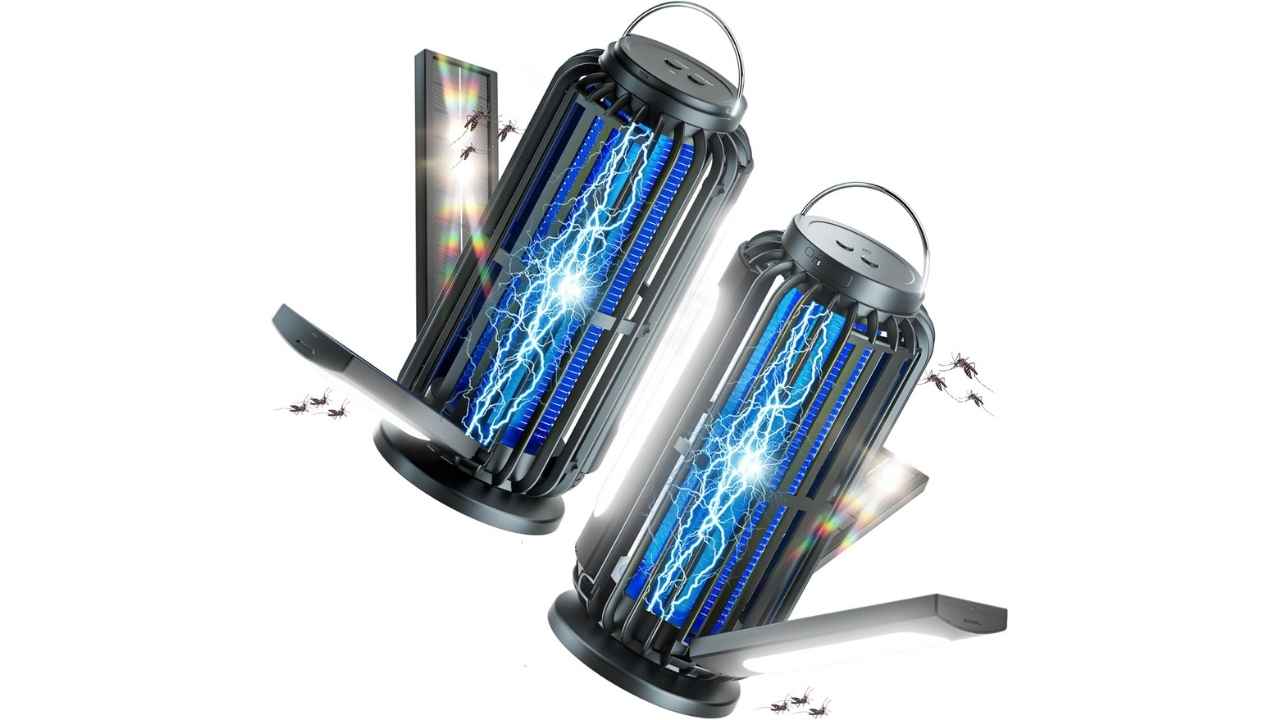 Outdoor essential TYPEC Solar Bug Zapper (36% off) Solar-powered bug zappers for patios and camping. |