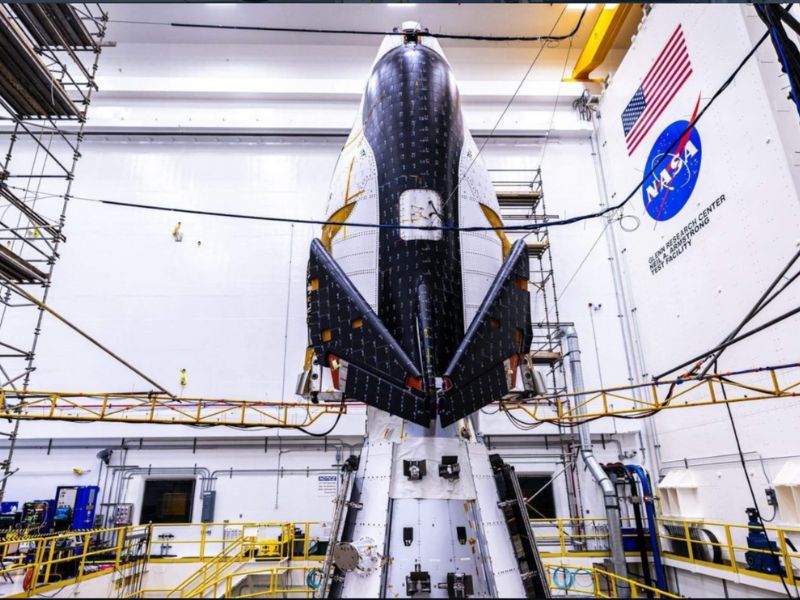



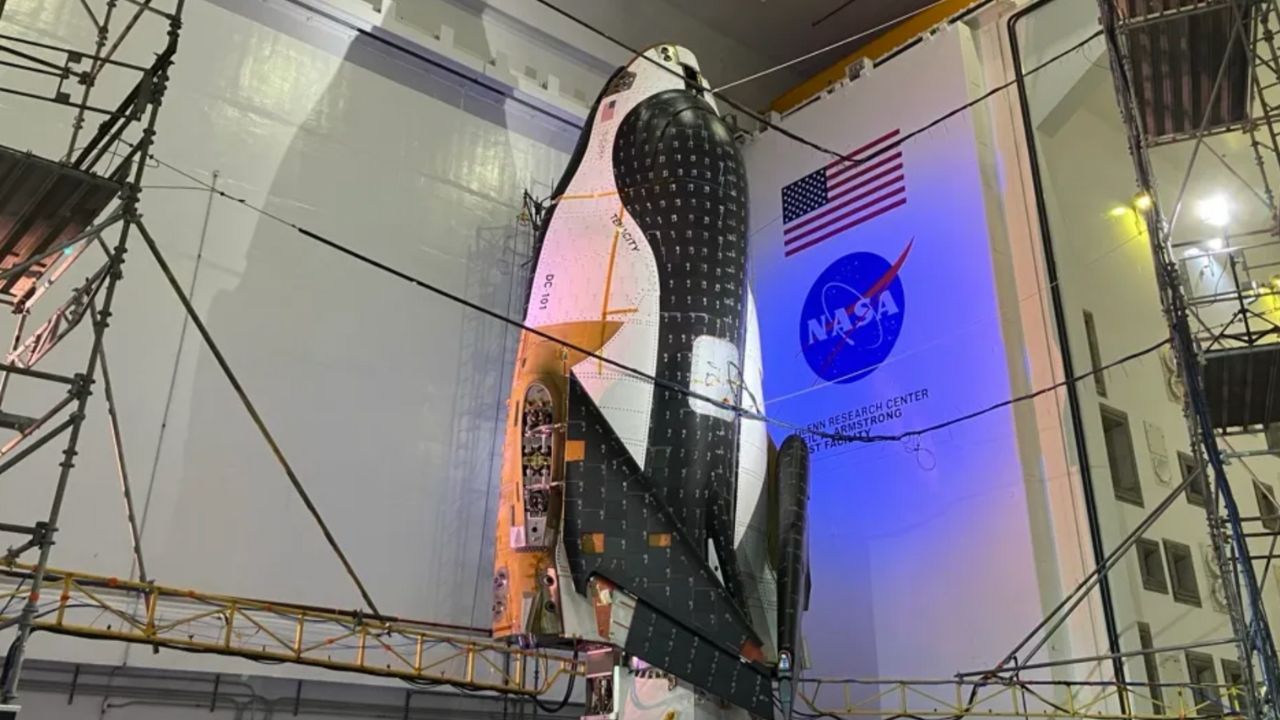
Imagine, just for a second, stepping into a world where space travel isn’t just for astronauts, but for everyone, including you. Now, picture Sierra Space’s Dream Chaser spaceplane and its Shooting Star cargo module, all lit up in soft blue lights at NASA’s Neil Armstrong Test Facility in Sandusky, Ohio.

This isn’t just some cool tech on display; it’s a peek into a future where space could be part of your everyday life and allow you to travel beyond Earth’s atmosphere. This towering 55-foot-tall spacecraft named Tenacity is the beginning of a journey that might one day take us and cargo out of this world.
Credit: Sierra Space
Testing the limits
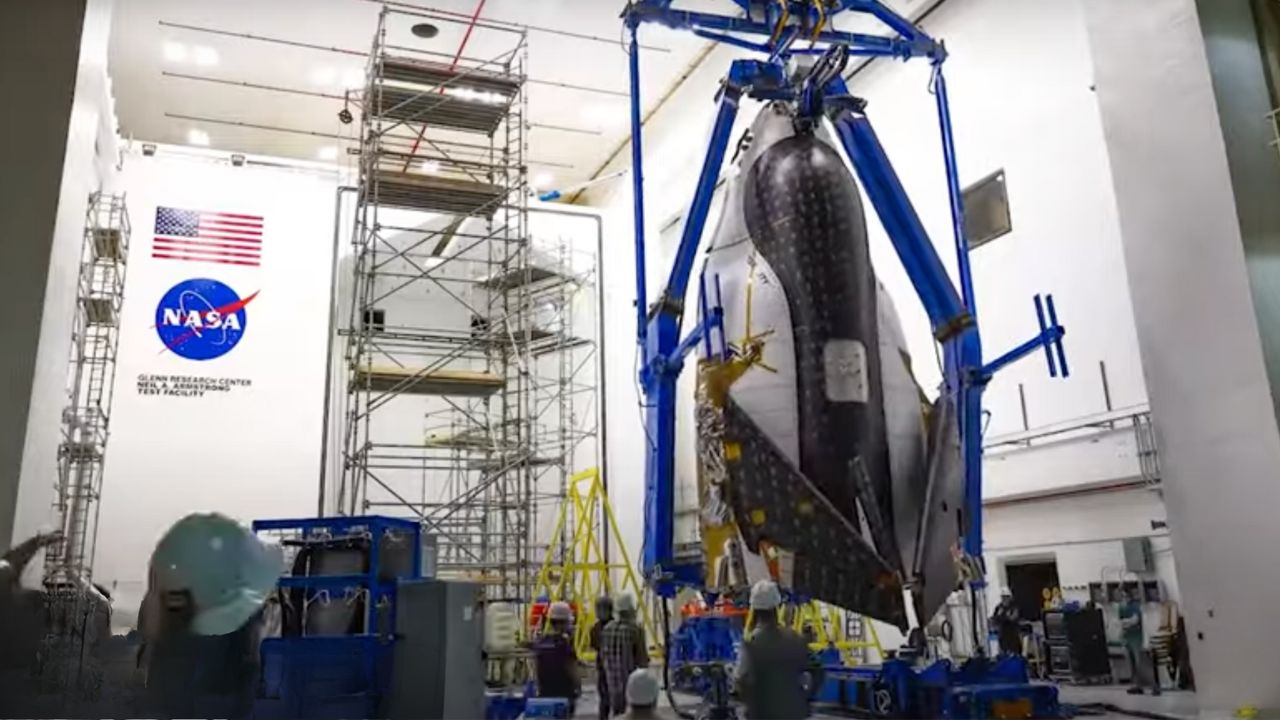
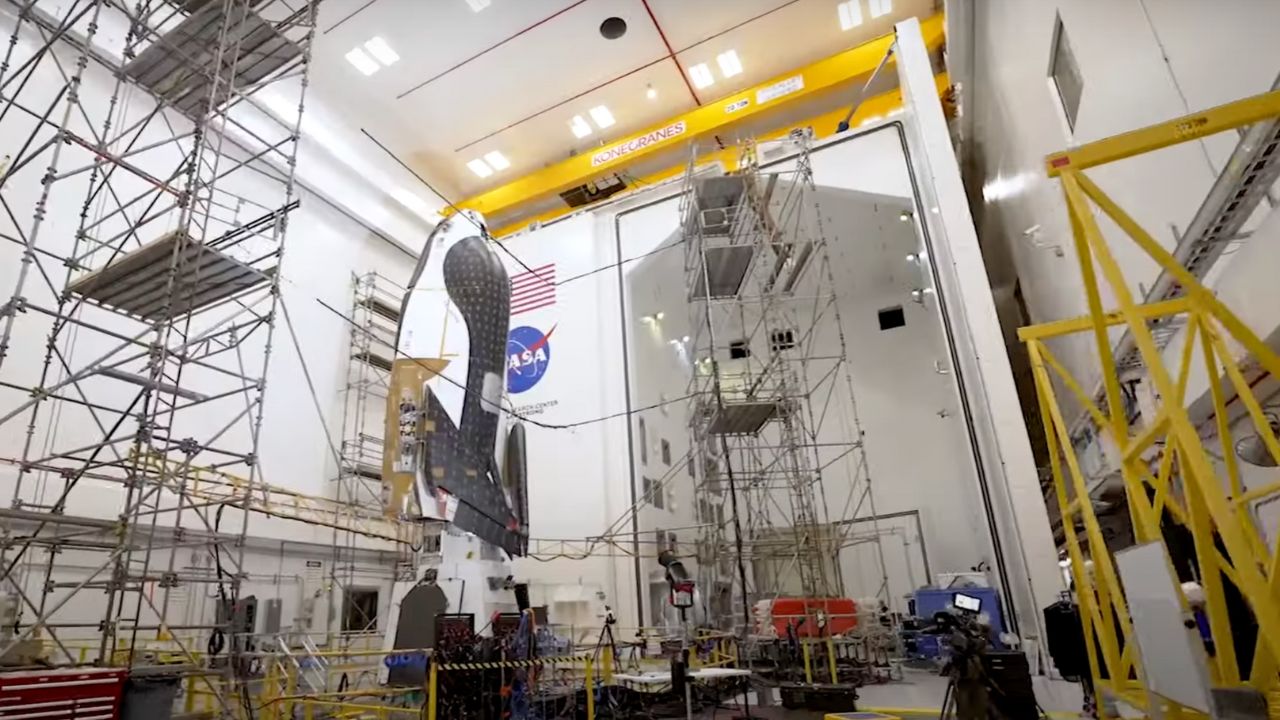
Under the rigorous scrutiny of space simulation, the Dream Chaser and its cargo module underwent a series of tests designed to face the harsh realities of launch and space flight, ensuring its readiness for the challenges ahead.
Credit: Sierra Space
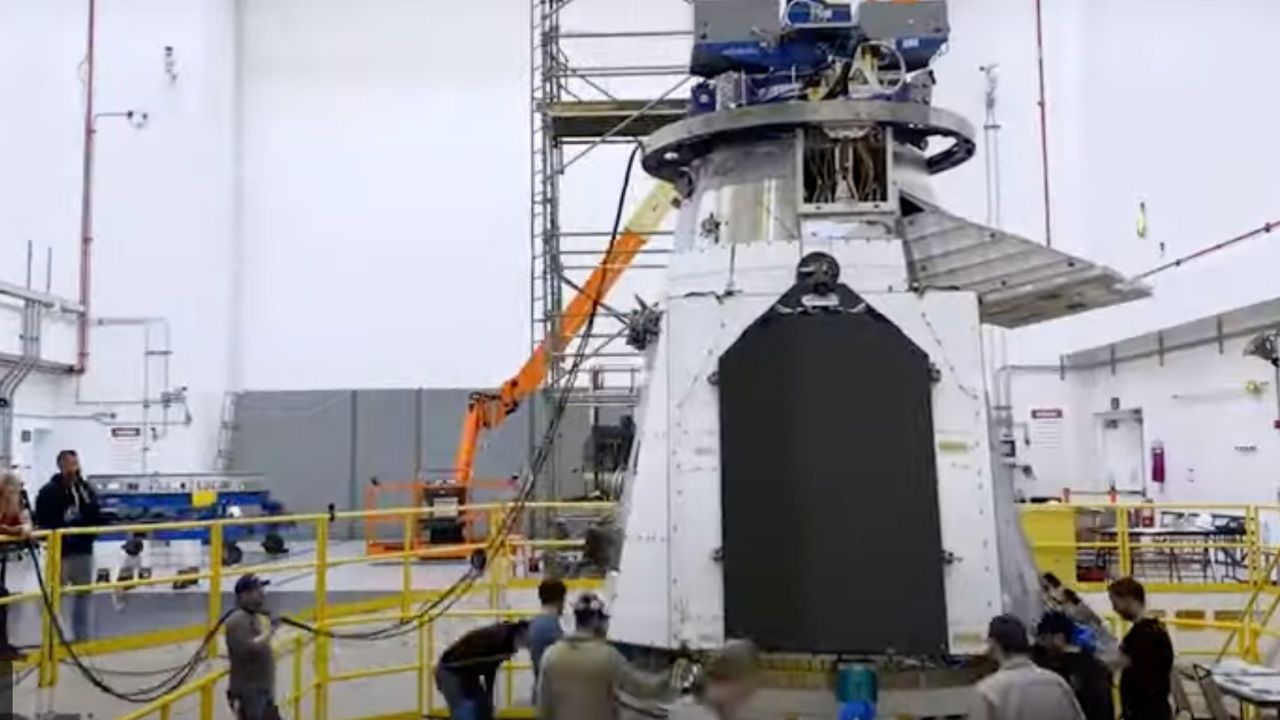
The intense tests included exposure to extreme vibrations using one of the world’s most powerful spacecraft shaker systems and will include a stint in a thermal vacuum chamber to simulate space’s unique and harsh conditions.
Credit: Sierra Space
Dream Chaser Spaceplane delayed: NASA and Sierra Space target 2026 free-flyer demonstration mission
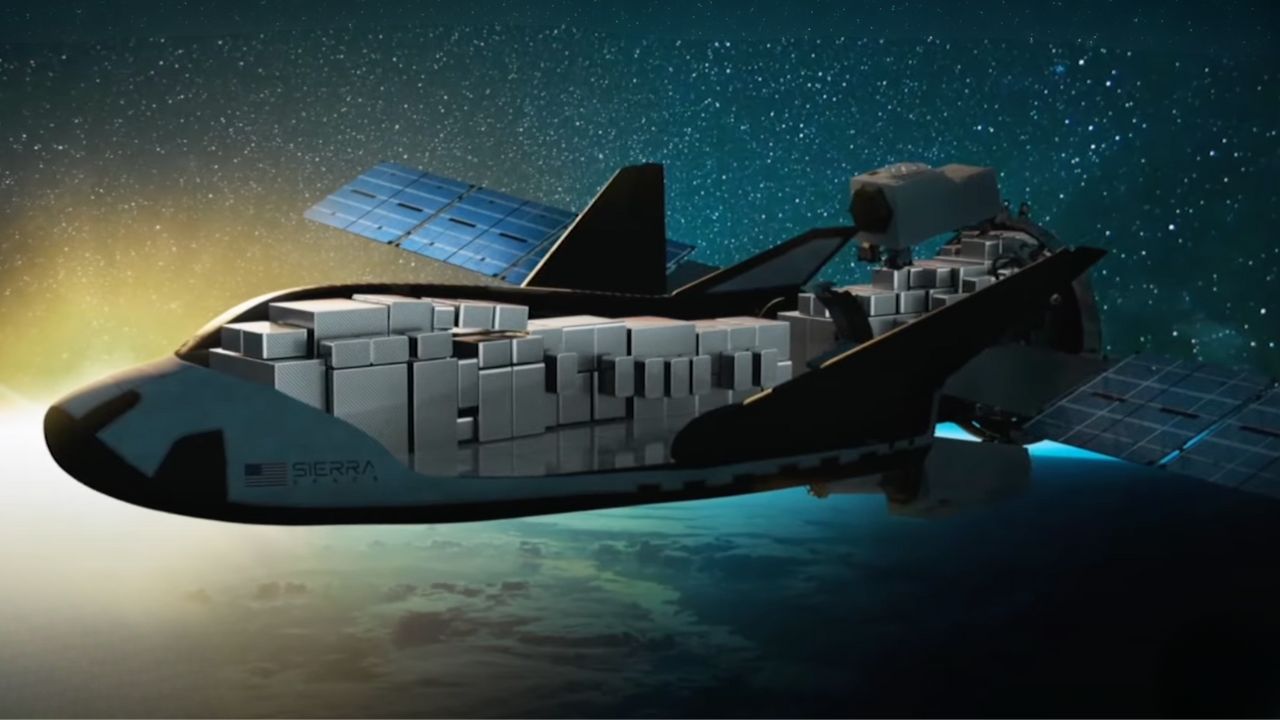
The Dream Chaser spaceplane is no longer preparing for a launch “later this year.” Its first uncrewed flight, now called the “free-flyer demonstration mission,” is targeted for no earlier than late 2026.
lass=”yoast-text-mark” />>It may not dock with the International Space Station as originally planned, as Sierra Space and NASA adjust the mission profile. NASA’s resupply obligation under the CRS-2 contract has been modified from a firm minimum number of flights to an option-based agreement.
This contract update, announced by NASA on September 26, 2025, reflects development delays, NASA’s shifting requirements for low-Earth-orbit services, and the approaching transition toward post-ISS operations planned around 2030.
These steps remain crucial as the spaceplane gears up for flight to demonstrate its ability to carry cargo and operate autonomously in orbit.
Note: The exact payload mass and number of NASA resupply missions under the CRS-2 contract are subject to change.
Credit: Sierra Space
Dream Chaser spaceplane clears crucial environmental tests
The successful completion of the initial phase of environmental testing represents a significant leap forward for Sierra Space and the Dream Chaser program. The journey to get to this place took years of development. The rigorous testing regimen has proven the spaceplane’s resilience and its readiness for the next phase of its journey, although it has not yet flown to orbit.
Credit: Sierra Space
A Texas mom says she spent the night in jail after speaking up online about dirty water in her town. The case was later dropped, but her story raises a troubling question: could something you post online ever put you at risk?

Join Kurt this Saturday, June 13 at 10 AM ET for quick phone privacy and security fixes.
See Kurt’s 2026 picks for practical tech and everyday upgrades.
Dream Chaser’s strategic transition and next steps
Sierra Space has confirmed that the first mission will now be a free-flyer demonstration flight designed to prove the spacecraft’s technology and deliver valuable data to NASA. The target launch is now late 2026, aligning with launch vehicle availability and updated scheduling.
While Sierra Space has discussed its broader ambitions for defense and commercial operations, NASA has not publicly announced any termination or major reduction of its CRS-2 contract.
The company continues to position Dream Chaser as a multi-use vehicle, capable of supporting future national security and low-Earth orbit missions once its first demonstration flight is complete.
Furthermore, this transition highlights Dream Chaser’s unique runway-landing capability, which allows rapid reuse, fast turnaround, and cost-efficient operations. These strengths make it a promising but still-unproven autonomous spacecraft in development today.
Fatih Ozmen, Executive Chair at Sierra Space, said this transition represents “the future of versatile space transportation and mission flexibility.” With this step, Sierra Space continues to position Dream Chaser at the forefront of space innovation and national defense, though operational validation will only come after its first orbital flight.
Related Links:
- Space startup unveils 1-hour orbital delivery system
- Space capsule marks milestone for bringing cargo back from orbit
- 329,000 MPH nuclear rocket leading the next era of space travel
Kurt’s key takeaways
The Dream Chaser spaceplane has been on quite the adventure. From its early development through rigorous testing, it reflects a shared dream to explore space and improve life on Earth. Although the Dream Chaser has not yet flown, it remains one of NASA’s active commercial space projects under CRS-2. Its debut is now expected in late 2026. Meanwhile, Sierra Space and NASA continue pushing the boundaries of what is possible. As a result, we stand on the edge of an exhilarating new chapter in human history. Space is no longer just a place to visit; instead, it may soon become a place to live and work. In the end, the Dream Chaser, with its innovative design and bold mission, is guiding us into this uncharted future. Though delayed, the project remains very much alive and steadily moving forward.
If you had the opportunity to visit space on board the Dream Chaser, would you feel comfortable taking that leap? What factors would influence your decision? Let us know in the comments below.
TO GET MORE OF MY SECURITY ALERTS, SUBSCRIBE TO MY FREE CYBERGUY REPORT NEWSLETTER
Copyright 2025 CyberGuy.com. All rights reserved. CyberGuy.com articles and content may contain affiliate links that earn a commission when purchases are made.
🎙 Now Streaming: My New Podcast: The CyberGuy Report
Kurt’s Top Deals
Deals move fast and inventory can be limited, so don’t wait too long.
| 🔥 Editor’s pick  Summer entertaining Ninja SLUSHi Machine (26% off) Frozen drinks and slushies at home in minutes. | |
| 💰 Top deal  Outdoor essential TYPEC Solar Bug Zapper (36% off) Solar-powered bug zappers for patios and camping. |