



Amazon’s Ring video doorbells are getting a major AI upgrade, and it is already stirring controversy. The company has started rolling out a new feature called Familiar Faces to Ring owners across the United States. Once enabled, the feature uses AI-powered facial recognition to identify people who regularly appear at your door. Instead of a generic alert saying a person is at your door, you might see something far more personal, like “Mom at Front Door.” On the surface, that sounds convenient. However, privacy advocates say this shift comes with real risks.

Credit: Amazon
How Ring’s Familiar Faces feature works
Ring says Familiar Faces helps you manage alerts by recognizing people you know. Here is how it works in practice. You can create a catalog of up to 50 faces. These may include family members, friends, neighbors, delivery drivers, household staff or other frequent visitors. After labeling a face in the Ring app, the camera will recognize that person as they approach. Anyone who regularly passes in front of your Ring camera can be labeled by the device owner if they choose to do so, even if that person is unaware they are being identified.
From there, Ring sends personalized notifications tied to that face. You can also fine-tune alerts on a per-face basis, which means fewer pings for your own comings and goings. Importantly, the feature is not enabled by default. You must turn it on manually in the Ring app settings. Faces can be named directly from Event History or from the Familiar Faces library. You can edit names, merge duplicates or delete faces at any time.
Amazon says unnamed faces are automatically removed after 30 days. Once a face is labeled, however, that data remains stored until the user deletes it.

Credit: Amazon
Why privacy groups are pushing back
Despite Amazon’s assurances, consumer protection groups and lawmakers are raising alarms. Ring has a long history of working with law enforcement. In the past, police and fire departments were able to request footage through the Ring Neighbors app. More recently, Amazon partnered with Flock, a company that makes AI-powered surveillance cameras widely used by police and federal agencies. Ring has also struggled with internal security. In 2023, the FTC fined Ring $5.8 million after finding that employees and contractors had unrestricted access to customer videos for years. The Neighbors app previously exposed precise home locations, and Ring account credentials have repeatedly surfaced online. Because of these issues, critics argue that adding facial recognition expands the risk rather than reducing it.
Electronic Frontier Foundation (EFF) staff attorney Mario Trujillo tells CyberGuy, “When you step in front of one of these cameras, your faceprint is taken and stored on Amazon’s servers, whether you consent or not. Today’s feature to recognize your friend at your front door can easily be repurposed tomorrow for mass surveillance. It is important for state regulators to investigate.” The Electronic Frontier Foundation is a well-known nonprofit organization that focuses on digital privacy, civil liberties and consumer rights in the tech space.
Where the feature is blocked and why that matters
Legal pressure is already limiting where Familiar Faces can launch. According to the EFF, privacy laws are preventing Amazon from offering the feature in Illinois, Texas and Portland, Oregon. These jurisdictions have stricter biometric privacy protections, which suggests regulators see facial recognition in the home as a higher-risk technology. U.S. Senator Ed Markey has also called on Amazon to abandon the feature altogether, citing concerns about surveillance creep and biometric data misuse.
Amazon says biometric data is processed in the cloud and not used to train AI models. The company also claims it cannot identify all locations where a face appears, even if law enforcement asks. Still, critics point out the similarity to Ring’s Search Party feature, which already scans neighborhoods to locate lost pets.
We reached out to Amazon for comment, but did not receive a response before our deadline.
Ring’s other AI feature feels very different
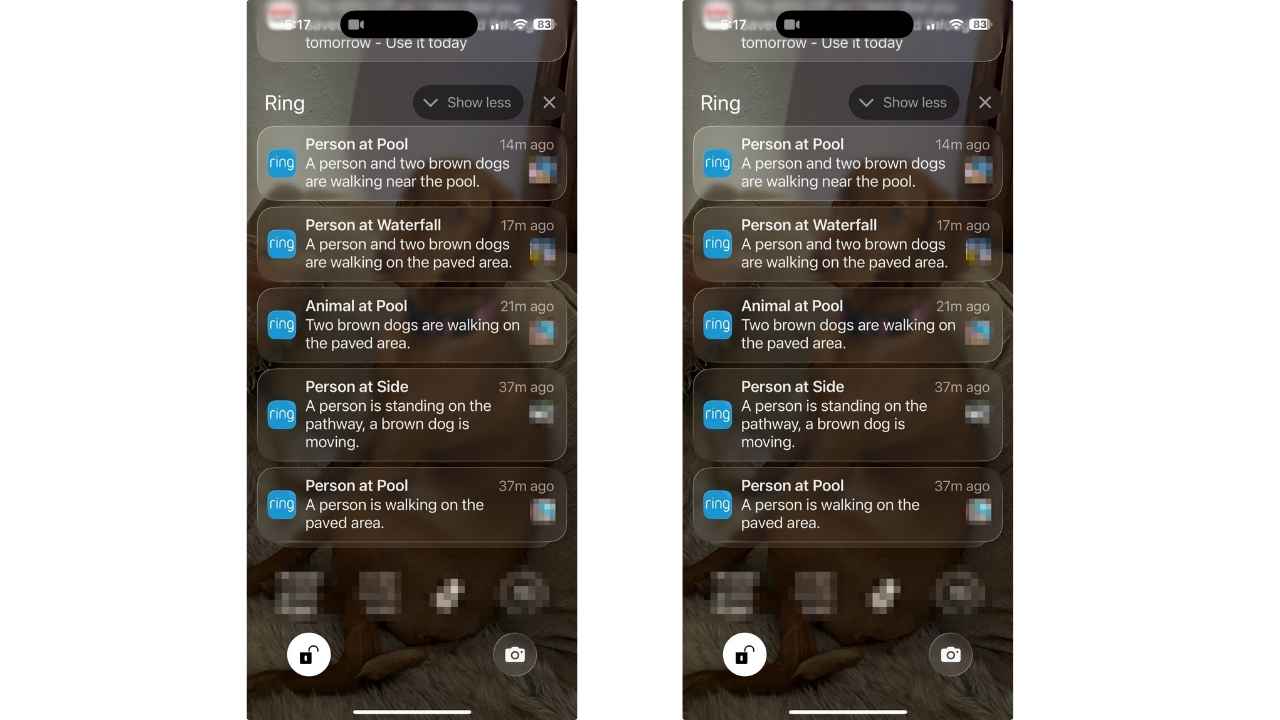
Not all of Ring’s AI updates raise the same level of concern. Ring recently introduced Video Descriptions, a generative AI feature that summarizes motion activity in plain text. Instead of guessing what triggered an alert, you might see messages like “A person is walking up the steps with a black dog” or “Two people are peering into a white car in the driveway.”

Credit: Amazon
Watch the latest episode of The CyberGuy Report.

Missed this event? Sign up via the registration form and see our live recording.
See Kurt’s latest Amazon picks for useful gadgets, smart home upgrades and everyday tech worth grabbing while the deals last.
How Video Descriptions decides what matters
This AI focuses on actions rather than identities. It helps you quickly decide whether an alert is urgent or routine. Over time, Ring says the system can recognize activity patterns around a home and only notify you when something unusual happens. However, as with any AI system, accuracy can vary depending on lighting, camera angle, distance and environmental conditions. Video Descriptions is currently rolling out in beta to Ring Home Premium subscribers in the U.S. and Canada. Unlike facial recognition, this feature improves clarity without naming or tracking specific people. That contrast matters.
Should you turn Familiar Faces on
If you own a Ring doorbell, caution is wise. While Familiar Faces may reduce notification fatigue, labeling people by name creates a detailed record of who comes to your home and when. Given Ring’s past security lapses and close ties with law enforcement, many privacy experts recommend keeping the feature disabled. If you do use it, avoid full names and remove faces you no longer need. In many cases, simply checking the live video feed is safer than relying on AI labels. Not every smart home feature needs to know who someone is.
How to turn Familiar Faces on or off in the Ring app
If you want to review or change this setting, you can do so at any time in the Ring mobile app.
To enable Familiar Faces:
- Open the Ring app
- Tap the menu icon
- Select Control Center
- Tap Video and Snapshot Capture
- Select Familiar Faces
- Toggle the feature on and follow the on-screen prompts
To turn Familiar Faces off:
- Open the Ring app
- Go to Control Center
- Tap Video and Snapshot Capture
- Select Familiar Faces
- Toggle the feature off
Turning the feature off stops facial recognition and prevents new faces from being identified. Any labeled faces can also be deleted manually from the Familiar Faces library if you want to remove stored data.
Alexa is now answering your door for you
Amazon is also rolling out a very different kind of AI feature for Ring doorbells, and it lives inside Alexa+. Called Greetings, this update gives Ring doorbells a conversational AI voice that can interact with people at your door when you are busy or not home. Instead of identifying who someone is, Greetings focuses on what they appear to be doing. Using Ring’s video descriptions, the system looks at apparel, actions, and objects to decide how to respond.
For example, if someone in a delivery uniform drops off a package, Alexa can tell them exactly where to leave it based on your instructions. You can even set preferences to guide delivery drivers toward a specific spot, or let them know water or snacks are available. If a delivery requires a signature, Alexa can ask the driver when they plan to return and pass that message along to you. The feature can also handle sales representatives or service vendors. You might set a rule such as politely declining sales pitches without ever coming to the door yourself.
Greetings can also work for friends and family. If someone stops by while you are away, Alexa can greet them and ask them to leave a message for you. That interaction is saved so you can review it later. That said, the system is not perfect. Because it relies on visual context rather than identity, mistakes can happen. A friend who works in logistics could show up wearing a delivery uniform and be treated like a courier instead of being invited to leave a message. Amazon acknowledges that accuracy can vary. Importantly, Amazon says Greetings does not identify who a person is. It uses Ring’s video descriptions to determine the main subject in front of the camera and generate responses, without naming or recognizing individuals. That makes it fundamentally different from the Familiar Faces feature, even though both rely on AI.
Greetings is compatible with Ring Wired Doorbell Pro (3rd Gen) and Ring Wired Doorbell Plus (2nd Gen). It is available to Ring Premium Plan subscribers who have video descriptions enabled and is currently rolling out to Alexa+ Early Access users in the United States and Canada.
Thinking about a Ring doorbell?
If you are already in the Ring ecosystem or considering a video doorbell, Ring’s lineup includes models with motion alerts, HD video, night vision, and optional AI-powered features such as Video Descriptions. While Familiar Faces remains controversial and can be turned off, many homeowners still use Ring doorbells for basic security awareness and package monitoring. If you decide Ring is right for your home, you can check out the latest Ring Video Doorbell models below or compare features and pricing with other options by clicking here.
Ring Wired Doorbell Pro (Newest Model)

The Ring Wired Doorbell Pro delivers premium home or business security with stunning Retinal 4K video, a wide-angle view, and up to 10x Enhanced Zoom to catch details clearly. Advanced features like 3D Motion Detection, Low-Light Sight, and Two-Way Talk with Audio+ help you see, hear, and speak to visitors in real time with fewer false alerts. Designed for nonstop protection, it installs via hardwiring and works seamlessly with Alexa, all wrapped in sleek, high-end finishes to match your home’s exterior.
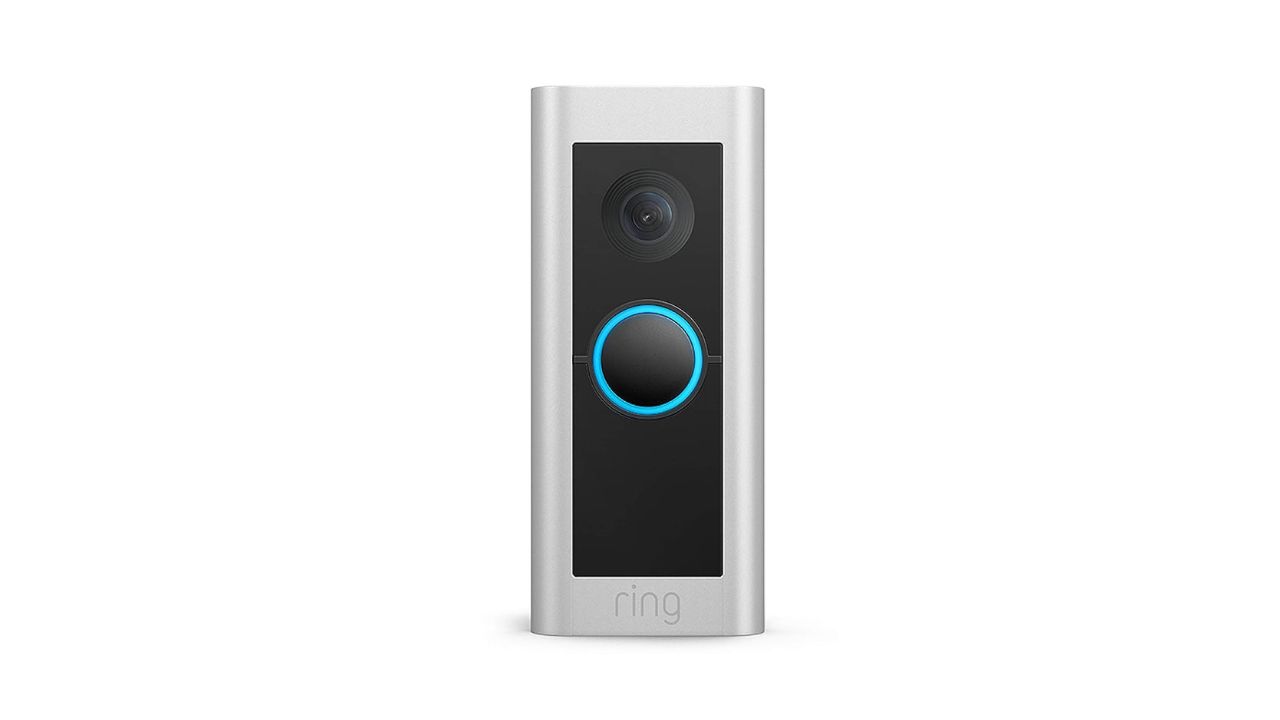
Ring Video Doorbell Pro 2
Credit: Ring
The Ring Video Doorbell Pro 2 is certainly one of the more common types of wired video doorbells you might see, and for good reason. The doorbell comes with some great features, including Head-to-Toe HD+ Video, Two-Way Talk with Audio+, 3D Motion Detection, built-in Alexa Greetings when you get a Ring Protect Plan subscription, and customizable privacy settings. And if you get that Ring Protect Plan, you can record all your videos, review what you missed for up to 180 days, and share videos and photos.
Related Links:
- AI cameras are giving DC’s air defense a major upgrade
- The AI camera stripping away privacy in the blink of an eye
- Smart home hacking fears: What’s real and what’s hype
Kurt’s key takeaways
Amazon Ring’s AI facial recognition feature shows how quickly convenience can collide with privacy. Familiar Faces may offer smarter alerts, but it also expands surveillance into deeply personal spaces. Meanwhile, features like Video Descriptions prove that AI can be useful without identifying people. As smart home tech evolves, the real question is not what AI can do but what it should do.
Would you trade fewer notifications for a system that recognizes and names everyone who comes to your door? Let us know your thoughts in the comments below.
FOR MORE OF MY TECH TIPS & SECURITY ALERTS, SUBSCRIBE TO MY FREE CYBERGUY REPORT NEWSLETTER HERE
Copyright 2025 CyberGuy.com. All rights reserved. CyberGuy.com articles and content may contain affiliate links that earn a commission when purchases are made.
🎙 Now Streaming: My New Podcast: The CyberGuy Report
Kurt’s Top Deals
Deals move fast and inventory can be limited, so don’t wait too long.
| 🔥 Editor’s pick  Summer entertaining Ninja SLUSHi Machine (26% off) Frozen drinks and slushies at home in minutes. | |
| 💰 Top deal  Outdoor essential TYPEC Solar Bug Zapper (36% off) Solar-powered bug zappers for patios and camping. |


