



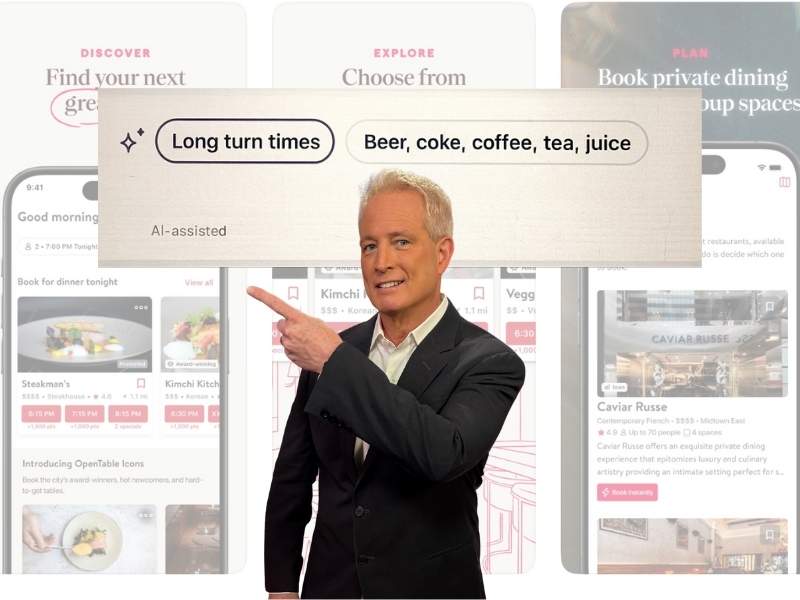
Maybe you order sparkling water, start every meal with an appetizer or prefer dining right when the restaurant opens. You might not track these habits. OpenTable might. Some restaurants are now seeing new AI-assisted tags about diners when they book a table. These tags can note drink patterns, spending levels, review habits and last-minute cancellations.
These insights surfaced after Kat Menter, a host at a Michelin-starred restaurant who posts about food under the name Eating Out Austin, spotted the new “AI-assisted” tags at work. She shared a look at the system in a TikTok video that quickly caught attention. Media outlets then confirmed the test with additional restaurants.

Credit: TikTokj
How OpenTable gathers this information
OpenTable integrates with POS (Point of Sale) platforms such as Toast or Epos. These systems handle orders, payments and timing during a meal. When your contact details match your OpenTable account, the platform can connect your visit to your profile.
This can include arrival time, general order details, time spent and bill totals. Reporting shows that these items help OpenTable generate AI summaries of non-identifiable guest data when the restaurant uses a supported POS system and has enabled data sharing. You do not need to book through OpenTable for this to happen. You only need an account and matching contact information.
Some users who pulled their data through OpenTable’s privacy request form saw very limited information. Basic contact details and a list of past reservations were the main items. That suggests the insight level depends on which restaurants use POS integrations and how long they have used them.

Credit: OpenTable
Why restaurants want these insights
Restaurants have tracked guest preferences for years. Staff may note favorite dishes or preferred seating. They may watch for frequent lateness or recurring celebrations. This helps them shape a smooth visit.
OpenTable’s AI-summarized guest insights aim to offer a simplified version of these notes. They highlight drink categories, spending ranges, or behavior patterns. However, Menter notes the tags can be off base. A single business dinner can mark someone as a high spender. Eating with friends who order cocktails can make a person look like a cocktail lover. Because of this, Menter treats the tags as loose suggestions rather than reliable signals.

Credit: OpenTable
How the AI works
OpenTable says the AI does not process personal guest data. Instead, it is employed for high-level classification and categorization of large, anonymized data sets. For instance, the AI analyzes various point-of-sale descriptions (like “glass of cabernet”) to consistently categorize them as “red wine,” “white wine,” etc., without ever interacting with specific guest profiles.
The platform says these insights can help staff suggest dishes or set a relaxed pace. OpenTable also says the use of POS information depends on the privacy settings you choose, and you can review, adjust, or opt out of data sharing at any time. Still, the privacy policy uses broad terms like dining preferences.
We reached out to OpenTable for a comment, and a representative shared this statement with CyberGuy,
“Guest insights are the engine of personalization, allowing restaurants to optimize their service and deliver the kind of thoughtful hospitality that both benefits the business and offers a special experience for the diner. These insights come from a mix of sources — including OpenTable, our restaurant partners, and POS partners — and are limited to non-confidential information. They might help a server suggest a dish you’ll love or recognize that you prefer a more relaxed dining pace. We also share these insights across our network so restaurants can learn and improve the hospitality experience for everyone, not just individual guests. You’re in charge of what data you share. Through your OpenTable preferences and settings, you can review, adjust, or opt out of data sharing at any time. What we share with restaurants is guided by the choices you’ve made in your privacy preferences. You can read OpenTable’s privacy policy here.”
What data gets shared and how to limit it
If a diner is opted in, OpenTable shares your name, contact details, party size, and special requests with the restaurant you book. The company also confirms that participating restaurants share POS data with OpenTable. This can include items ordered, bill totals, and how long you stayed. OpenTable then turns this into aggregated insights.
Watch the latest episode of The CyberGuy Report.

Missed this event? Sign up via the registration form and see our live recording.
See Kurt’s latest Amazon picks for useful gadgets, smart home upgrades and everyday tech worth grabbing while the deals last.
OpenTable reportedly shares insights across its broader restaurant network. This applies only where enabled and only for restaurants on the OpenTable Pro plan, and is a feature in Beta.
How to turn off the “Point of sale information” toggle
If you want more privacy, you can turn off the “Point of sale information” setting:
- Log in to your OpenTable account
- Tap on your profile in the upper right corner
- Click Account settings
- Tap Communications
- Scroll down and toggle off Allow OpenTable to use Point of Sale information
- Click Save
This stops your order history from contributing to future insights.

What this means to you
Your dining habits may move with you when you dine at restaurants that use OpenTable Pro.
This awareness helps you understand what your apps track. It also gives you the chance to adjust your privacy settings so you stay in control of your information.
Kurt’s key takeaways
Dining out should feel simple, yet today’s tech adds a new layer to the experience. These AI-assisted tags give restaurants extra insight, but they also remind you how much of your behavior gets logged behind the scenes. By checking your privacy settings and turning off POS data sharing, you keep more control over what follows you from one meal to the next. Staying aware makes a big difference. It helps you enjoy your night out without wondering who’s tracking your habits or how your data might appear on a screen. With a few quick choices, you can shape what restaurants see and keep your preferences truly personal.
Would you change how you dine out if you knew your ordering habits might follow you to restaurants you have never visited? Let us know in the comments below.
FOR MORE OF MY TECH TIPS & SECURITY ALERTS, SUBSCRIBE TO MY FREE CYBERGUY REPORT NEWSLETTER HERE
Copyright 2025 CyberGuy.com. All rights reserved. CyberGuy.com articles and content may contain affiliate links that earn a commission when purchases are made.
🎙 Now Streaming: My New Podcast: The CyberGuy Report
Kurt’s Top Deals
Deals move fast and inventory can be limited, so don’t wait too long.
| 🔥 Editor’s pick  Summer entertaining Ninja SLUSHi Machine (26% off) Frozen drinks and slushies at home in minutes. | |
| 💰 Top deal  Outdoor essential TYPEC Solar Bug Zapper (36% off) Solar-powered bug zappers for patios and camping. |


1 comment
RE: OPEN TABLE. One of our local better eating places will only accept reservations thru “Open Table”. They lost us as a customer.