



Driving an electric vehicle could soon mean charging as you go. A new wireless charging pilot in France is showing how coils built into the road can transfer more than 300 kilowatts of power to moving EVs. This breakthrough could make long trips possible without stopping at a charging station.
Credit: Electreon Wireless
The road that powers your vehicle
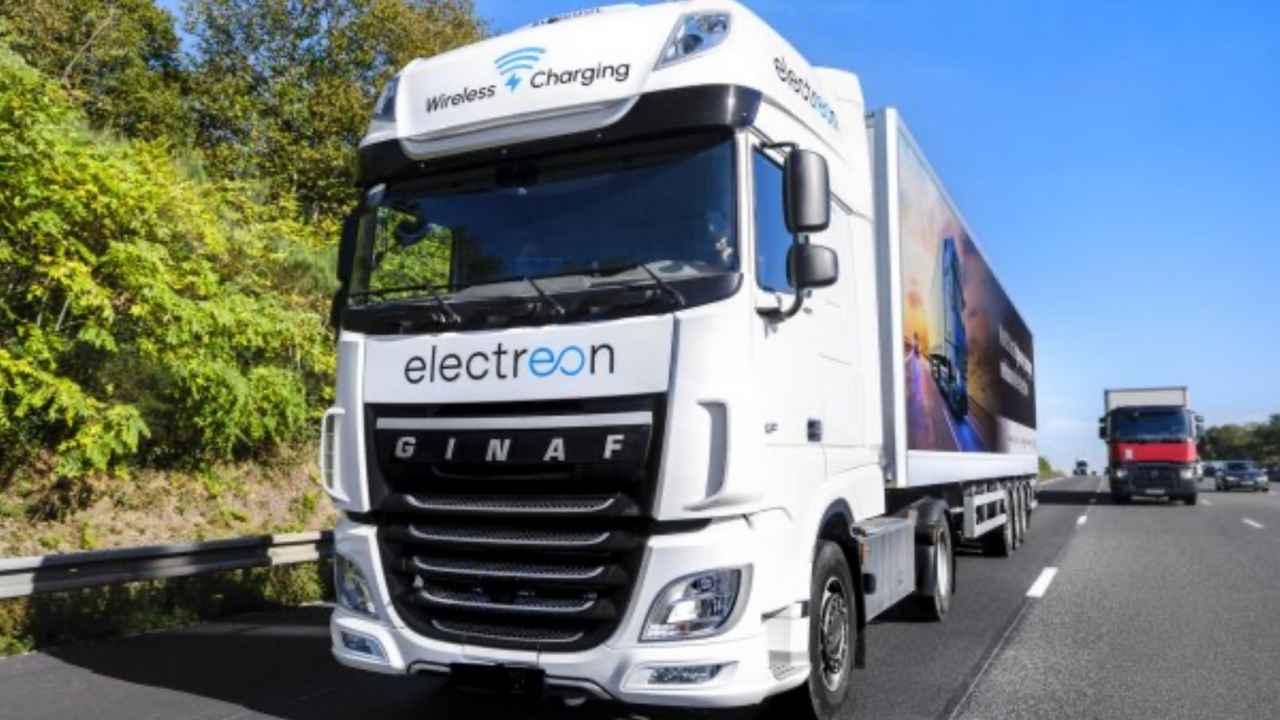
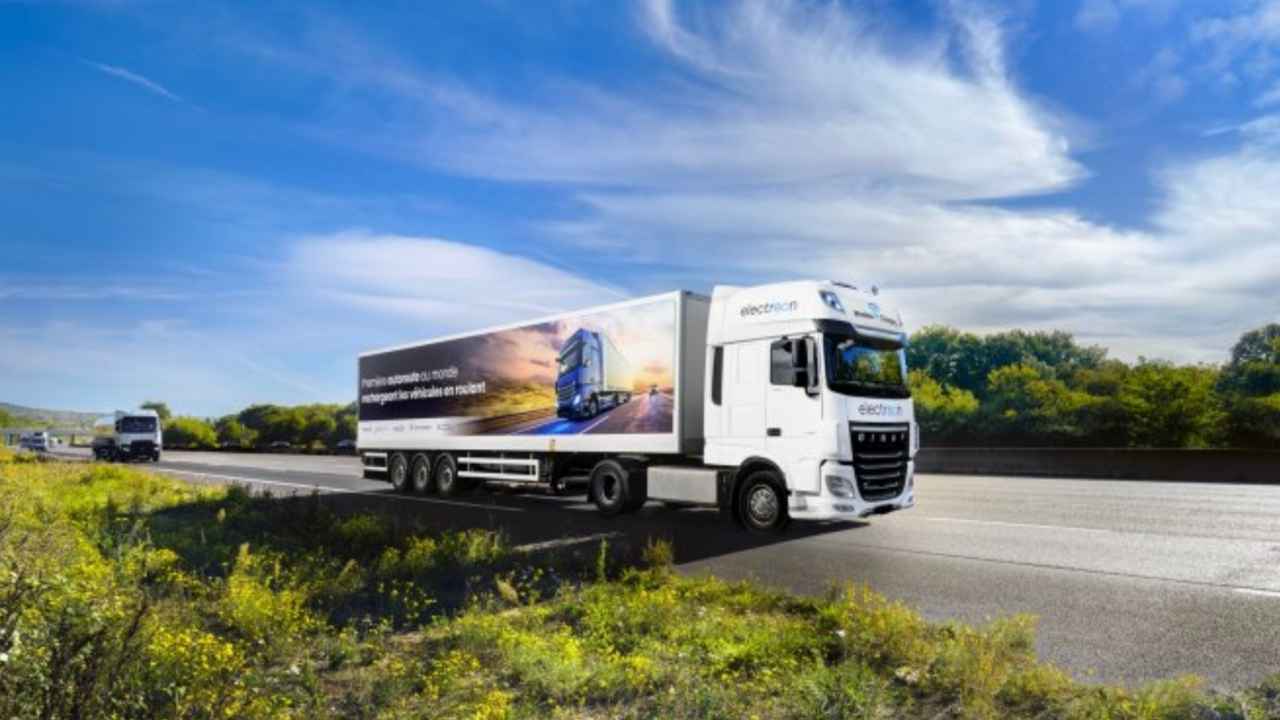
The technology comes from Electreon Wireless, working with Vinci Construction, Gustave Eiffel University, and Hutchinson. Together, they’ve installed about a one-mile stretch of road near Paris that can transfer energy to EVs in motion.
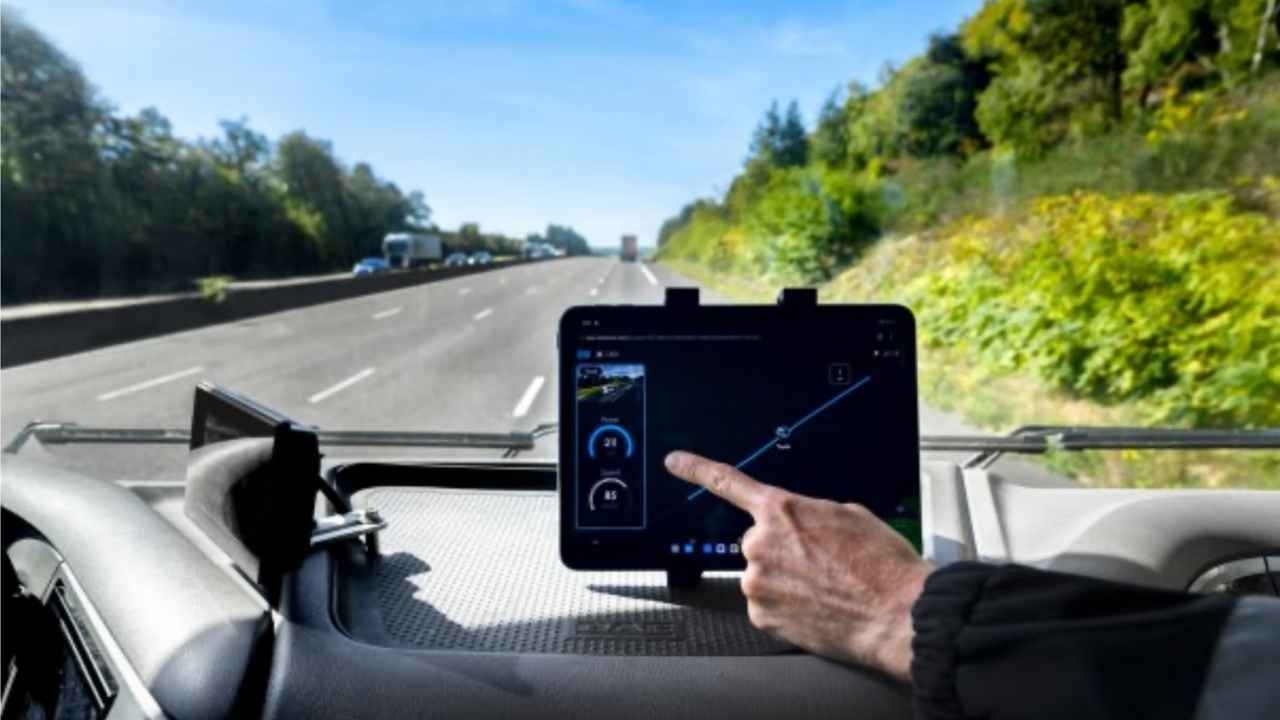
So far, the system has powered a truck, van, car, and bus-all equipped with special pickup coils. Early tests show the system can deliver peak power over 300 kW, and more than 200 kW under steady conditions. That’s strong enough to keep large cargo trucks rolling for miles without a pit stop.
Credit: Electreon Wireless
Charging ahead: Why it matters
If widely adopted, dynamic wireless charging could change how America powers transportation. Heavy-duty trucks could use smaller, cheaper batteries. Delivery vehicles and buses could stay on the road longer with less downtime.
For drivers, it could mean never having to worry about range anxiety again. Instead of hunting for the nearest charger, the highway itself could be your power source.
Credit: Electreon Wireless
The roadblocks ahead
The big questions now are about cost and control. Who pays to install these power roads? How much will it cost to use them? Public-private partnerships may hold the key, but until those details are ironed out, large-scale rollout remains a challenge.
Still, with global momentum building, it’s only a matter of time before dynamic wireless charging becomes part of everyday driving.
What this means for you
This innovation is not limited to Europe. In Detroit, Michigan, a public road on 14th Street already uses embedded charging coils that can send power to EVs as they move. In Indiana, Purdue University and the Indiana Department of Transportation are building a quarter-mile highway section designed to charge electric vehicles, including heavy trucks, while they travel.
For drivers, this technology could make owning an EV easier and more practical. Your vehicle could recharge during normal trips without the need to stop, plug in, or wait. That level of convenience could help expand EV adoption across the United States, lowering emissions and fuel costs for millions.
Kurt’s key takeaways
Wireless charging roads are moving from concept to construction and showing real promise for a new era of electric travel. The idea that vehicles could charge while driving has the potential to transform how we move goods, commute, and use energy. There are still big questions about who will fund widespread installation and how well the system will perform under real traffic and weather conditions. The technology is advancing fast, but scaling it will take time, collaboration, and investment. If these challenges can be overcome, dynamic wireless charging could redefine the way we think about mobility and sustainability.
Do you think this is really a viable way to power the future of transportation? Let us know your thoughts in the comments below.
Watch the latest episode of The CyberGuy Report.

Missed this event? Sign up via the registration form and see our live recording.
See Kurt’s Prime Day picks for useful gadgets, practical upgrades and everyday tech while the deals last.
FOR MORE OF MY TECH TIPS & SECURITY ALERTS, SUBSCRIBE TO MY FREE CYBERGUY REPORT NEWSLETTER HERE
Copyright 2025 CyberGuy.com. All rights reserved. CyberGuy.com articles and content may contain affiliate links that earn a commission when purchases are made.
🎙 Now Streaming: My New Podcast: The CyberGuy Report
Kurt’s Top Deals
Deals move fast and inventory can be limited, so don’t wait too long.
| 🔥 Editor’s pick  Summer entertaining Ninja SLUSHi Machine (26% off) Frozen drinks and slushies at home in minutes. | |
| 💰 Top deal  Outdoor essential TYPEC Solar Bug Zapper (36% off) Solar-powered bug zappers for patios and camping. |


3 comments
There is likely a big problem with the Power Transfer Efficiency of such a solution (e=Po/Pi). When transformer coils are far apart, the amount of flux leakage can be quite high. This results in high energy losses (Power_Into “the charging system in the road” VS. Power_Out “the car battery being charged”). Something else that is part of the overall losses will be the power lost by self heating of the coils in the road. Will all these coils in the roads be superconductors with liquid cooling? I think not. Cost and availability of enough rare material to blanket highways with these things will be prohibitive, if not impossible to find that much material worldwide, let alone the cost to make the conductors! There should be a much more careful engineering analysis of all of these problems before people tout this technology as viable. It really is irresponsible to do so otherwise.
Just to add a few more thoughts…
If there are high energy losses in all of this… then how many more power plants and their energy losses and potential emissions will need to be added to the total equation. Compare that with the total power transfer of continuing to use petrochemicals. which in the end may be easy more efficient overall.
Then there is the problem of system resiliency. An electric system is fragile overall. it would be easy to shut down a whole state or country and immobilize a people with some hacker or foreign power to just come in and throw the switch. Let alone your own government. Converting to electric power (which is really not portable and storable like a gas can) is a serious threat to national security and individual freedom. And would give incredible and almost absolute power to just a few people.
If cars are dependent on such a power delivery system, then how would you travel into the mountains or off road anywhere fir any significant length of time?
And if the power transfer is low, then you are even more dependent than before, because you would be tied to the system, even up to the point of constantly, just to keep going. And what about big trucks? Such a low efficiency system would possibly struggle to provide enough power to get large semi’s up long hills where the demand would be high.
Just to add a few more thoughts…
If there are high energy losses in all of this… then how many more power plants and their energy losses and potential emissions will need to be added to the total equation? Compare that with the total power transfer of continuing to use petrochemicals. which in the end may be easy more efficient overall.
Then there is the problem of system resiliency. An electric system is fragile overall. it would be easy to shut down a whole state or country and immobilize a people with some hacker or foreign power to just come in and throw the switch. Let alone your own government. Converting to electric power (which is really not portable and storable like a gas can) is a serious threat to national security and individual freedom. And would give incredible and almost absolute power to just a few people.
If cars are dependent on such a power delivery system, then how would you travel into the mountains or off-road anywhere fir any significant length of time?
And if the power transfer is low, then you are even more dependent than before, because you would be tied to the system, even up to the point of constantly just to keep going. And what about big trucks? Such a low efficiency system would possibly struggle to provide enough power to get large semi’s up long hills where the demand would be high.