



Ransomware gangs once thrived on infected email attachments and bogus invoices, but security-savvy users and hardened mail gateways have weakened those tactics. Attackers are now focusing on a subtler trick that targets the small checkbox labeled “I’m not a robot” that most people click without thinking.
A widespread campaign known as MacReaper has compromised more than 2,800 legitimate websites and redirects visitors to an infection process designed specifically for Apple computers. The operation relies on visual trust signals, including a convincing fake of Google’s reCAPTCHA, along with hidden clipboard code that ends with the installation of Atomic macOS Stealer (AMOS) malware, a data-harvesting infostealer distributed through Telegram.

How does the attack unfold?
When a Mac user visits one of the compromised websites, they don’t see the page they were expecting. Instead, the site displays a full-screen imitation of Google’s familiar reCAPTCHA box.
This fake reCAPTCHA appears harmless, simply asking the user to click “I’m not a robot.” However, when the user clicks the box, a hidden command is silently copied to their clipboard. Immediately afterward, the page displays a friendly message, complete with familiar macOS keyboard shortcut visuals, explicitly instructing the user to open Terminal and paste what they’ve just copied. If the user follows these instructions, the command downloads and runs a malicious file known as Atomic macOS Stealer (AMOS).
This trick is specifically targeted at Mac users. The website checks the visitor’s operating system and only activates the attack if it detects macOS. For Windows or Linux users, the site behaves normally. Researchers have dubbed this infection method “ClickFix,” referencing the single click that initiates the attack chain.
At the center of this campaign is AMOS, a sophisticated piece of malware that has become notorious in cybercrime circles. AMOS is available for rent on Telegram, with some versions costing attackers up to $3,000 per month. Once installed, AMOS can steal a wide array of sensitive data: it can extract Wi-Fi and app passwords stored in Keychain, collect browser cookies and autofill data, list system information, and scan through personal folders such as Desktop and Documents. It is also capable of identifying and targeting more than fifty types of cryptocurrency wallets.
Much of the research on the MacReaper campaign and AMOS malware was first published by Null Pwner at badbyte.io and highlighted on X.

Cyber Security News
THE HIDDEN COSTS OF FREE APPS: YOUR PERSONAL INFORMATION
Domains and sites compromised in the MacReaper campaign
Several cybersecurity reports have identified specific domains involved in the attack infrastructure. Notably, domains such as technavix.cloud and salorttactical.top have been highlighted as part of the malicious network distributing Atomic macOS Stealer (AMOS). The campaign’s initial discovery traced back to a compromised Brazilian news site, agencia2.jornalfloripa.com.br, which served as an early infection vector before the operation expanded to over 2,800 legitimate websites worldwide.
Macs aren’t as secure as Apple wants you to believe
MacReaper challenges two widely held beliefs. The first is that everyday CAPTCHA checks are just harmless speed bumps. The second is that macOS provides a level of built-in security that keeps most attackers at bay. In reality, a single click can expose Keychain credentials, active browser sessions, and cryptocurrency wallets.
These are exactly the kinds of targets that attract credential-stuffing groups and profit-driven cybercriminals. Because the attack is triggered by the user, many network monitoring tools treat the traffic as normal, leaving security teams with little to investigate. In environments where Macs and Windows machines share identity systems, one compromised Mac can open access to single sign-on portals, cloud storage, and even production codebases.

Watch the latest episode of The CyberGuy Report.

Missed this event? Sign up via the registration form and see our live recording.
See Kurt’s latest Amazon picks for useful gadgets, smart home upgrades and everyday tech worth grabbing while the deals last.
SPOTIFY PLAYLISTS ARE BEING HIJACKED TO PROMOTE PIRATED SOFTWARE AND SCAMS
6 ways you can stay safe from MacReaper attack
To protect yourself from the evolving threat of MacReaper attack, which continues to target users through sophisticated social engineering tactics, consider implementing these six essential security measures:
1) Be skeptical of CAPTCHA prompts: Legitimate CAPTCHA tests never require you to copy commands or paste anything into Terminal. If a website instructs you to do this, it’s likely a scam. Close the page immediately and avoid interacting with it.
2) Don’t click links from unverified emails and use strong antivirus software: Many MacReaper attacks start with phishing emails that impersonate trusted services. Always verify the sender before clicking on links. If an email seems urgent or unexpected, go directly to the company’s official website instead of clicking any links inside the email.
The best way to safeguard yourself from malicious links that install malware, potentially accessing your private information, is to have strong antivirus software installed on all your devices. This protection can also alert you to phishing emails and ransomware scams, keeping your personal information and digital assets safe.
- Strong real-time protection against viruses, malware, ransomware and hacking attempts
- AI-powered scam protection to help identify suspicious emails, texts and websites
- Built-in password manager to securely store and manage logins
- 2 GB PC cloud backup to help protect important files from ransomware or hardware failure
- Smart firewall and phishing protection
- Protects 1, 3 or 5 devices
- Available for Windows, macOS, Android and iOS
- Includes real-time threat protection, smart firewall and phishing protection to guard against online attacks
3) Enable two-factor authentication: Enable two-factor authentication whenever possible. This adds an extra layer of security by requiring a second form of verification, such as a code sent to your phone, in addition to your password.
4) Keep devices updated: Regularly updating your operating system, browser, and security software ensures you have the latest patches against known vulnerabilities. Cybercriminals exploit outdated systems, so enabling automatic updates is a simple but effective way to stay protected.
5) Monitor your accounts for suspicious activity and change your passwords: If you’ve interacted with a suspicious website, phishing email, or fake login page, check your online accounts for any unusual activity. Look for unexpected login attempts, unauthorized password resets, or financial transactions that you don’t recognize. If anything seems off, change your passwords immediately and report the activity to the relevant service provider. Also, consider using a password manager to generate and store complex passwords.
- Unlimited password storage
- Secure sharing
- Password health reports
- Auto-fill and emergency access
- Data breach monitoring to alert you if your credentials have been exposed
- A Security Dashboard with tools like the Data Breach Scanner and Password Health Checker to identify weak, reused, or compromised passwords
CyberGuy Exclusive Deal: Save 52% now with CyberGuy’s exclusive NordPass offer – Get 1 extra month FREE with a 2-year plan. Try 30 days risk-free for only $1.43 per month!
6) Invest in a personal data removal service: Consider using a service that monitors your personal information and alerts you to potential breaches or unauthorized use of your data. These services can provide early warning signs of identity theft or other malicious activities resulting from MacReaper or similar attacks. While no service promises to remove all your data from the internet, having a removal service is great if you want to constantly monitor and automate the process of removing your information from hundreds of sites continuously over a longer period of time.
Incogni, a service I trust 100% and use myself, helps automate the process by submitting removal requests to hundreds of data brokers and people-search sites on your behalf.
Incogni automatically contacts data brokers on your behalf and requests the removal of your personal information. It also continues monitoring those sites and submits new removal requests if your data reappears.
- Incogni currently removes personal data from 420+ data broker and people-search websites, and its Unlimited plan allows you to request removals from as many additional sites as you need.
- Incogni has also received third-party assurance from Deloitte, validating its marketing claims.
- The goal is simple: make it much harder for strangers, scammers, and cybercriminals to find your personal information online.
CyberGuy readers get 60% off Incogni’s annual plans using the links in this article.
The service also includes a 30-day money-back guarantee, so you can try it risk-free and see how much of your information is exposed online.
MASSIVE SECURITY FLAW PUTS MOST POPULAR BROWSERS AT RISK ON MAC
Kurt’s key takeaway
MacReaper makes it clear that the most durable exploits aren’t zero-days but borrowed moments of trust, an authentic-looking CAPTCHA, a helpful-sounding fix, a clipboard that does what it’s told. As Apple tightens the technical screws with Rapid Security Responses and notarisation, expect adversaries to double down on such psychological levers. The counter-strategy is to hard-bake healthy scepticism into user behaviour and to instrument Macs with the same telemetry layers enterprises already expect from Windows. Security, in other words, has finally become a platform-agnostic muscle, and complacency is the riskiest operating system of all.
Do you think tech companies are doing enough to stop malware like MacReaper? Let us know in the comments below.
FOR MORE OF MY TECH TIPS & SECURITY ALERTS, SUBSCRIBE TO MY FREE CYBERGUY REPORT NEWSLETTER HERE
Copyright 2025 CyberGuy.com. All rights reserved. CyberGuy.com articles and content may contain affiliate links that earn a commission when purchases are made.
🎙 Now Streaming: My New Podcast: The CyberGuy Report
Kurt’s Top Deals
Deals move fast and inventory can be limited, so don’t wait too long.
| 🔥 Editor’s pick  Summer entertaining Ninja SLUSHi Machine (26% off) Frozen drinks and slushies at home in minutes. | |
| 💰 Top deal 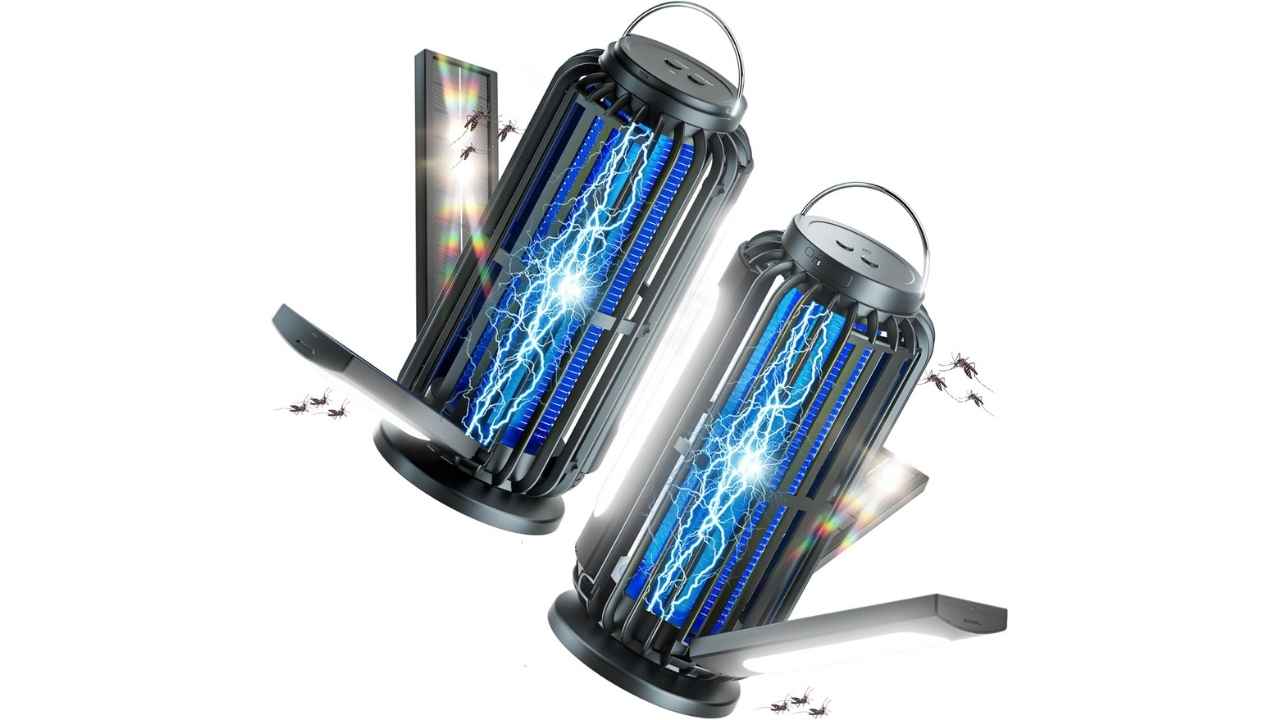 Outdoor essential TYPEC Solar Bug Zapper (36% off) Solar-powered bug zappers for patios and camping. |


