


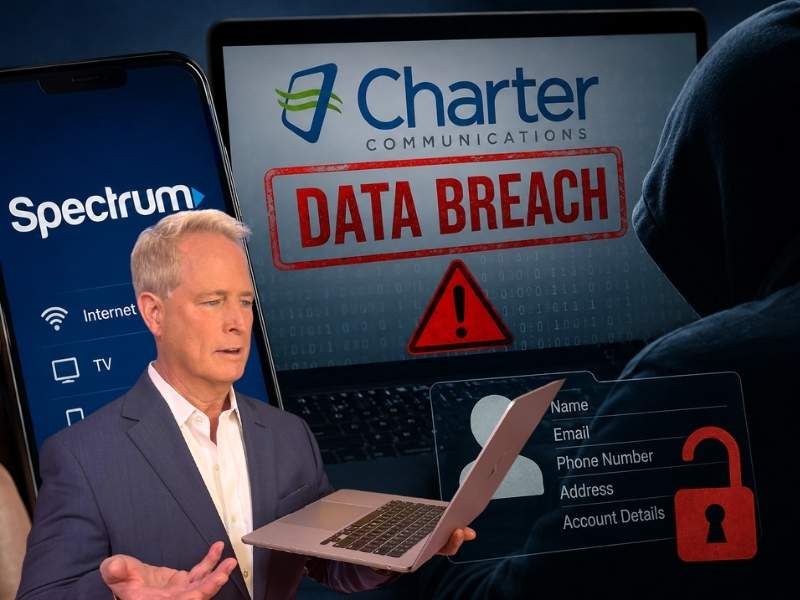
- Charter confirmed a cybersecurity incident after ShinyHunters listed the company on its leak site.
- Charter says sensitive customer data and private telecom account information were not released.
- ShinyHunters claims it stole millions of records after a phone-based phishing attack.
- Customers should watch for fake Spectrum messages, billing alerts and support calls.
A phone call may have opened the door to a major telecom security scare involving Charter Communications, the company behind Spectrum. Charter is one of the largest broadband and cable providers in the United States, serving more than 32 million customers across more than 40 states with internet, cable TV, mobile and phone service.
The company has confirmed a cybersecurity incident after the ransomware group ShinyHunters listed it on a leak site. Charter says the most sensitive customer information was not released. However, the hackers claim they stole millions of records, which means customers should stay alert for scams that may follow.

Credit: Charter Communications
What happened in the Charter data breach
The incident became public after ShinyHunters added Charter to its data leak site. The ransomware group claimed it breached the company’s systems and threatened to release stolen data unless a ransom was paid.
Charter has confirmed it is aware of the situation. The company says it is following security protocols and working with authorities. CyberGuy reached out to Charter for comment. A Charter spokesperson provided this statement:
“We are aware of the situation, following our security protocols and are working with appropriate authorities. Only sales tools used to manage current, past and prospective Business customers were impacted; no CPNI or sensitive PI was released by the threat actor.”
In other words, Charter says the breach affected sales tools used for current, past and prospective business customers. The company also says hackers did not release sensitive personal information or private telecom account data. Private telecom account data can include details tied to someone’s service, account activity or communication services. For customers, the key point is this: Charter says the incident was limited. The hackers are making a much broader claim.
What ShinyHunters claims it stole from Charter
ShinyHunters claims the attack happened on April 1, 2026. The group says it used a voice phishing scam, also known as vishing, to get inside.
A vishing attack usually starts with a phone call. The attacker pretends to be someone trustworthy, often IT support, customer service or a security employee. Then the scammer tries to pressure the person into approving access, sharing a code or opening a company system.
According to ShinyHunters, the attackers obtained access to a Microsoft Entra account belonging to an employee. Microsoft Entra helps companies manage employee logins and access. From there, the group claims it accessed Charter’s Salesforce system. ShinyHunters says it pulled customer names, email addresses, home addresses, phone numbers, phone types, plan information and support ticket data.
The group also claims some private telecom account data was stolen. Charter denies that sensitive personal information or private telecom account data was released. That gap between Charter’s statement and the hackers’ claims is why customers should pay attention.
Credit: Charter Communications
Why the Charter breach could affect you
Even if the most sensitive information was not released, exposed contact details can still create problems. Scammers can use names, email addresses, phone numbers, addresses and service details to make fake messages feel more believable. They may pretend to be Charter, Spectrum, billing support or technical support.
A scammer might claim your account needs verification. They could warn that your service will be disconnected. They may also offer a fake refund or ask you to update your payment information. That is where customers can get caught off guard.
The scam may sound more believable if the person already knows your provider or account details. That does not mean you should panic. It does mean you should slow down before clicking, replying or sharing anything.
Watch the latest episode of The CyberGuy Report.

Missed this event? Sign up via the registration form and see our live recording.
See Kurt’s latest Amazon picks for useful gadgets, smart home upgrades and everyday tech worth grabbing while the deals last.
What companies can learn from the Charter breach
This incident also shows why companies need to take phone-based attacks seriously. Hackers no longer need to rely only on malicious emails. Sometimes, they call an employee and talk their way into a system.
Companies should train workers to verify unexpected support calls. They should also limit employee access, monitor unusual logins and use stronger sign-in protections for cloud tools.
Salesforce, Microsoft Entra and other business platforms can hold valuable customer information. That makes them attractive targets. A convincing phone call should never be enough to open the door.
Credit: Charter Communications
Ways to stay safe after the Charter data breach
You may not control what happens inside a company’s systems, but you can control how quickly you react to suspicious calls, texts, emails and account changes.
1) Watch for fake Charter and Spectrum messages
Be careful with unexpected calls, texts or emails claiming to come from Charter or Spectrum. Do not click links in surprise messages. Instead, open the official Spectrum app or type the company’s website into your browser.
2) Do not share login codes by phone
Never give a one-time login code to someone who calls you. Scammers often ask for these codes because they are trying to break into your account. A real support agent should not need you to read that code out loud.
3) Change your Spectrum password
If you have a Spectrum account, change your password. Use a strong password that you do not use anywhere else. A password manager such as NordPass can help you create and save stronger passwords without having to remember each one.
4) Check your account details
Log in through the official Spectrum website or app. Review your email address, phone number, billing information and account settings. If anything looks strange, contact Spectrum directly through a verified number.
5) Watch for fake billing alerts
Scammers may use breach news to send fake payment warnings. They might say your card failed or that your account will be suspended. Do not pay through a link in a text or email. Go directly to your account instead.
6) Let unknown callers go to voicemail
If someone calls claiming to be from Charter or Spectrum, do not rely on caller ID. Scammers can spoof real company numbers. Let the call go to voicemail. Then call back using a number from your bill or the official website.
7) Use a data removal service
A data removal service such as Incogni can help reduce how much of your personal information appears on people-search sites and data broker databases. After a breach, scammers often combine leaked information with public records. The less they can find about you online, the harder it becomes to make a scam feel personal.
Exclusive Deal for CyberGuy Readers (60% off): Incogni offers a 30-day, money-back guarantee and applies a special CyberGuy discount to all annual plans, for as low as $6.39/month for one person (billed annually) or $13.19/month for your family (up to 5 people) on their annual plan.
I strongly recommend the family plan. Here's why: the scam that starts with a Google search of your name almost always ends with a call to you, your elderly parent or a text to your adult child. Protecting yourself without protecting the people around you is half a solution. At $2.64 per person per month, the family plan covers up to five people, and the people most likely to be the final target are often the ones who'd never think to protect themselves.
Get Incogni and remove your info
8) Use strong antivirus software
Install strong antivirus software such as Norton Antivirus Plus (CyberGuy Deal: Get 58% off) on your devices. It can help detect malicious links, fake websites, malware and other online threats. That extra layer helps if you accidentally click something risky.
9) Consider identity theft protection
If your personal information appears in a breach, identity theft protection such as Aura (CyberGuy Deal: Get 68% off) can help you spot suspicious activity faster. Some services monitor the dark web, alert you to possible misuse and help with recovery steps. You can also check your credit reports and consider a credit freeze if you are worried about identity theft.
Related Links:
- ADT data breach exposes customer information
- Ameriprise data breach hits 48,000 customers
- Amtrak data breach exposes millions of customer records
Kurt’s key takeaways
The Charter data breach story comes down to two very different claims. Charter says the incident affected sales tools for business customers and that hackers did not release sensitive personal or private telecom account information. ShinyHunters claims it stole millions of records with customer details. Until more facts come out, the safest move is to stay alert. Check your account, avoid surprise links and be careful with anyone who calls claiming to be from Charter or Spectrum. Even basic contact information can help a scammer sound more convincing.
Should companies do more to protect your data from phone-based attacks before one employee mistake turns into a breach? Let us know your thoughts in the comments below.
FOR MORE OF MY TECH TIPS & SECURITY ALERTS, SUBSCRIBE TO MY FREE CYBERGUY REPORT NEWSLETTER HERE
Copyright 2026 CyberGuy.com. All rights reserved. CyberGuy.com articles and content may contain affiliate links that earn a commission when purchases are made.
🎙 Now Streaming: My New Podcast: The CyberGuy Report
Kurt’s Top Deals
Deals move fast and inventory can be limited, so don’t wait too long.
| 🔥 Editor’s pick  Summer entertaining Ninja SLUSHi Machine (26% off) Frozen drinks and slushies at home in minutes. | |
| 💰 Top deal 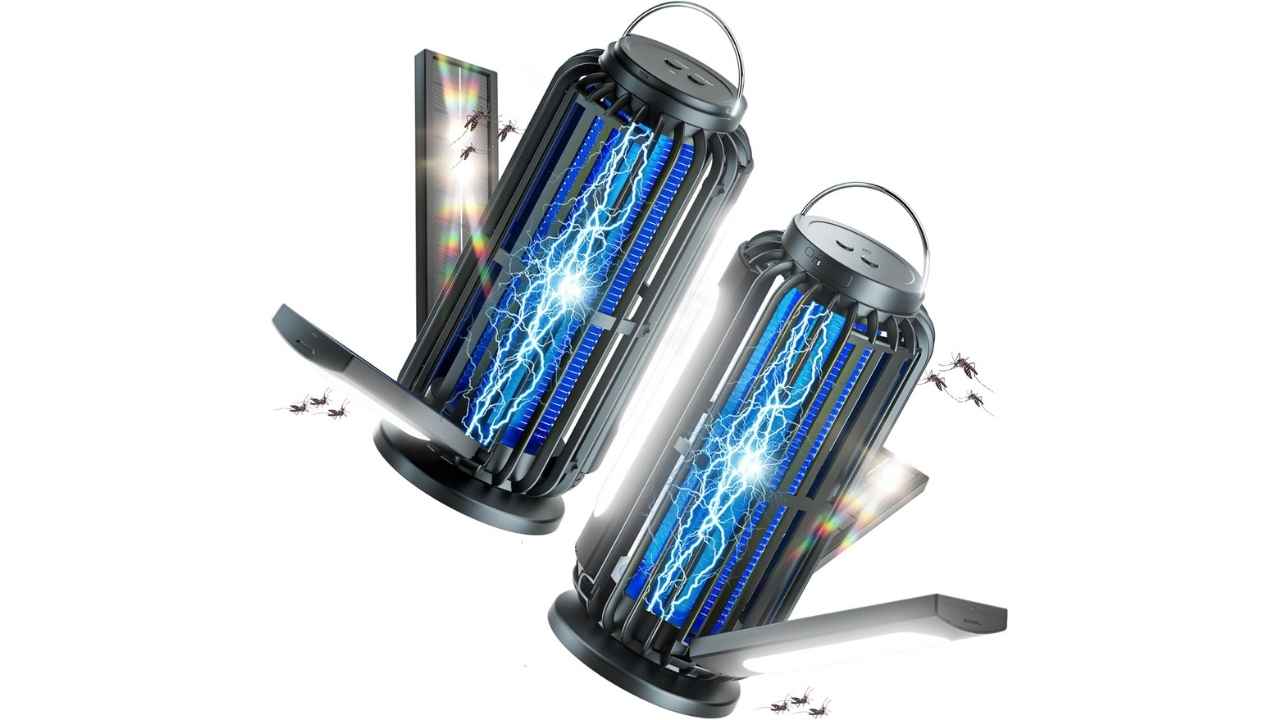 Outdoor essential TYPEC Solar Bug Zapper (36% off) Solar-powered bug zappers for patios and camping. |


1 comment
These companies then they get breach need to pay for lifetime identity protection for then life nof the customer and it has to be paid by the CEO for not doing thier job. Also the IT deparment is at fault.They should give every customer 1 year of free service. They keep raising the cost of thier services but they can not protect their customers .