



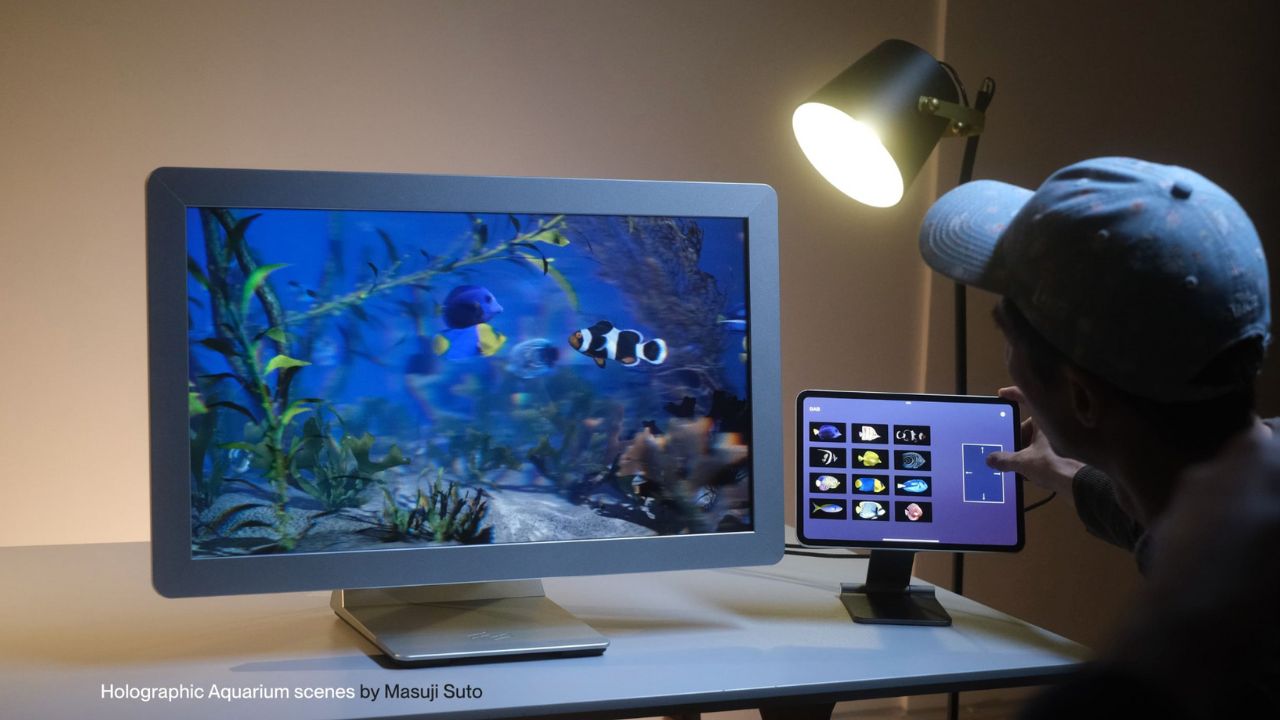
You can now gather around a screen and see digital objects come to life in true three dimensions, no headsets, no glasses, just your eyes and a shared experience with others. That’s exactly what the new 27-inch light-field display from Looking Glass offers. This innovative technology is transforming how we interact with 3D visuals, making immersive experiences more natural and accessible for businesses, educators, and creators alike.
Credit: Looking Glass
How it works
The Looking Glass 27 uses light-field display technology, which projects multiple perspectives of an object simultaneously. This allows for “Super Multi View” experiences, where everyone around the screen can see a slightly different angle, just like in the real world. It’s a step beyond traditional 3D displays, offering richer depth cues and a more natural viewing experience. The display can showcase single images, 3D videos, or interactive applications, and it’s flexible enough to handle everything from quick model previews to fully interactive group experiences.

Credit: Looking Glass
WILL 3D TECH CHANGE SPORTS FOREVER?
A breakthrough in group 3D experiences
Shawn Frayne, Looking Glass’s CEO and co-founder, describes this release as a “breakthrough moment for 3D.” The new 27-inch display is the company’s most advanced yet, combining major hardware and software advances to cut costs and dramatically reduce the computing power needed to run complex 3D content.
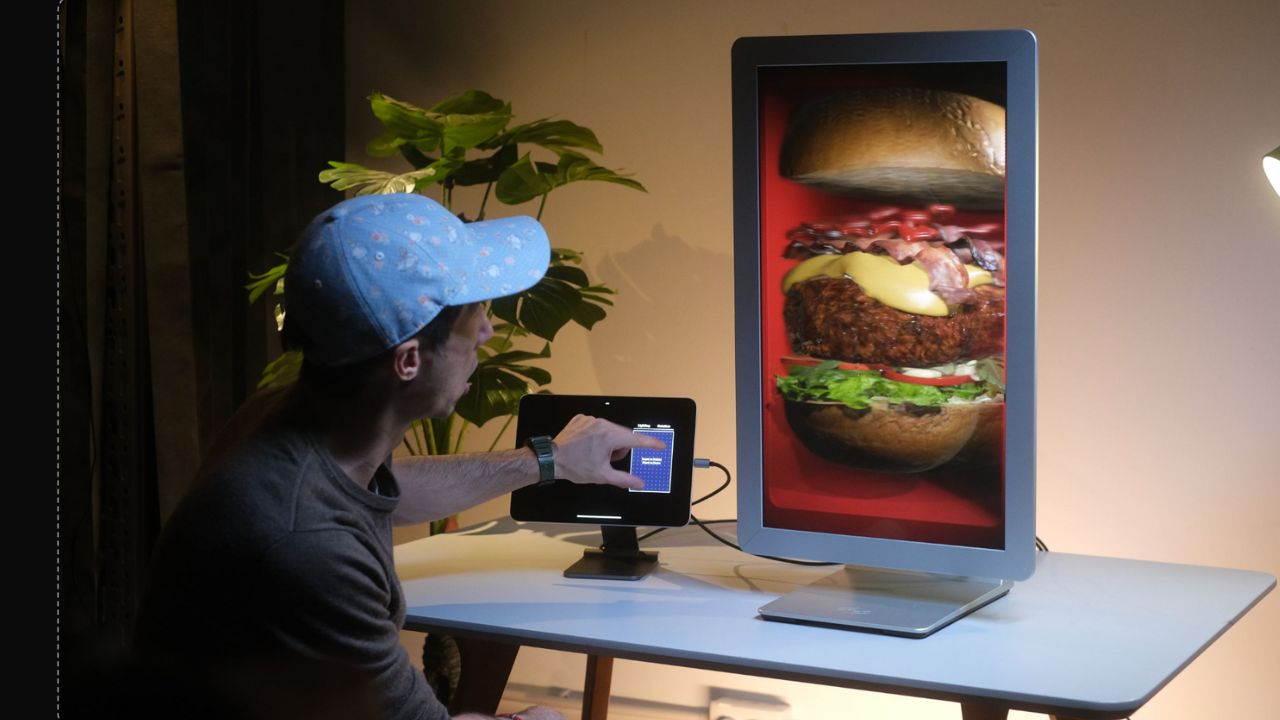
The display sits at just an inch thick but packs a punch with 5K resolution (5,120 x 2,880 pixels) at 60 Hz, delivering up to 16 inches of virtual depth and 8-bit color. The result? Real-time 3D visuals that look and feel like they’re actually present in the room.
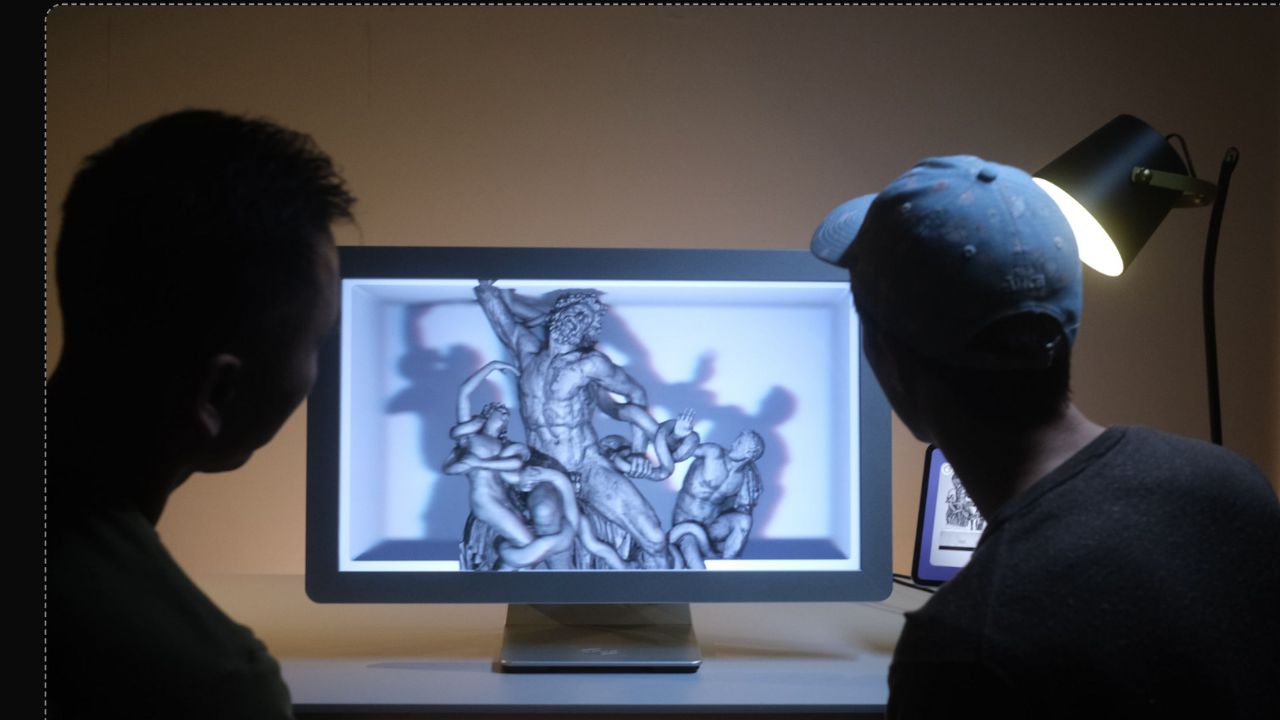
But what really sets this display apart is its ability to create a shared 3D experience. Unlike traditional VR or AR setups that require each participant to wear a headset, the Looking Glass 27 can project up to 100 unique perspectives across a 53-degree viewing cone. This means a team can gather around a single screen and see the same digital object from different angles, just as they would with a real-world prototype or artifact.
Credit: Looking Glass
WORLD’S FIRST AI-DESIGNED, 3D-PRINTED SHOE WANTS TO BE THE NEXT CROCS
A streamlined pipeline for collaborative 3D creation
Looking Glass has made it easier than ever for developers and enterprises to build, test, and deploy 3D applications. Content creation starts on a computer running Unity, but the finished product can be deployed on an iPad, which also powers the display and serves as its interface. This approach reduces system costs by about 35% compared to previous models and makes deployment far more flexible. The display also supports Blender, Unreal Engine, WebXR, and Looking Glass’s own Studio and Bridge tools, making it compatible with a wide range of 3D workflows.
Watch the latest episode of The CyberGuy Report.


Missed this event? Sign up via the registration form and see our live recording.
See Kurt’s latest Amazon picks for useful gadgets, smart home upgrades and everyday tech worth grabbing while the deals last.
The display is designed for versatility: it can sit on a desk or be mounted on a wall, and it’s available in both portrait and landscape configurations (though you’ll need to pick one when ordering). The software ecosystem allows for quick creation of 3D apps using Unity templates, and content can be managed just like any other iOS application, streamlining updates and deployment.
Credit: Looking Glass
THIS 3D-PRINTED TEXAS HOTEL IS SHAKING UP THE CONSTRUCTION INDUSTRY
Real-world applications
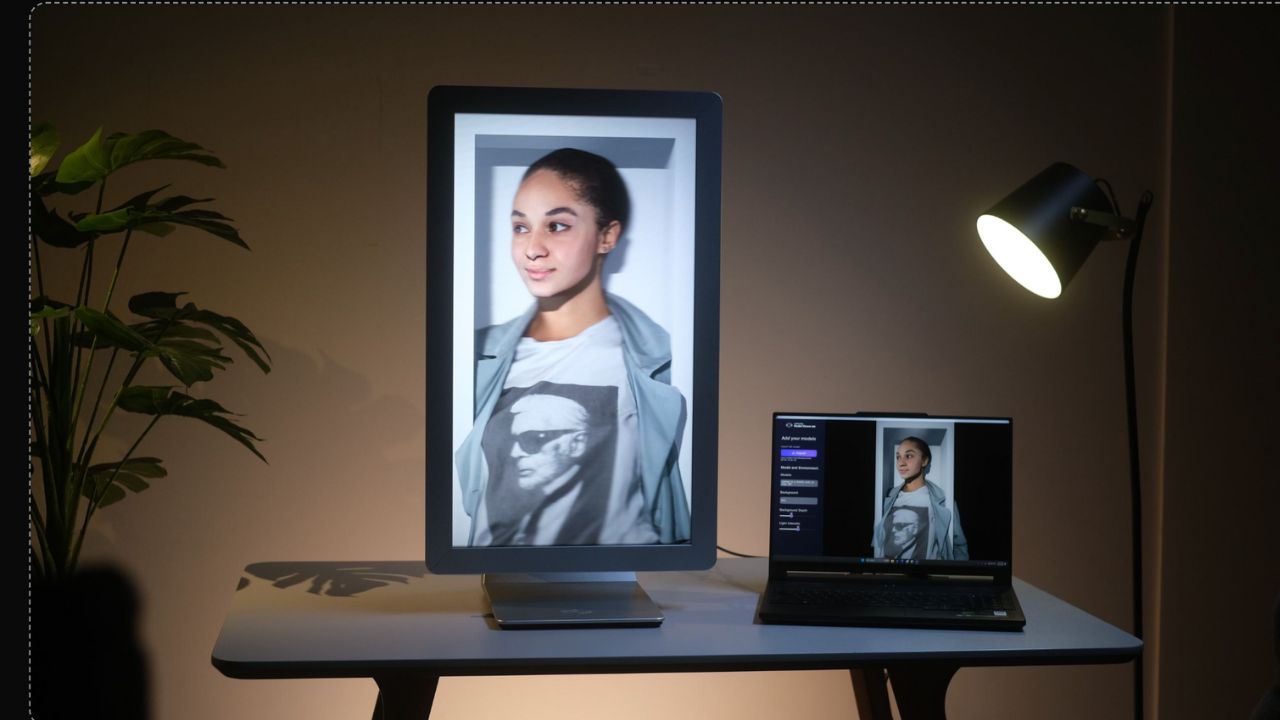
While the $10,000 price tag (or $8,000 if you pre-order before April 30) puts the Looking Glass 27 out of reach for most consumers, its target audience is clear: businesses, research institutions, museums, education settings, medical training centers, and even retail or entertainment venues. Imagine medical students exploring a virtual anatomy lesson together, or design teams collaborating on a 3D prototype without the hassle of headsets. The display’s ability to render depth, texture, translucency, and lighting effects as they appear in real life makes it a powerful tool for any field that benefits from visualizing complex, spatial information.
SUBSCRIBE TO KURT’S YOUTUBE CHANNEL FOR QUICK VIDEO TIPS ON HOW TO WORK ALL OF YOUR TECH DEVICES
Credit: Looking Glass
Kurt’s key takeaways
The Looking Glass 27-inch light-field display isn’t just about seeing 3D- it’s about sharing it, collaborating, and making digital ideas feel as tangible as the real world. While the price means it’s not for everyone just yet, the technology is a clear sign that immersive, headset-free 3D is on the cusp of becoming a mainstream tool for innovators everywhere. If you’ve ever wanted to just look at a screen and see your digital creations spring to life, Looking Glass is making that dream a reality- no headsets required.
What would you create or explore if you could share true 3D visuals with your team, no headsets or glasses needed? Let us know in the comments below.
FOR MORE OF MY TECH TIPS & SECURITY ALERTS, SUBSCRIBE TO MY FREE CYBERGUY REPORT NEWSLETTER HERE