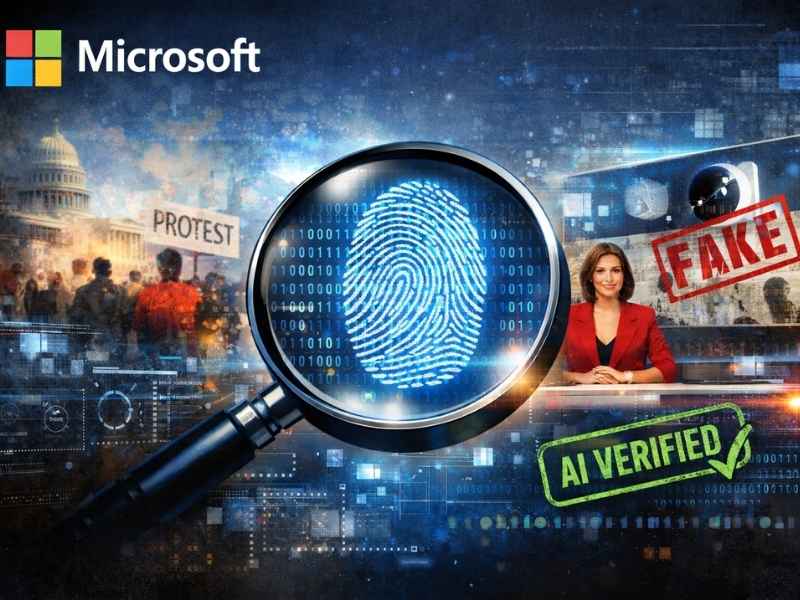



- Microsoft proposes AI content verification using digital fingerprints, watermarks and metadata tracking.
- The system would show where the content came from and whether someone altered it.
- Experts say consistent labeling could reduce deceptive posts, but it will not solve misinformation alone.
- Rushed or inconsistent AI labels could backfire and erode public trust.
Scroll your social feed for five minutes. You will likely see something that looks real but feels slightly off.
Maybe it is a viral protest image that turns out to be altered. Maybe it is a slick video pushing a political narrative. Or maybe it is an AI voice clip that spreads before anyone stops to question it.
AI-enabled deception now permeates everyday life. And Microsoft says it has a technical blueprint to help verify where online content comes from and whether it has been altered.

Why AI-generated content feels more convincing today
AI tools can now generate hyperrealistic images, clone voices and create interactive deepfakes that respond in real time. What once required a studio or intelligence agency now requires a browser window. That shift changes the stakes.
It is no longer about spotting obvious fakes. It is about navigating a digital world where manipulated content blends into your daily scroll. Even when viewers know something is AI-generated, they often engage with it anyway. Labels alone do not automatically stop belief or sharing. So Microsoft is proposing something more structured.
How Microsoft’s AI content verification system works
To understand Microsoft’s approach, picture the process of authenticating a famous painting. An owner would carefully document its history and record every change in possession. Experts might add a watermark that machines can detect, but viewers cannot see. They could also generate a mathematical signature based on the brush strokes.
Now Microsoft wants to bring that same discipline to digital content. The company’s research team evaluated 60 different tool combinations, including metadata tracking, invisible watermarks and cryptographic signatures. Researchers also stress-tested those systems against real-world scenarios such as stripped metadata, subtle pixel changes or deliberate tampering.
Rather than deciding what is true, the system focuses on origin and alteration. It is designed to show where the content started and whether someone changed it along the way.
What AI content verification can and cannot prove
Before relying on these tools, you need to understand their limits. Verification systems can flag whether someone altered content, but they cannot judge accuracy or interpret context. They also cannot determine meaning. For example, a label may indicate that a video contains AI-generated elements. It will not explain whether the broader narrative is misleading.
Even so, experts believe widespread adoption could reduce deception at scale. Highly skilled actors and some governments may still find ways around safeguards. However, consistent verification standards could reduce a significant share of manipulated posts. Over time, that shift could reshape the online environment in measurable ways.

Why AI labels create a business dilemma for social platforms
Here is where the tension becomes real. Platforms depend on engagement. Engagement often feeds on outrage or shock. And AI-generated content can drive both. If clear AI labels reduce clicks, shares or watch time, companies face a difficult choice. Transparency can clash with business incentives.
| 🎙 Now Streaming [Ep. 34] Is that Social Security email in your inbox real? How one convincing SSA scam nearly tricked a reader, and the five red flags to check before you click |

| 📱 Lock down your phone in 30 minutes: Join Kurt “CyberGuy” Knutsson for a free live class on Saturday, June 13 at 10 AM ET and learn simple, real-time steps to protect your personal data and stay safer from scams. Register free: CyberGuyLive.com |
Audits of major platforms already show inconsistent labeling of AI-generated posts. Some receive tags. Many slip through without disclosure.
Now, U.S. regulations are stepping in. California’s AI Transparency Act is set to require clearer disclosure of AI-generated material, and other states are considering similar rules. Lawmakers want stronger safeguards.
Still, implementation matters. If companies rush verification tools or apply them inconsistently, public trust could erode even faster.
The risk of incorrect AI labels and false flags
Researchers also warn about sociotechnical attacks. Imagine someone takes a real photo of a tense political event and modifies only a small portion of it. A weak detection system flags the entire image as AI-manipulated.
Now, a genuine image is treated as suspect. Bad actors could exploit imperfect systems to discredit real evidence. That is why Microsoft’s research stresses combining provenance tracking with watermarking and cryptographic signatures. Precision matters. Overreach could undermine the entire effort.

How to protect yourself from AI-generated misinformation
While industry standards evolve, you still need personal safeguards.
1) Slow down before sharing
If a post triggers a strong emotional reaction, pause. Emotional manipulation is often intentional.
2) Check the original source
Look beyond reposts and screenshots. Find the first publication or account.
3) Cross-check major claims
Search for coverage from reputable outlets before accepting dramatic narratives.
4) Verify suspicious images and videos
Use reverse image search tools to see where a photo first appeared. If the earliest version looks different, someone may have altered it.
5) Be skeptical of shocking voice recordings
AI tools can clone voices using short samples. If a recording makes explosive claims, wait for confirmation from trusted outlets.
6) Avoid relying on a single feed
Algorithms show you more of what you already engage with. Broader sources reduce the risk of getting trapped in manipulated narratives.
7) Treat labels as signals, not verdicts
An AI-generated tag offers context. It does not automatically make content harmful or false.
8) Keep devices and software updated
Malicious AI content sometimes links to phishing sites or malware. Updated systems reduce exposure.
Strengthen account security
Use strong, unique passwords and a reputable password manager to generate and store complex logins for you. Also, enable multi-factor authentication where available. No system is perfect. But layered awareness makes you a harder target.
Related Links:
- AI dating cafes are now a real thing
- AI home search could change how you buy a house
- Ring’s AI Search Party helps find lost dogs faster
Kurt’s key takeaways
Microsoft’s AI content verification plan signals that the industry understands the urgency. The internet is shifting from a place where we question sources to a place where we question reality itself. Technical standards could reduce manipulation at scale. But they cannot fix human psychology. People often believe what aligns with their worldview, even when labels suggest caution. Verification may help restore some trust online. Yet trust is not built by code alone.
So here is the question. If every post in your feed came with a digital fingerprint and an AI label, would that actually change what you believe? Let us know in the comments below.
FOR MORE OF MY TECH TIPS & SECURITY ALERTS, SUBSCRIBE TO MY FREE CYBERGUY REPORT NEWSLETTER HERE
Copyright 2026 CyberGuy.com. All rights reserved. CyberGuy.com articles and content may contain affiliate links that earn a commission when purchases are made.
🎙 Now Streaming: My New Podcast: The CyberGuy Report
Kurt’s Top Deals
Deals move fast and inventory can be limited, so don’t wait too long.
| 🔥 Editor’s pick  Summer entertaining Ninja SLUSHi Machine (26% off) Frozen drinks and slushies at home in minutes. | |
| 💰 Top deal  Outdoor essential TYPEC Solar Bug Zapper (36% off) Solar-powered bug zappers for patios and camping. |