


Hackers have become increasingly sophisticated in targeting bank accounts, sometimes stealing money without the account holder realizing it right away. This raises an unsettling concern among many: could someone actually drain your bank account while making it appear as though your balance remains untouched? As Bruce from Phoenix asks,
“Is it true that hackers can wipe out your bank account but make it look like the money is still there?”
The short answer is yes, though it’s rare and requires a high level of skill. Still, even the possibility is alarming, especially when you consider how easily people can fall victim to common tactics hackers use to gain access to accounts in the first place.

How do hackers access your bank account?
There’s a long list of methods cybercriminals use to get into people’s financial accounts, and most of them don’t involve “hacking” in the Hollywood sense. Instead, they rely on tricking you into handing over sensitive information. Here are some of the most common techniques:
Fake banking apps & mobile trojans: Some apps are designed to look exactly like your bank’s official app, but they’re actually fakes. If you enter your login info, it goes straight to the scammer. Even more advanced are mobile banking trojans, which hide inside seemingly unrelated apps. Once installed, the trojan watches for when you open your real banking app and then quickly overlays a fake login screen. If you type in your credentials, the trojan grabs them and sends them off to the attacker.
Phishing scams: Scammers send emails or texts that appear to be from your bank, asking you to verify a transaction or log in to resolve an issue. These messages often include links to websites that look identical to your bank’s site, but are actually fakes. The giveaway is often a small detail, like a misspelled URL. For example, ‘captial0ne.com’ instead of ‘capitalone.com’.
Keyloggers: Keyloggers are a type of malware that silently records everything you type. If one gets onto your device, it can capture your banking username, password, and anything else you type, all without you knowing.
Man-in-the-middle attacks: These attacks happen when hackers intercept the data being transmitted between you and your bank’s website. This is especially risky if you’re on public Wi-Fi. You may think you’re logging in securely, but a hacker could be watching everything, or even redirecting you to a fake version of your bank’s site.
SIM swapping: SIM swapping is where a scammer contacts your phone provider, pretends to be you, and asks to transfer your number to a new SIM card. If successful, they receive your text messages, including any verification codes sent by your bank. This gives them access to your account, even if two-factor authentication is turned on.

SNEAKY SCAMMERS DRAIN BANK ACCOUNT IN SINISTER PHONE PHISHING SCHEME
Advanced account manipulation
This is where it gets unsettling. In rare cases, hackers can actually make it look like your bank balance hasn’t changed, even though they’ve already taken the money. How? By targeting the display layer of your banking app or web interface. If malware is installed on your device, it can manipulate what shows up on the screen. That means your balance might look normal, while your actual funds are long gone. This type of attack is extremely rare and usually requires access to a compromised or jailbroken device, but it’s technically possible, and just sophisticated enough to delay you from realizing what happened.

Watch the latest episode of The CyberGuy Report.

Missed this event? Sign up via the registration form and see our live recording.
See Kurt’s latest Amazon picks for useful gadgets, smart home upgrades and everyday tech worth grabbing while the deals last.
PREVENTING THIS INSIDIOUS EMAIL FORWARDING SCAM THAT WILL DRAIN YOUR BANK ACCOUNT
8 steps to protect your bank account from sophisticated hackers
The good news? You don’t need to be a cybersecurity expert to protect yourself. Just following these key steps can dramatically reduce your risk:
1) Use official apps only: Cybercriminals will try to trick you with fake banking apps and mobile trojans that overlay fake login screens, so it’s critical to download banking apps exclusively from the Apple App Store or Google Play. Never install apps from links in emails or texts.
2) Turn on two-factor authentication (2FA): SIM swapping attacks can hijack your phone number and intercept SMS codes, so enable app-based 2FA to block unauthorized logins even if hackers obtain your password.
3) Get text or app alerts: Hackers can manipulate your account’s display to hide stolen funds, so set up real-time transaction alerts to expose unauthorized withdrawals immediately, especially for micro-transactions used to test your account.
4) Use strong, unique passwords: Phishing scams and keyloggers often harvest weak or reused credentials, so use a password manager to generate and store complex passwords.
- Unlimited password storage
- Secure sharing
- Password health reports
- Auto-fill and emergency access
- Data breach monitoring to alert you if your credentials have been exposed
- A Security Dashboard with tools like the Data Breach Scanner and Password Health Checker to identify weak, reused, or compromised passwords
CyberGuy Exclusive Deal: Save 52% now with CyberGuy’s exclusive NordPass offer – Get 1 extra month FREE with a 2-year plan. Try 30 days risk-free for only $1.43 per month!
5) Avoid clicking suspicious links and install strong antivirus software: Scammers impersonate banks with phishing emails/texts containing misspelled URLs (e.g., “captial0ne.com”), so always navigate directly to your bank’s official website or app instead of clicking embedded links. Strong antivirus software helps protect your devices from fake apps, keyloggers, and other threats. The best way to safeguard yourself from malicious links that install malware, potentially accessing your private information, is to have antivirus software installed on all your devices. This protection can also alert you to phishing emails and ransomware scams, keeping your personal information and digital assets safe.
- Strong real-time protection against viruses, malware, ransomware and hacking attempts
- AI-powered scam protection to help identify suspicious emails, texts and websites
- Built-in password manager to securely store and manage logins
- 2 GB PC cloud backup to help protect important files from ransomware or hardware failure
- Smart firewall and phishing protection
- Protects 1, 3 or 5 devices
- Available for Windows, macOS, Android and iOS
- Includes real-time threat protection, smart firewall and phishing protection to guard against online attacks
6) Check your accounts regularly: Don’t just glance at your balance. Review recent transactions at least once a week to catch any suspicious activity.
7) Avoid public Wi-Fi for banking: Hackers exploit unsecured networks to launch man-in-the-middle attacks and spoof banking sites, so use a VPN to encrypt your connection if you must bank on public Wi-Fi. VPNs will protect you from those who want to track and identify your potential location and the websites that you visit.
ExpressVPN is the go-to choice for those who prioritize ultra-fast speeds, reliability, and top-tier security. With servers in 105 countries, ExpressVPN delivers blazing-fast performance for streaming, gaming, and secure browsing. It supports P2P file sharing, offers best-in-class encryption, and maintains a strict no-logs policy—with all servers running on RAM for enhanced privacy. You can connect up to 10 devices simultaneously, and setup takes under 2 minutes. Plus, with 24/7 live customer support and a 30-day money-back guarantee, ExpressVPN is a premium choice for security-focused users who want speed without compromise.
CyberGuy Exclusive ExpressVPN Deals:
✅ Save 75% – Get 3 months FREE with 12-month plan for $3.99/month. Try 30 days risk-free.
✅ Save 84% – Get 4 months FREE with 24-month plan for $2.49/month. Try 30 days risk-free.
Surfshark – Best for Unlimited Devices & Budget-Friendly Security
If you're looking for a more affordable VPN without sacrificing security, Surfshark is an excellent choice. Surfshark operates under a strict no-logs policy and offers top-notch encryption to keep your data safe. However, Surfshark stands out by allowing unlimited devices on a single account - making it perfect for families, small businesses, or users with multiple gadgets. If you're looking for a more affordable VPN without sacrificing security, Surfshark is an excellent choice. Surfshark operates under a strict no-logs policy and offers top-notch encryption to keep your data safe. It now runs on upgraded 100 Gbps servers, delivering faster speeds, smoother streaming, and greater reliability even during peak hours. The upgrade also makes Surfshark more future-proof with improved stability, scalability, and load balancing for growing bandwidth demands.
Surfshark stands out by allowing unlimited devices on a single account—making it perfect for families, small businesses, or users with multiple gadgets. It also includes features like MultiHop (double VPN) and Camouflage Mode to bypass VPN restrictions in censored regions. With a budget-friendly price and feature-rich security, Surfshark is ideal for those who want privacy on a budget.
CyberGuy Exclusive Surfshark Deals:
✅ Save 81% – Get 3 extra months FREE with 12-month plan for $2.98/month. Try 30 days risk-free.
✅ Save 88% – Get 3 extra months FREE with 24-month plan for $1.78/month. Try 30 days risk-free.
For best VPN software, see my expert review of the best VPNs for browsing the web privately on your Windows, Mac, Android & iOS devices
8) Use a personal data removal service: Data brokers sell your contact details and personal information, which hackers can use for targeted phishing attacks or SIM swap scams. These services automatically remove your data from broker databases, reducing the risk of social engineering attempts that could compromise your bank account.
While no service can guarantee the complete removal of your data from the internet, a data removal service is really a smart choice. They aren’t cheap – and neither is your privacy. These services do all the work for you by actively monitoring and systematically erasing your personal information from hundreds of websites. It’s what gives me peace of mind and has proven to be the most effective way to erase your personal data from the internet. By limiting the information available, you reduce the risk of scammers cross-referencing data from breaches with information they might find on the dark web, making it harder for them to target you.
Incogni, a service I trust 100% and use myself, helps automate the process by submitting removal requests to hundreds of data brokers and people-search sites on your behalf.
Incogni automatically contacts data brokers on your behalf and requests the removal of your personal information. It also continues monitoring those sites and submits new removal requests if your data reappears.
- Incogni currently removes personal data from 420+ data broker and people-search websites, and its Unlimited plan allows you to request removals from as many additional sites as you need.
- Incogni has also received third-party assurance from Deloitte, validating its marketing claims.
- The goal is simple: make it much harder for strangers, scammers, and cybercriminals to find your personal information online.
CyberGuy readers get 60% off Incogni’s annual plans using the links in this article.
The service also includes a 30-day money-back guarantee, so you can try it risk-free and see how much of your information is exposed online.
GOT A BANK TRANSFER ALERT TEXT? IT MIGHT BE A SCAM. HERE’S WHAT TO DO
Kurt’s key takeaways
Hackers don’t need to break into your bank’s system; they just need to trick you. Whether it’s phishing, malware, or SIM swaps, the goal is always the same: get access to your login and verification codes. Fortunately, you can make it much harder for them by using secure habits and staying alert. Your money belongs with you, not in the hands of a scammer.
Has this ever happened to you or someone you know? Drop your story in the comments below.
FOR MORE OF MY TECH TIPS & SECURITY ALERTS, SUBSCRIBE TO MY FREE CYBERGUY REPORT NEWSLETTER HERE
Copyright 2025 CyberGuy.com. All rights reserved. CyberGuy.com articles and content may contain affiliate links that earn a commission when purchases are made.
🎙 Now Streaming: My New Podcast: The CyberGuy Report
Kurt’s Top Deals
Deals move fast and inventory can be limited, so don’t wait too long.
| 🔥 Editor’s pick  Summer entertaining Ninja SLUSHi Machine (26% off) Frozen drinks and slushies at home in minutes. | |
| 💰 Top deal 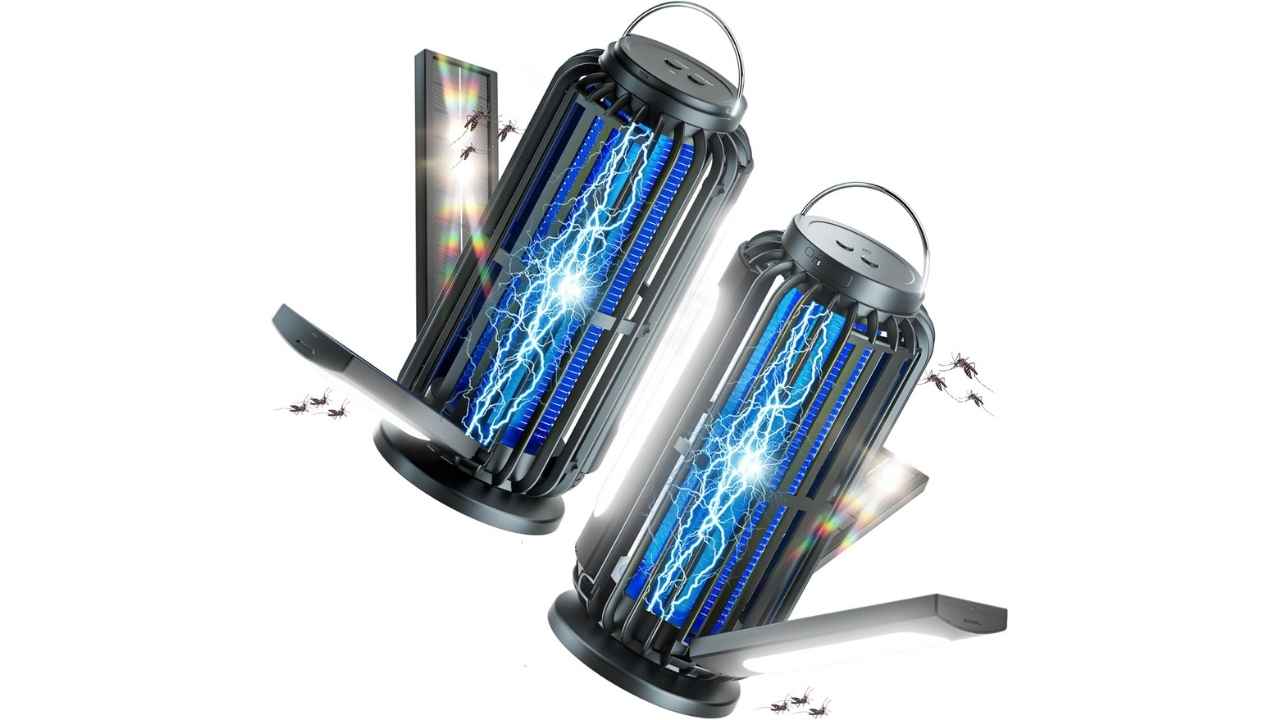 Outdoor essential TYPEC Solar Bug Zapper (36% off) Solar-powered bug zappers for patios and camping. |


