


5G home internet and cable internet can both power streaming, video calls and connected homes. The question is not whether they work, but how consistently they perform when your household and your neighborhood are online at the same time. Your location, upload habits and tolerance for speed swings matter more than the plan name.
5G home internet relies on a wireless link between your home gateway and a nearby cell tower. It can be fast and easy to set up, but performance rises and falls with signal quality and local network load.
Cable internet uses a wired coaxial connection from your home to a shared neighborhood node. It still shares bandwidth, but it usually delivers steadier speeds and lower latency during peak hours.
Below, we break down how each option really behaves day to day, where the tradeoffs show up, and which type of connection makes the most sense based on how you use the internet at home.

How 5G home internet works
You get a gateway that acts like a modem and Wi-Fi router. It connects over 5G, often mid-band, sometimes mmWave in limited areas.
What this means for speed
In late 2025, typical real-world median download speeds reported for major 5G home providers often land in the hundreds of Mbps, but results vary widely by location and congestion.
What this means for latency
Latency can be good, but it fluctuates more than cable. It depends on signal quality, tower load and network routing.
What this means for uploads
Uploads can be the sticking point. Many 5G home users see lower upload speeds than cable or fiber, especially at busy times.

How cable internet works
Cable uses DOCSIS technology. Your modem talks to the cable system headend equipment, and your router handles Wi-Fi.
What this means for speed
Cable download speeds tend to be consistent and fast, especially if your neighborhood node is not overloaded.
What this means for uploads
Cable uploads have been improving in many markets due to mid-split and high-split upgrades, with some providers offering much higher upload tiers where upgrades are live.
Cable still varies a lot by market. Some areas remain stuck with older upload limits until upgrades arrive.
Speed and performance comparison
Here is how the two usually feel day to day.
Download speed
- Cable often wins for consistency.
- 5G home can match cable on good days, then drop during congestion or a weak signal.
Upload speed
- Cable often wins today, especially in upgraded markets.
- 5G home can be fine for video calls, but it can struggle with large backups, big file uploads and creators who push lots of data.
Latency and gaming
- Cable usually gives steadier ping.
- 5G home can feel great, but spikes happen more often, especially at peak hours or with a marginal signal.
Reliability
Cable has outages too, but wireless adds more variables like signal changes, tower maintenance and seasonal load.
Watch the latest episode of The CyberGuy Report.

Missed this event? Sign up via the registration form and see our live recording.
See Kurt’s latest Amazon picks for useful gadgets, smart home upgrades and everyday tech worth grabbing while the deals last.
Price, fees and contracts
Pricing changes constantly by ZIP code, but the structure often looks like this.
5G home internet pricing patterns
- Usually simple pricing
- Often includes the gateway
- Often, there is no annual contract
- Often, there is no data cap language on the plan
Cable pricing patterns
- Promotional pricing is common
- Equipment rental may add to the bill
- Data caps exist in some markets and not in others
- Upload upgrades might require specific modems in upgraded areas
Pro tip: Check the FCC broadband label when it is available. It shows price, typical speeds, latency and data limits in a standardized format, making it easier to compare plans even as the FCC considers streamlining parts of the label rules.
Security and privacy
This is the part most people skip. It is also the part that saves you when something goes wrong. Whether you pick 5G home or cable, attackers usually go after the weakest link in the home. That is often the router, weak passwords, old firmware and exposed devices. So focus on what you control.
Cable security: what is protected and what is not
Cable networks have long used DOCSIS privacy features to protect traffic between the cable modem and the provider’s network equipment, rather than leaving it open for neighbors to sniff or intercept. That said, cable security still depends on:
- The quality of your modem and router firmware
- Whether your provider pushes updates quickly
- Whether you changed the default admin credentials
- Whether you secured your Wi-Fi properly
Cable security checklist
1) Use a modern modem that your provider supports in your market
2) Use a router that gets updates, not a forgotten model
3) Turn on WPA3 or WPA2 if WPA3 is not available
4) Disable WPS
5) Put IoT devices on a guest network. IoT stands for Internet of Things. These are smart devices like cameras, doorbells, speakers, TVs, thermostats and appliances that connect to the internet. Many of them get fewer security updates, so placing them on a guest network helps keep them isolated from your phones, computers and sensitive data.
6) Change the admin login and Wi-Fi password. Consider using a password manager, which securely stores and generates complex passwords, reducing the risk of password reuse.
- Unlimited password storage
- Secure sharing
- Password health reports
- Auto-fill and emergency access
- Data breach monitoring to alert you if your credentials have been exposed
- A Security Dashboard with tools like the Data Breach Scanner and Password Health Checker to identify weak, reused, or compromised passwords
CyberGuy Exclusive Deal: Save 52% now with CyberGuy’s exclusive NordPass offer – Get 1 extra month FREE with a 2-year plan. Try 30 days risk-free for only $1.43 per month!
5G home internet security: what changes
5G networks include strong authentication and encryption between your gateway and the carrier network. In plain English, the cellular link has modern security built into the standard and carrier operations. The bigger practical security differences come from how 5G home providers deliver internet to you.
CGNAT and inbound access
Many 5G home internet services use carrier-grade NAT. That often blocks inbound connections by default. This reduces exposure to random scans from the internet, but it also complicates remote access to things like a home server or some camera setups unless you use a VPN style workaround.
Gateway and Wi-Fi security
Your gateway is your modem and router in one. Treat it like a router. Use strong Wi-Fi security settings and keep firmware updated.
5G home security checklist
- Set WPA3 if your gateway supports it, or WPA2 if needed
- Change the default admin password. Consider using a password manager such as NordPass, which securely stores and generates complex passwords, reducing the risk of password reuse.
- Disable WPS
- Turn on automatic firmware updates if offered
- Use a guest network for smart home gear
- Add a reputable DNS filter for phishing protection
- Use a VPN for remote access instead of exposing ports, especially with CGNAT. A reliable VPN is essential for protecting your online privacy and ensuring a secure, high-speed connection.
ExpressVPN is the go-to choice for those who prioritize ultra-fast speeds, reliability, and top-tier security. With servers in 105 countries, ExpressVPN delivers blazing-fast performance for streaming, gaming, and secure browsing. It supports P2P file sharing, offers best-in-class encryption, and maintains a strict no-logs policy—with all servers running on RAM for enhanced privacy. You can connect up to 10 devices simultaneously, and setup takes under 2 minutes. Plus, with 24/7 live customer support and a 30-day money-back guarantee, ExpressVPN is a premium choice for security-focused users who want speed without compromise.
CyberGuy Exclusive ExpressVPN Deals:
✅ Save 75% – Get 3 months FREE with 12-month plan for $3.99/month. Try 30 days risk-free.
✅ Save 84% – Get 4 months FREE with 24-month plan for $2.49/month. Try 30 days risk-free.
Surfshark – Best for Unlimited Devices & Budget-Friendly Security
If you're looking for a more affordable VPN without sacrificing security, Surfshark is an excellent choice. Surfshark operates under a strict no-logs policy and offers top-notch encryption to keep your data safe. However, Surfshark stands out by allowing unlimited devices on a single account - making it perfect for families, small businesses, or users with multiple gadgets. If you're looking for a more affordable VPN without sacrificing security, Surfshark is an excellent choice. Surfshark operates under a strict no-logs policy and offers top-notch encryption to keep your data safe. It now runs on upgraded 100 Gbps servers, delivering faster speeds, smoother streaming, and greater reliability even during peak hours. The upgrade also makes Surfshark more future-proof with improved stability, scalability, and load balancing for growing bandwidth demands.
Surfshark stands out by allowing unlimited devices on a single account—making it perfect for families, small businesses, or users with multiple gadgets. It also includes features like MultiHop (double VPN) and Camouflage Mode to bypass VPN restrictions in censored regions. With a budget-friendly price and feature-rich security, Surfshark is ideal for those who want privacy on a budget.
CyberGuy Exclusive Surfshark Deals:
✅ Save 81% – Get 3 extra months FREE with 12-month plan for $2.98/month. Try 30 days risk-free.
✅ Save 88% – Get 3 extra months FREE with 24-month plan for $1.78/month. Try 30 days risk-free.
For best VPN software, see my expert review of the best VPNs for browsing the web privately on your Windows, Mac, Android & iOS devices

Video calls, work from home and smart homes
If you live on Zoom, upload consistency matters more than headline download speed.
Choose cable if you:
- Upload large files daily
- Send 4K video, big photo libraries or frequent backups
- Need stable performance during peak evening hours
Choose 5G home internet if you:
- Want a simple setup
- Want to avoid long promos, fees and installation delays
- Get a strong signal at your address, and do not need heavy uploads
Who should pick which option
The right choice depends on how you use the internet day to day, how much you upload and how much consistency you expect during busy hours.
5G home internet is a strong pick for:
- Apartments and rentals
- People who want a fast setup
- Households that stream and browse more than they upload
- Anyone who wants a cleaner bill structure
Cable internet is a strong pick for:
- Gamers who hate ping spikes
- Work from home households with lots of uploads
- Homes with multiple heavy users at the same time
- Creators who push big files daily
What this means to you
Do not choose based on the plan name. Choose based on your real habits. If you upload more than you think, cable will usually feel better today, especially in upgraded markets. If you want simplicity and your area has strong 5G capacity, fixed wireless can be a great value, but test it during peak hours. No matter what you choose, lock down your Wi-Fi and keep your gateway updated. That is where most home security failures start.
👉 Find the best internet plans in your area to ensure you’re getting the fastest, most reliable connection possible.
- 8 simple steps to ditch cable and save money with streaming
- How scammers are posing as your cable and internet providers
- Do I still need to pay for cable internet with 5G rollout?
Kurt’s key takeaways
Cable remains the safe bet for consistency and uploads in many neighborhoods, while 5G home internet keeps improving and often wins on simplicity. The best move is practical. Check the FCC broadband label for each option, compare upload speeds and latency, then test the connection where you live during the hours you actually use it.
If your internet slowed down tonight, would you rather blame your neighborhood node or your nearest cell tower? Let us know your thoughts in the comments below.
FOR MORE OF MY TECH TIPS & SECURITY ALERTS, SUBSCRIBE TO MY FREE CYBERGUY REPORT NEWSLETTER HERE
Copyright 2026 CyberGuy.com. All rights reserved. CyberGuy.com articles and content may contain affiliate links that earn a commission when purchases are made.
🎙 Now Streaming: My New Podcast: The CyberGuy Report
Kurt’s Top Deals
Deals move fast and inventory can be limited, so don’t wait too long.
| 🔥 Editor’s pick  Summer entertaining Ninja SLUSHi Machine (26% off) Frozen drinks and slushies at home in minutes. | |
| 💰 Top deal 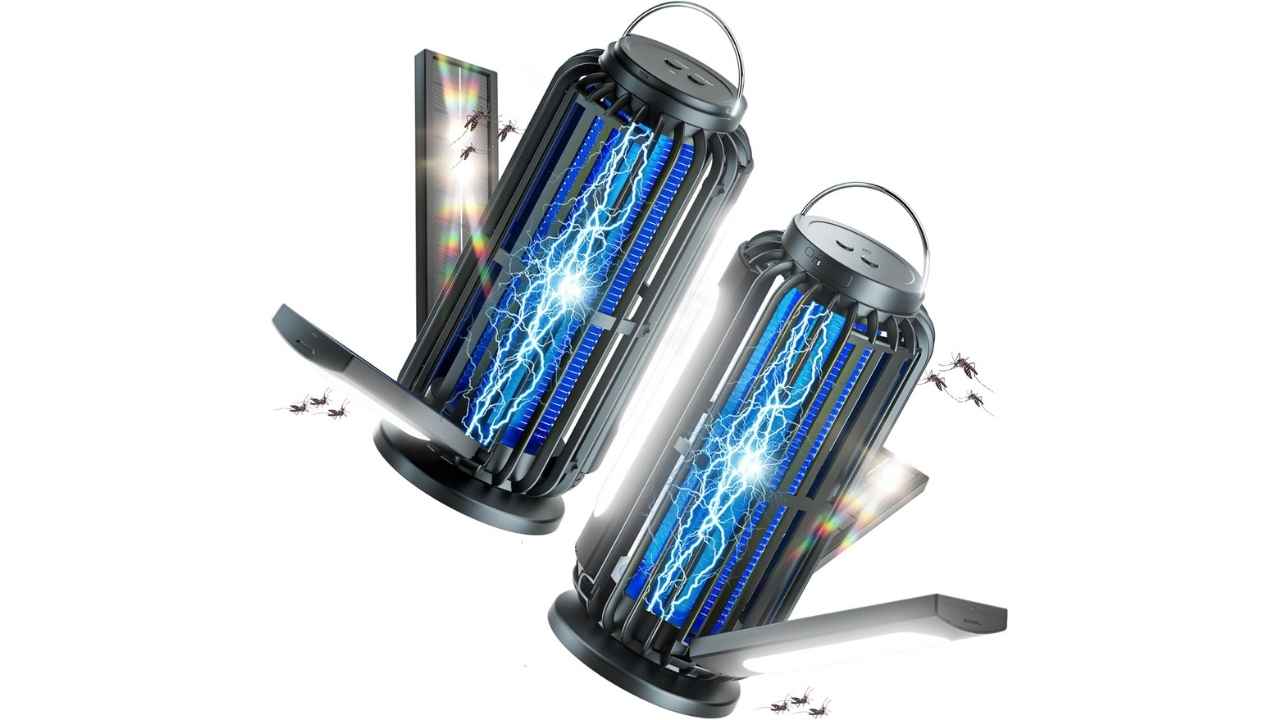 Outdoor essential TYPEC Solar Bug Zapper (36% off) Solar-powered bug zappers for patios and camping. |


